


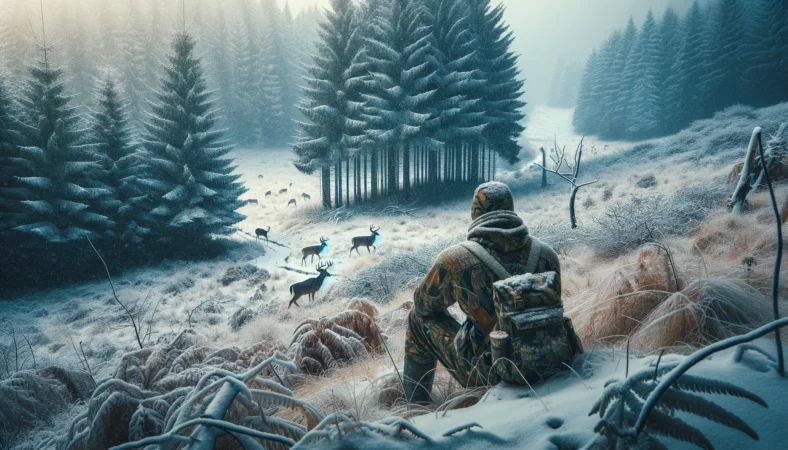
Late-season deer hunting is different from early fall or the rut. Cold weather, hunting pressure, limited daylight movement, food availability, and winter survival patterns can all change where deer spend time. The best late-season tactics focus on food, cover, wind, and low-pressure access.
This guide gives practical late-season deer hunting tips without making state-specific legal claims. Always check current regulations, season dates, weapon rules, and property permission before hunting.
Table of contents
- Quick Answer
- Find Late-Season Food Sources
- Hunt Close To Thermal Cover
- Account For Hunting Pressure
- Use Weather And Cold Fronts Wisely
- What Changes After The Rut
- Stand And Blind Placement
- Timing Your Sit
- Plan Quiet Access And Exit Routes
- Late-Season Safety And Recovery
- Late-Season Setup Checklist
- Common Late-Season Mistakes
- FAQ
- Final Takeaway
Quick Answer
For late-season deer hunting, focus on reliable food, thick or warm bedding cover, low-pressure routes, and weather changes that encourage daytime movement. Hunt carefully because deer may already be pressured and conserving energy. A quiet approach can matter as much as the stand location.
The biggest mistake is hunting late season like the rut is still happening. Deer often shift from breeding behavior to survival behavior, so food and security become the center of the plan.
Find Late-Season Food Sources
Food is a major late-season driver. Depending on region and property, deer may use standing crops, food plots, acorns, browse, cut crop fields, mast pockets, or natural green growth. The best source is the one deer are actually using now, not the one that looked good in October.
Scout from a distance when possible. Tracks, trails, droppings, feeding sign, and evening observation can reveal active food patterns without pushing deer out of the area. For reading sign, see our tracking animals and reading signs guide.
Hunt Close To Thermal Cover
Thermal cover helps deer conserve energy and avoid harsh weather. Thick evergreens, brush, south-facing slopes, cedar cover, cattails, CRP, and protected bedding areas can become important when temperatures drop.
The best late-season setup often sits between secure bedding cover and evening food. Getting too close can bump deer. Staying too far away may leave you watching empty travel routes after dark.
Account For Hunting Pressure
By late season, deer may have learned where hunters park, walk, sit, and leave scent. They may avoid obvious stand sites, main trails, open field edges, or easy access routes until after dark.
Look for overlooked pockets: small cover near food, hard-to-access corners, brushy transitions, creek crossings, and downwind edges that other hunters skip. Keep pressure low by limiting unnecessary scouting trips and stand sits.
Use Weather And Cold Fronts Wisely
Cold fronts, snow, wind shifts, and warming trends can all affect movement. In many areas, deer may feed more predictably before or after rough weather, but local patterns matter more than a generic rule.
Check wind and access before committing. A great food source with the wrong wind may educate deer quickly. The Hunter Ed safety resources are a useful reminder that weather, visibility, and field conditions should shape safe hunting decisions.
What Changes After The Rut
After peak breeding activity, many deer shift back toward food, rest, and security. Bucks that moved widely during the rut may become less visible, and does may focus on predictable feeding and bedding patterns. Hunting pressure can make those patterns even more cautious.
This does not mean deer stop moving in daylight. It means daylight movement is often tied more tightly to safety, weather, and food. Fresh sign near secure cover is more useful than rut sign that is weeks old.
Stand And Blind Placement
Late-season stand or blind placement should balance visibility with intrusion. A setup on the food source may offer a clear view, but it can be hard to enter or exit without spooking deer. A setup tucked back on a staging trail may be better if deer reach the field after dark.
Pay attention to where deer can smell, see, and hear you. Cold air may settle into low spots, and open fields can make movement obvious. Choose a setup that lets you arrive quietly, hunt the wind, and leave without crossing the main feeding area.
Timing Your Sit
Late-season deer often wait until the final part of daylight before stepping into open feeding areas. That makes timing important. If you arrive too late, you may bump deer already staging near food. If you leave too early, you may miss the short movement window that happens just before dark.
Plan for a patient sit and keep gear organized so you are not moving when deer are close. In cold weather, quiet clothing, warm gloves, and a steady rest can help you stay still and make better decisions when light is fading.
Plan Quiet Access And Exit Routes
Late-season access should be quiet, scent-conscious, and realistic. Crunchy snow, frozen leaves, mud, ice, and open fields can all make movement more noticeable. Give yourself more time than usual so you do not rush.
Plan the exit too. If deer are feeding near your route after dark, leaving carelessly can ruin the spot for future hunts. Sometimes it is better to wait, take a longer route, or use terrain to leave quietly.
Late-Season Safety And Recovery
Cold weather changes safety planning. Carry layers, a headlamp, a charged phone or navigation device, water, gloves, and emergency basics. Tell someone where you are hunting and when you expect to return.
Recovery planning matters too. Darkness comes early, temperatures can drop quickly, and terrain may be slick. For broader packing help, review our day hunting packing checklist.
Late-Season Setup Checklist
Before choosing a stand or blind, run through a simple checklist. First, confirm the freshest food sign. Second, identify the nearest secure bedding or thermal cover. Third, check the wind for both the sit and the walk in. Fourth, decide how you will leave if deer are still feeding after dark.
Also think about visibility and recovery before the hunt starts. Late-season shots may happen in low light, with snow, brush, or uneven terrain affecting what you can see. Do not force a shot just because the season is closing. A good late-season plan should help you hunt patiently, choose a responsible shot, and recover safely.
If the spot fails one of those checks, adjust before hunting it. A slightly less obvious setup with cleaner access and better wind control can outperform the prettiest field edge on pressured deer.
Common Late-Season Mistakes
Ignoring Current Food
Old sign can mislead you. Focus on the food source deer are using now.
Overhunting One Spot
Repeated pressure can push deer to safer patterns. Save good setups for the right wind and conditions.
Using Loud Access Routes
Frozen leaves, snow crust, and open ground can make entry obvious. Plan quieter routes when possible.
Under-Dressing For The Sit
Cold hunters move more and leave earlier. Dress for the sit, not just the walk in.
FAQ
What is the best time to hunt late-season deer?
Evening food-source hunts are often important, but weather, pressure, and local patterns matter. Morning hunts can work near bedding or travel routes if access is clean.
Are food plots good in late season?
They can be, if deer are actively using them and pressure is managed. Natural browse, mast, and crop fields can also be important depending on region.
Does colder weather improve deer movement?
Cold weather can increase feeding urgency in some situations, but it is not automatic. Wind, pressure, food, moonlight, and local patterns can all affect movement.
How do you hunt pressured late-season deer?
Use low-impact access, hunt fresh sign, avoid obvious pressure points, and save your best setups for the right wind and weather.
Final Takeaway
Late-season deer hunting is about survival patterns: food, thermal cover, pressure, weather, and quiet access. Find current food, respect bedding cover, hunt the right wind, and avoid educating deer with unnecessary pressure.