


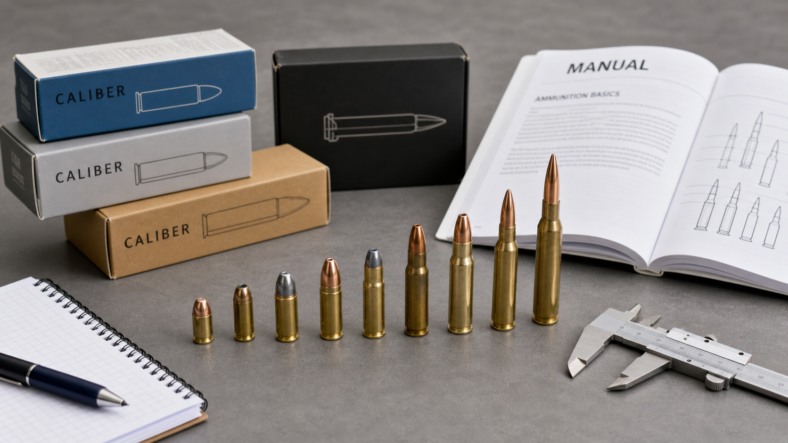
Gun caliber usually describes bullet or bore diameter, but cartridge names are not always simple measurements. That is why beginners can see names like 9mm, .22 LR, .308 Winchester, or 7.62x39mm and feel like the system is harder than it should be. The most important rule is simple: the ammunition must match the firearm markings, the ammunition packaging, and the owner’s manual.
This guide explains caliber in plain language. It is not a recommendation guide, not a technical ammunition-building guide, and not a substitute for firearm markings, manufacturer instructions, range rules, or qualified instruction.
Table of Contents
Quick Beginner Summary
- Caliber usually refers to bullet or bore diameter.
- A cartridge is the complete round of ammunition, not just the diameter.
- Cartridge names mix measurement, history, and naming conventions.
- Similar names are not automatically interchangeable.
- Always verify ammunition against the firearm markings, packaging, and manual.
Caliber vs Cartridge
People often use caliber and cartridge as if they mean the same thing, but they are different ideas. Caliber generally refers to diameter. A cartridge is the complete round of ammunition, including the case, primer, propellant, and bullet. A cartridge name may include a caliber figure, but the full name matters because it identifies the specific ammunition type.
For terminology, the SAAMI glossary is a useful authority because SAAMI publishes firearm and ammunition industry standards and definitions. For a beginner, the practical point is this: caliber gives part of the story, but cartridge designation tells you much more.
| Term | Plain Meaning | Beginner Takeaway |
|---|---|---|
| Caliber | A diameter measurement or naming convention | Helpful, but not enough by itself |
| Cartridge | The complete round of ammunition | The full cartridge designation must match the firearm |
| Firearm marking | The designation marked on the firearm | Use it with the manual and ammunition box before loading |
Why Caliber Names Can Confuse Beginners
Caliber names developed over a long time. Some names come from bullet diameter, some from case design, some from older conventions, and some from manufacturer or military naming history. That is why the number in a name is not always a simple literal measurement.
This is also why similar-looking names can be risky for beginners. A name that looks close on a shelf is not proof that the ammunition is correct for your firearm. Compatibility is a manual-and-marking question, not a guess from memory.
Metric vs Inch-Based Names
You will see cartridge names in metric measurements and inch-based measurements. Metric names often use millimeters, such as 9mm or 7.62mm. Some metric names include another number for case length. Inch-based names use decimals such as .22, .30, .357, or .45.
The measurement system is only part of the label. Do not assume that two cartridges are the same because their numbers seem close, and do not assume that one naming system translates neatly into the other. The correct source is still the firearm marking, owner’s manual, and ammunition packaging.
Why Matching Ammunition Matters
A firearm is designed around a specific cartridge or a clearly stated set of compatible cartridges. Using the wrong ammunition can damage equipment and injure people. A cartridge that appears similar, or even one that seems to fit, is not automatically safe.
Safety organizations make this point directly. The NSSF rules of safe gun handling include using only the correct ammunition for your firearm. SAAMI also publishes firearm safety rules that reinforce the same manual-first mindset.
For more on this specific safety check, read our guide to choosing the right ammunition for your firearm.
Common Beginner Mistakes
- Relying on memory: A remembered caliber name is not enough. Check the marking and box.
- Assuming close names match: Similar numbers or similar words do not prove compatibility.
- Using fit as a test: A cartridge appearing to fit is not proof that it is safe.
- Ignoring the manual: The owner’s manual and manufacturer guidance are part of the safety check.
- Mixing loose ammunition: Keep ammunition organized and clearly identified.
How to Check the Right Ammunition Safely
Start with the cartridge designation marked on the firearm. Depending on the firearm, that marking may be on the barrel, slide, frame, or receiver. Then compare that exact designation with the owner’s manual and the ammunition box. If the markings and packaging do not clearly match, do not use that ammunition.
If anything is unclear, stop and ask a qualified range officer, instructor, gunsmith, or the firearm manufacturer. This is not a place to guess. A few minutes of verification is much better than trying to solve a compatibility question at the firing line.
Where Caliber Fits in Safe Shooting
Caliber knowledge helps you understand ammunition labels, compare terminology, and ask better questions. It does not replace the rest of firearm safety. You still need safe handling, safe storage, range commands, eye and ear protection, and clear ammunition organization.
If you are new to shooting, pair this article with our shooting range safety rules overview before live-fire practice.
Frequently Asked Questions
What does caliber mean in simple terms?
Caliber usually refers to bullet or bore diameter, expressed in inches or millimeters. It is part of how ammunition is described, but it is not always the complete cartridge designation.
Is caliber the same as cartridge?
No. Caliber is a diameter-related term. A cartridge is the complete round of ammunition, including the case, primer, propellant, and bullet.
Why are caliber names confusing?
Names come from different measurement systems, historical conventions, case designs, and manufacturer naming habits. That is why a cartridge name is not always a literal measurement.
Are similar cartridge names interchangeable?
Not unless your firearm markings or manual clearly state that they are compatible. Similar names, close numbers, or physical fit do not prove safety.
How do I know which ammunition my firearm uses?
Read the cartridge designation marked on the firearm, confirm it in the owner’s manual, and match it to the ammunition box and headstamp. If you are unsure, ask a qualified professional before loading or firing.
Final Safety Reminder
Caliber is a useful term, but it is not enough by itself. Cartridge names can be historical and confusing, so the safest habit is to verify the exact ammunition designation every time. Match the firearm marking, manual, ammunition packaging, and headstamp, and ask for qualified help whenever something is unclear.