


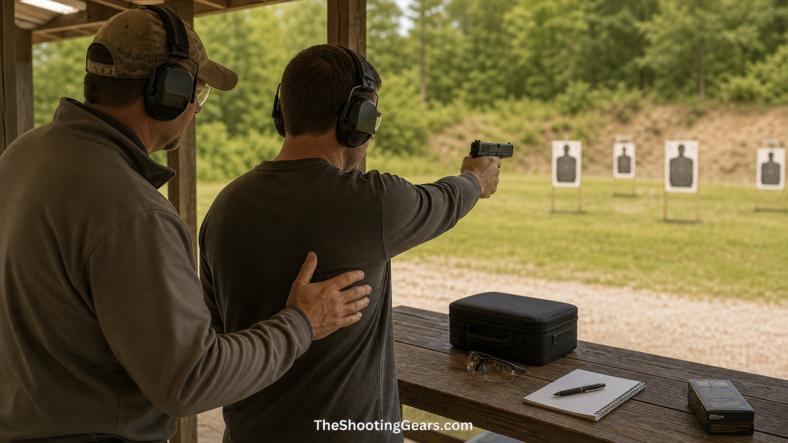
Shooting with your non-dominant hand is a learnable range-practice skill, but the safe approach is to slow down, keep the fundamentals simple, and get help when your setup feels uncomfortable. People practice from the other side for many reasons: eye dominance, temporary hand limitations, reduced mobility, or a desire to build more balanced skills.
This guide is safety-first and beginner-friendly. It is not advanced-use, legal, or competitive coaching, and it does not claim that general tips will solve an injury, disability, vision change, or mobility issue. If pain, injury, disability, medication, vision changes, or reduced mobility are involved, work with the right professionals and a qualified instructor.
Table of Contents
Quick Safety-First Checklist
Before changing hands or stance, keep these basics front and center.
- Follow firearm safety rules at every step.
- Start with unloaded, safe handling only where it is legal, appropriate, and allowed by the manual and range rules.
- Check eye dominance before changing your shooting side.
- Begin live fire slowly, close, and controlled at a safe range.
- Stop if there is pain, confusion, unsafe handling, or discomfort you cannot explain.
- Consider a qualified instructor or adaptive program for hands-on guidance.
When Non-Dominant-Hand Practice Makes Sense
There are several reasonable reasons to practice from the non-dominant side. Cross dominance, where your dominant eye is on the opposite side from your dominant hand, can make sight alignment from your usual side feel awkward. A temporary limitation may make your usual hand unavailable. Some shooters simply want more balanced range skills.
Adaptive shooting is also a recognized part of the sport, including Paralympic shooting at the highest levels. That does not mean a general article can replace coaching or adaptive support. It simply shows that shooting can be approached in different ways when the setup is safe, appropriate, and guided.
Start With Firearm Safety Basics
Changing hands, stance, or visual alignment makes the basic safety rules more important, not less. Keep the muzzle pointed in a safe direction, handle every firearm as if it is loaded, keep your finger off the trigger until you are ready to fire, and be sure of your target and what is beyond it.
These fundamentals from sources such as the NSSF firearm safety rules anchor everything else. When your hands are doing something unfamiliar, deliberate safety habits prevent sloppy movement from becoming unsafe movement.
Check Eye Dominance Before Changing Your Setup
Eye dominance often drives the decision to switch sides. Ocular dominance is the tendency to favor visual input from one eye. When the dominant eye is opposite the dominant hand, aligning sights from the usual side can feel less natural.
You can check eye dominance with a simple alignment test, but use the result as practical context rather than a formal assessment. Because eye dominance affects the whole setup, it is worth confirming with an instructor before making a major change.
Build Comfort Before Live Fire
Comfort comes before live fire. Where it is legal, safe, and consistent with your firearm manual and range rules, unloaded handling can help you get used to the new grip, mount, stance, and sight alignment. Keep the muzzle in a safe direction even during unloaded practice.
Focus on a relaxed, repeatable hold and a natural sight picture on the new side. The goal is familiarity, not speed. If the position feels painful, unstable, or confusing, stop and get help before adding live fire.
Practice Slow, Simple Fundamentals
When you move to live fire, start slow, close, and controlled. Use a safe range, follow the range officer, and keep the target distance manageable. Fire deliberately while focusing on consistent grip, stance, sight alignment, breathing, and a smooth trigger press.
The goal is safe, repeatable fundamentals, not speed or advanced drills. Progress only as comfort and consistency grow. A calm session with a few careful shots is more useful than a rushed session that teaches poor habits.
When to Work With an Instructor or Adaptive Program
Some situations call for qualified help, and there is no downside to asking for it. A certified instructor, range safety officer, or adaptive shooting program can provide hands-on feedback that an article cannot, especially when you are changing hands, adapting your stance, or working around a physical limitation.
If pain, injury, a medical condition, medication, vision changes, or reduced mobility are involved, get appropriate professional guidance first. The right goal is a safe, workable setup for your needs, not forcing yourself into a generic position.
Common Mistakes to Avoid
A few mistakes show up often. Rushing into live fire before the new position feels comfortable leads to poor habits and added risk. Pushing through pain instead of stopping can make a problem worse. Assuming one stance, grip, or eye technique works for everyone ignores real differences between shooters.
Another common mistake is skipping the eye-dominance check and fighting an alignment issue that could have been identified early. Slowing down, keeping the practice simple, and getting feedback addresses most of these problems.
Frequently Asked Questions
Should I shoot from the side of my dominant hand or dominant eye?
It depends on the shooter. Many cross-dominant shooters find that shooting from the side of the dominant eye improves alignment and comfort, but the best setup should be confirmed with safe handling and, ideally, an instructor.
How do I check my eye dominance?
A common method is a simple alignment test where you focus on a distant object through a small opening formed by your hands and note which eye keeps it centered. Because eye dominance affects the whole setup, confirm your results with an instructor when possible.
Is it hard to learn to shoot with my non-dominant hand?
It takes patience, but it is learnable. Start with safe unloaded handling where appropriate, then begin live fire slowly and close at a safe range. Focus on consistent fundamentals rather than speed.
Can I shoot if I have an injury or disability?
Many people participate in shooting sports with different physical needs, but a general article cannot evaluate your situation. If pain, injury, disability, medication, or vision changes are involved, get appropriate professional guidance and consider a qualified adaptive shooting program.
Should I take a lesson for this?
Yes, it is a strong idea. A qualified instructor or adaptive program can give hands-on feedback, watch muzzle direction and trigger discipline, and help you build a safe setup from the start.
Final Recommendation
Shooting with your non-dominant hand is achievable when you put safety first and build fundamentals slowly. Check eye dominance, get comfortable with safe unloaded handling where appropriate, start live fire slowly, and never push through pain. For anything involving injury, disability, vision changes, or persistent difficulty, a qualified instructor or adaptive program is the right next step.

