


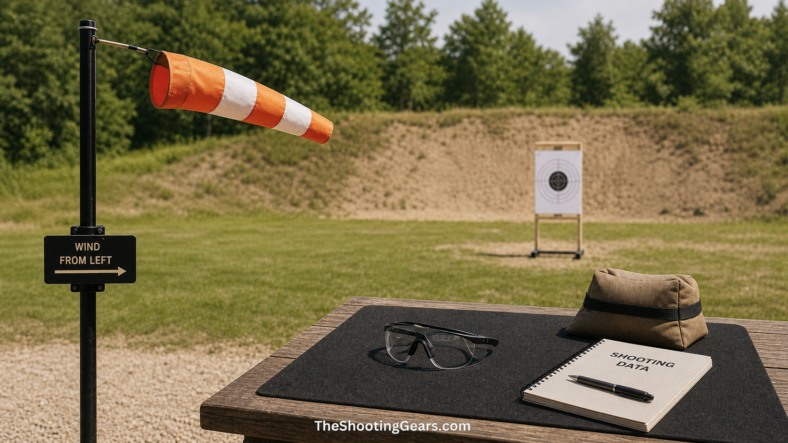
Wind can affect shooting accuracy because moving air is one of several outside factors that can shift where a bullet lands. The effect generally becomes more noticeable as target distance increases and the bullet spends more time in flight. For beginners, the practical takeaway is simple: understand wind as a variable, learn what windage means on your own optic, and keep live-fire practice inside a lawful, controlled range with a safe backstop.
This is a beginner concept explainer, not a step-by-step wind-calling guide. It explains why wind matters, which factors change the result, and why readers should rely on qualified instruction, range rules, and their own equipment manuals for live-fire decisions.
Table of Contents
Why Wind Can Move a Bullet
Once a bullet leaves the barrel, it is no longer being guided by the firearm. Moving air can push against the bullet during flight, which is one reason the point of impact can differ from the point of aim. For a beginner, the useful point is awareness: wind is real, variable, and worth respecting, but it is not something to precisely solve from a general article.
A Beginner’s View of the Variables
Several factors interact to determine how much wind matters. Distance, wind direction, gusts, bullet design, firearm setup, ammunition, and optic setup can all affect the result. This is why a simple one-size answer is not helpful for beginners.
| Factor | What It Changes Conceptually | Beginner-Safe Takeaway |
|---|---|---|
| Distance | More distance usually means more time in flight. | Build fundamentals at safe, manageable distances first. |
| Wind direction | Crossing wind can matter differently than head or tail wind. | Treat wind as variable along the path. |
| Gusts | Changing wind can shift conditions shot to shot. | Do not assume a single reading describes the whole range. |
| Firearm and ammunition | Different setups behave differently. | Follow your firearm, ammunition, and optic manuals. |
| Optic setup | Windage and reticle references are optic-specific. | Use the manual for your exact optic. |
Windage vs Elevation: What the Terms Mean
Windage and elevation are common sight and scope terms. Windage refers to horizontal adjustment or horizontal correction, while elevation refers to vertical adjustment. Optics makers define these terms in their own references, including the Leupold glossary.
This article explains the terms at a concept level. It does not teach adjustment methods because those depend on the exact optic, firearm, ammunition, range, and conditions.
Why Distance Makes Wind More Noticeable
Wind tends to matter more as distance increases because the bullet spends more time in flight. More time in moving air gives wind more opportunity to affect where the bullet lands. This is one reason beginners should start with manageable range practice before stretching distance.
Wind Direction, Speed, and Gusts
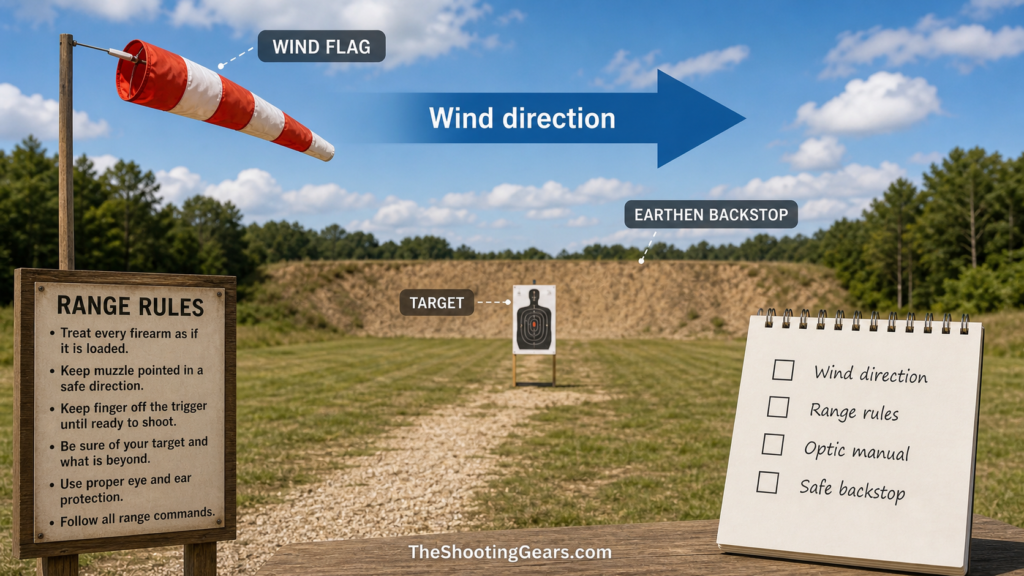
Wind is rarely steady. Direction, speed, and gusts can change from moment to moment, and wind near the firing line may not match wind near the target. A crosswind across your line can have a different effect than wind coming toward you or from behind, but the safer beginner mindset is to treat all wind as changing and imperfectly known.

Why Bullet and Rifle Setup Change the Result
Different firearms, optics, and ammunition behave differently, so the same wind will not affect every setup identically. Rather than chase numbers from another setup, follow the manuals for your specific firearm, ammunition, and optic, then confirm how your equipment behaves under safe, supervised range conditions.
If you want to understand related optic setup basics, our guides to choosing the right rifle scope and rifle scope parallax adjustments are better next steps than guessing at wind corrections.
What Beginners Should Not Assume
It is easy to over-trust quick answers. Charts, apps, and online anecdotes are estimates, not certainty. Reticle marks and turret references are specific to your optic and should be checked against its manual. No reading, gear, or tool makes wind fully predictable.
Use Optic Manuals and Range Rules
Your equipment manuals and your range rules are the real authorities. Follow your firearm, ammunition, and optic manufacturer instructions, and follow basic firearm safety rules such as the NSSF firearm safety rules: keep the muzzle in a safe direction, be sure of your target and what is beyond it, and follow range commands.
Before working on accuracy at all, review your range’s posted rules and our shooting range safety rules overview.
Practice Safely in a Controlled Range Setting
Any live-fire learning should happen only in a lawful, controlled range with a safe backstop, clear target area, and proper supervision. Do not practice in informal areas without verified legal permission and a safe backstop. A qualified instructor can teach fundamentals and range process better than a general article can.
Common Wind Myths to Avoid
A few myths create confusion. One is that wind only pushes in one simple direction; real wind can vary along the path. Another is that an app or chart gives an exact answer; those tools still rely on assumptions. A third is that a certain scope or reticle automatically solves wind; equipment may help, but safe practice and instruction matter more.
What This Guide Does Not Cover
To keep this article beginner-appropriate, it does not cover advanced ballistic calculation, field correction methods, hunting shot-placement advice, or advanced live-fire instruction. For hands-on technique, work with a qualified instructor and your equipment manuals.
Frequently Asked Questions
Does wind always move a bullet sideways?
No, not in a simple constant way. A crosswind can create sideways movement, but real wind varies in direction and strength along the path. Treat wind as variable rather than predictable.
What does windage mean on a rifle scope?
Windage refers to horizontal adjustment or horizontal correction on a sight or scope. Elevation refers to vertical adjustment. The exact markings and adjustment system are specific to your optic, so check its manual.
Why does wind matter more at longer distances?
Because the bullet spends more time in flight, giving moving air more time to affect it. This is one reason beginners should build skills at manageable distances first.
Can a beginner use a wind chart or app?
You can read them for context, but treat their output as an estimate. They do not replace training, your optic manual, range confirmation, or safe range practice.
Is this article a wind-calling guide?
No. This is a conceptual overview of how wind can affect accuracy. It does not teach live-fire adjustment methods.
Final Safety-First Takeaway
Wind is one of several factors that can move a bullet, and its effect tends to grow with distance and time in flight. As a beginner, the goal is understanding, not calculation: respect wind as a variable, learn what windage means on your own optic, follow your equipment manuals, and practice only in a safe, controlled range environment.

