


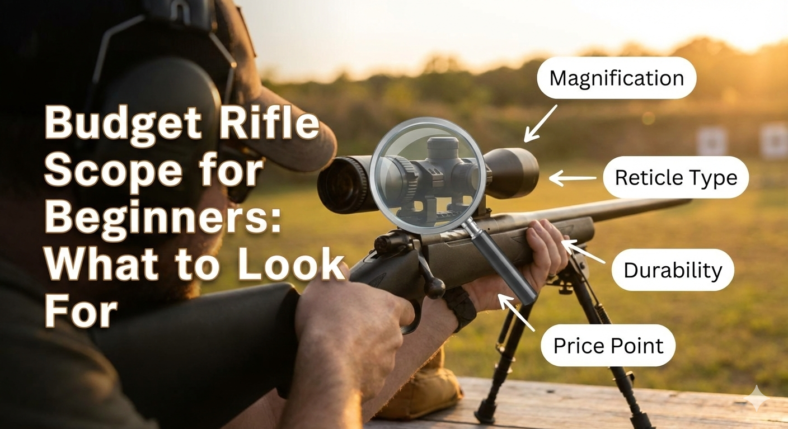
A good budget rifle scope for a beginner is one with clear glass at the magnification you will use, a simple reticle you understand, repeatable adjustments that hold zero, solid sealed construction, and a manufacturer warranty that stands behind it. You do not need to spend the most to get a scope that works for learning, but a few features matter far more than price. This guide explains what to look for, what to skip, and how to shop smart so you buy a scope that helps you learn instead of one you fight or outgrow quickly.
Table of contents
What Matters Most in a Beginner Scope
For a beginner, the features that matter most are clear glass at usable magnification, a reticle you can read and understand, adjustments that move reliably and return to zero, a sealed and shock-resistant body, and a warranty you can actually use. Price is real, but a slightly higher price that buys repeatable adjustments and a fog-proof seal is usually worth it over the cheapest option that fails on either. Focus your budget on those fundamentals before fancy features.
Before mounting anything, confirm safe handling habits. The NSSF firearm safety rules are a clear, free reference for treating every firearm safely while you sight in and practice.
Glass Clarity and Coatings
Clarity is how sharp and bright the image looks through the scope, and it is the feature you will notice every time you use it. Look for lenses described as fully multi-coated, which means all air-to-glass surfaces have multiple coatings to reduce glare and improve light transmission. You do not need top-tier glass to learn, but a dim or fuzzy image makes it harder to aim and tires your eyes, especially in early morning or late evening light.
Magnification Range
For most beginners, a modest variable range such as 3-9x or 4-12x covers nearly everything you will do at the range and in the field. More magnification is not automatically better; higher power narrows your field of view, magnifies wobble, and can be harder to use offhand. Pick a range that matches your typical distance, and learn to shoot at the lower end first. For a fuller explanation, see our guide on rifle scope magnification for beginners.
Reticle Choice
The reticle is the aiming pattern you see through the scope. For a beginner, a simple duplex reticle, thick outer lines that taper to a fine center, is easy to read and fast to aim with. Busy reticles packed with dots and numbers can help experienced shooters who have practiced with them, but they often confuse newcomers and slow things down. Start simple and add complexity only when you have a clear reason.
First focal plane vs second focal plane
Most budget scopes use a second focal plane reticle, where the reticle stays the same visual size as you change magnification. That is fine for beginners. If you want to understand the difference and when it matters, see our explainer on the difference between FFP and SFP rifle scopes.
Adjustments and Holding Zero
The adjustment turrets move your point of impact for elevation and windage, and the most important quality in a beginner scope is that they move predictably and return to the same point reliably. A scope that does not track or hold zero will frustrate you no matter how clear the glass is. When you sight in, a scope with repeatable clicks lets you make a correction and trust it. Capped turrets are common and helpful on a beginner scope because they protect the setting from accidental movement.
Durability and Sealing
Look for a scope described as waterproof, fog-proof, and shockproof, usually achieved by sealing the tube and purging it with a dry gas such as nitrogen. Sealing keeps moisture from fogging the inside of the scope in temperature swings, and shock resistance helps the scope survive recoil and handling. These are common features even at lower prices, and they are worth confirming before you buy.
Warranty and Support
A warranty matters more on a budget scope than many beginners expect. Several optics makers offer strong, often transferable warranties that cover defects and accidental damage, which can make a moderately priced scope a better long-term value than the cheapest option with no real support. Read the warranty terms on the manufacturer’s own page before you buy, and keep your proof of purchase.
How to Shop Smart on a Budget
Do not spend the entire budget on the optic alone. Rings, bases, bore-sighting help, and range ammunition all affect the real cost of a beginner setup. If you buy a scope that seems affordable but then pair it with weak rings or mount it with poor eye relief, the setup may shift, feel uncomfortable, or be harder to shoot consistently. A practical beginner budget should leave room for a secure mount and at least one careful sight-in session.
- Decide your typical shooting distance first, then pick a magnification range that fits it.
- Prioritize repeatable adjustments and a sealed body over extra magnification or a busy reticle.
- Choose a simple reticle while you are learning the fundamentals.
- Read the manufacturer’s warranty terms directly on their site, not just a retailer summary.
- Budget for quality rings or a mount; a good scope on a poor mount will not hold zero. Our eye relief guide can also help you check comfort and safe head position before settling on a setup.
- Plan to spend range time sighting in and practicing; no scope replaces practice.
Frequently Asked Questions
What magnification is best for a beginner rifle scope?
A modest variable range such as 3-9x or 4-12x suits most beginners and covers common range and field distances. Higher magnification narrows your view and magnifies wobble, so start at the lower end and learn the fundamentals first.
Do I need expensive glass to start?
No. You can learn on a moderately priced scope as long as the image is clear at your magnification, the adjustments hold zero, and the body is sealed. Spend on those fundamentals before premium glass or extra features.
Why does the warranty matter on a budget scope?
A strong warranty can make a moderately priced scope a better long-term value than the cheapest one with no support. Several makers cover defects and even accidental damage. Read the terms on the manufacturer’s site and keep your receipt.
What reticle should a beginner choose?
A simple duplex reticle is the easiest for beginners to read and aim with quickly. Busy reticles with many dots and numbers can help experienced shooters but often slow newcomers down, so start simple.
Final Takeaway
A smart budget scope choice for a beginner comes down to clear glass at a magnification you will use, a simple reticle, adjustments that hold zero, a sealed and shock-resistant body, and a warranty that backs it up. Put your money into those fundamentals, add quality rings, and plan for range time to sight in and practice. A well-chosen entry scope will support your learning for a long time without overspending on features you do not yet need.