


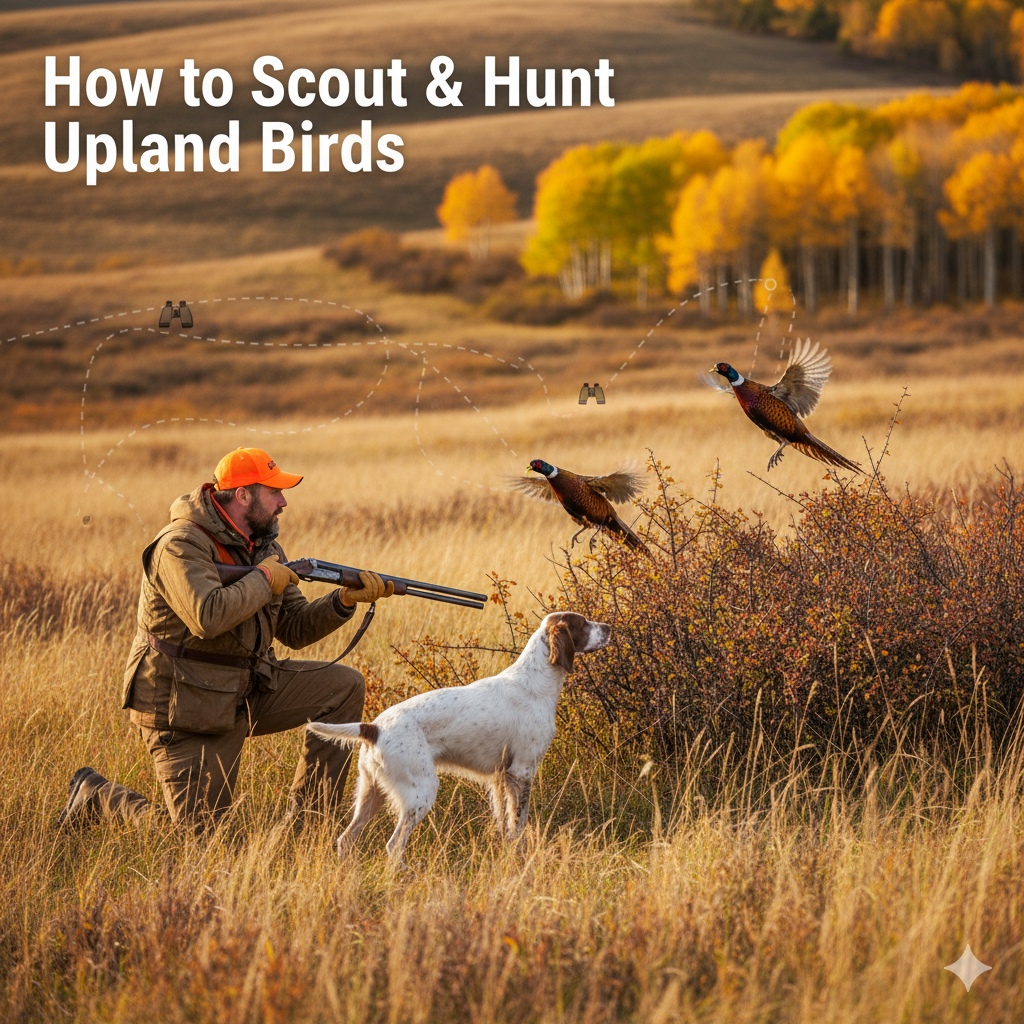
Scouting upland birds means learning where pheasant and quail find cover, food, water, and escape routes, then planning safe, legal field movement before the hunt. Good scouting is mostly habitat reading, access planning, and safety awareness. It never guarantees birds will be there, and it never replaces target identification.
This guide focuses on pheasant and quail habitat clues, safe movement with partners and dogs, and the regulation checks every hunter should make through current official sources. Season dates, bag limits, blaze-orange rules, licenses, access rules, and legal methods vary by state and year.
Table of Contents
Upland Bird Scouting Basics
Scouting for upland birds is the process of identifying likely habitat, safe access points, and field boundaries before the hunt. The goal is to narrow a large area down to a few spots worth walking, based on cover quality, food, water, pressure, and safe shooting layout.
- Cover: birds need protection from weather and predators.
- Food: crop edges, weed seeds, insects, and waste grain can concentrate birds.
- Water: moist low spots and water edges matter more in dry country.
- Edges: transitions between cover and food often deserve extra attention.
- Escape routes: birds need somewhere to run or fly when pressured.
- Pressure: heavily walked areas may push birds into thicker or less obvious cover.
Treat these as clues, not promises. Regional habitat differs, so compare what you see with habitat guidance from groups such as Pheasants Forever and Quail Forever.
Pheasant Habitat and Sign
Pheasants favor dense nesting or loafing cover near reliable food, with thick escape cover close by. Look for grassy fields, cattail sloughs, shelterbelts, weedy fence lines, and the edges of standing or harvested crops.
Cover, food, water, and escape routes
The most useful spots usually combine thick cover, a nearby food source, and a way for birds to escape pressure. Grassy or weedy strips that connect larger cover blocks can act as travel lanes. In dry regions, low wet areas can also draw birds.
Pressure, weather, and time of day
Hunting pressure can push pheasants into the thickest cover and make them run before flushing. Early and late in the day, birds often move toward food. Midday, they may sit tighter in heavier cover. Wind, rain, and snow can change where birds shelter, so re-scout after major weather or pressure changes.
Quail Habitat and Sign
Quail are covey birds that favor a patchwork of low woody cover, open ground underneath, and seed-producing plants nearby. Brushy edges, field borders, fence rows, and shrubby draws are common places to start looking.
Covey cover and edge habitat
Quail need overhead cover for protection, room at ground level to move, and food close enough that they do not have to expose themselves for long. Edge habitat where brush meets field or grassland often provides that mix in a small area.
Regional differences to verify
Quail species and habitat vary widely by region. Before relying on one pattern, confirm what local quail habitat looks like through Quail Forever, local habitat programs, and your state wildlife agency. Good-looking cover improves odds, but it does not guarantee a covey is present.
Safe Field Movement and Shot Awareness
Safe upland hunting depends on muzzle control, partner awareness, dog awareness, and clear target identification. Follow established firearm safety rules from sources such as the NSSF firearm safety rules and your hunter education program.
- Keep the muzzle pointed in a safe direction, including when crossing fences or ditches.
- Agree on safe zones of fire before walking.
- Identify the bird and confirm a safe background before mounting the gun.
- Know where partners and dogs are before any shot.
- Do not shoot at sound, movement, low birds, skylined birds, or unknown ground.
- When in doubt, do not shoot.
For broader safety habits, review IHEA-USA hunter education resources and our beginner-friendly shooting range safety rules guide. Eye and ear protection also matter in the field; see our guide on shooting eye and ear protection.
Gear and Dog-Handling Considerations
Upland gear should support safe walking, clear communication, and comfort without turning the hunt into a heavy loadout. Common considerations include sturdy boots, brush-resistant clothing, hearing and eye protection, water, and a way to carry birds. Many states require hunter-orange clothing for upland hunting, but the exact rule must be checked through the current state source.
For dogs, plan around conditioning, water, weather, terrain, and clear handling. A dog can help locate birds, but the hunter remains responsible for target identification, safe zones of fire, and knowing what is beyond the bird. Plan shots around the dog’s position, not the other way around.
Season, Land Access, and Regulation Checks
Season dates, bag and possession limits, license and stamp requirements, blaze-orange rules, shooting hours, dog rules, and public/private land access all change by state and season. Check your current state wildlife agency pages before scouting or hunting.
For access planning context, our public land hunting guide is a useful companion, even though upland access rules still need to be verified for the exact state and property. For broader beginner hunting habits, see deer hunting tips for beginners.
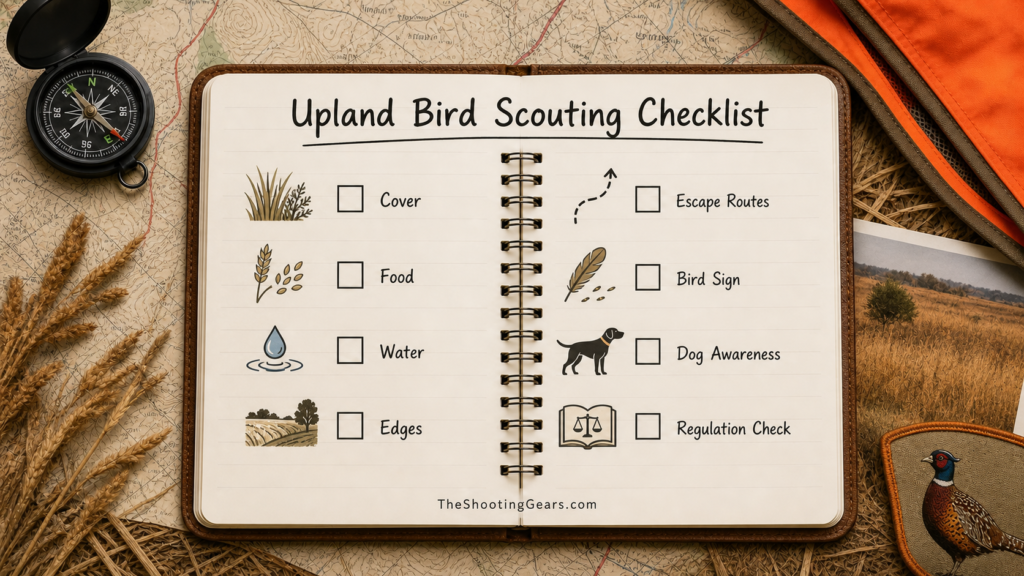
Upland Bird Scouting Checklist
| Scouting Check | What to Look For |
|---|---|
| Cover | Grass, cattails, brush, shelterbelts, fence rows, and shrubby draws |
| Food | Crop edges, weed seeds, insects, waste grain, and seed-producing plants |
| Water | Moist low spots, nearby water, and cover close to water in dry country |
| Edges | Transitions where food, cover, and open ground meet |
| Escape routes | Thicker cover birds can run or fly into when pressured |
| Bird sign | Tracks, droppings, dusting areas, feathers, flushes, and calls |
| Dog awareness | Dog position, range, hydration, and safe zones of fire |
| Regulation check | Season, license, limits, blaze orange, access, and legal methods |

Frequently Asked Questions
When is the best time of day to scout upland birds?
Early morning and late afternoon are often useful because birds may move toward food. Midday scouting can still reveal cover, sign, and access points even when birds are sitting tight.
How do I find pheasant or quail without trespassing?
Start with public hunting lands and access programs listed by your state wildlife agency. For private land, get clear permission before scouting or hunting. Access rules vary, so verify them through official sources.
Does good habitat guarantee I will find birds?
No. Habitat tells you where birds are more likely to be, not that they are present. Pressure, weather, food availability, and season timing all affect whether birds are using a spot.
Do I still need to identify my target if I am hunting with a dog?
Yes. A dog can help locate and flush birds, but you must always identify the bird, confirm a safe background, and know where the dog and partners are before any shot.
What clothing color is required for upland hunting?
Many states require hunter orange or blaze orange for upland hunting, but the amount and placement vary. Check your state wildlife agency’s current rules before hunting.
Final Takeaway
Scout upland birds by reading cover, food, water, edges, escape routes, pressure, and bird sign, then layer in safe field movement and current regulation checks. Habitat can guide your plan, but safe target identification, dog awareness, partner communication, and official rules decide whether the hunt is responsible.