


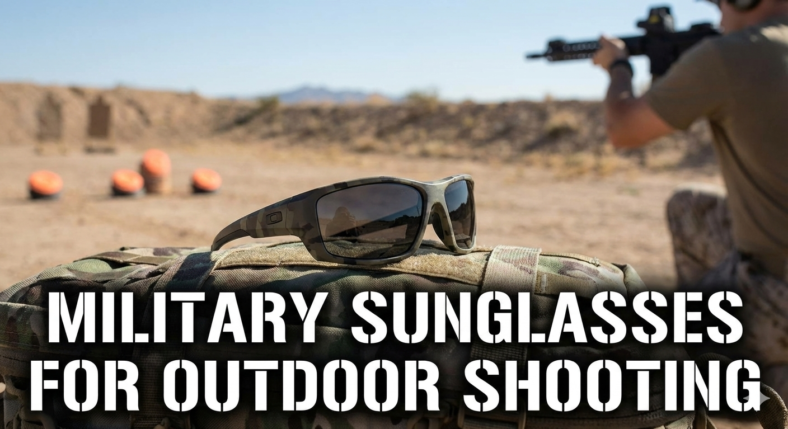
Military-style sunglasses for outdoor shooting should be judged first as eye protection, not as a fashion accessory. The right pair needs impact-rated lenses, good side coverage, clear vision in changing light, and a fit that stays stable when you mount a rifle or shotgun.
Be careful with words like “military,” “tactical,” and “ballistic.” Those words do not prove a lens meets a protective standard. Before buying, check the actual markings, product documentation, and manufacturer claims for impact rating, UV protection, lens tint, and compatibility with your hearing protection or prescription needs.
Table of Contents
Quick Answer
For outdoor shooting, choose sunglasses or shooting glasses that are impact rated, wrap well around the eyes, block UV, stay clear in your light conditions, and fit comfortably under ear protection. If a pair only looks tactical but does not show a real safety rating, treat it as normal sunglasses, not shooting eye protection.
Clear, amber, bronze, gray, and rose lenses all have a place depending on the range, target color, background, and sunlight. The best lens is the one that protects your eyes while helping you see the sights, target, and surroundings without strain.
What Matters Most
Outdoor shooting glasses should protect against impact hazards, wind, dust, glare, ejected brass, target fragments, and small debris. They also need to stay comfortable enough that you keep them on the entire time you are around firearms.
Impact protection comes first
Look for protective eyewear markings and documentation, not just marketing copy. General sunglasses may reduce glare, but they are not automatically suitable for shooting.
Vision still matters
A lens that is too dark, too distorted, or the wrong color can make sight alignment and target contrast worse. Check clarity at the distances and lighting conditions where you actually shoot.
Comfort keeps protection on your face
Heavy frames, pressure under earmuffs, fogging, or slipping can make shooters remove glasses between strings of fire. A good fit helps keep protection in place.
Impact Ratings and Safety Standards
Protective eyewear is often discussed around ANSI Z87.1 markings in the United States. For workplace eye and face protection background, OSHA has a helpful eye and face protection overview. For shooting safety habits, the NSSF firearm safety rules are a useful public reference.
Some eyewear may also claim military ballistic standards, but the claim should be backed by exact documentation. Do not assume a pair has projectile-impact protection because the frame shape looks military or the product name uses tactical language.
Check the markings
Look for markings on the lens or frame and compare them with the product documentation. If the listing is vague, ask the manufacturer or choose a clearer product.
Do not rely on style alone
A wraparound shape is useful, but shape alone does not prove impact performance. Lens material, thickness, certification, and fit all matter.
Eye injuries are worth preventing
The American Academy of Ophthalmology has general guidance on protective eyewear and eye injury prevention. For shooters, that point is simple: eye protection should be worn before handling firearms, ammunition, or targets on the range.
Lens Tint and Visibility
Lens tint changes how targets, sights, and backgrounds look. There is no single best color for every shooter and every range. The right tint depends on light, target color, terrain, and your eyes.
Clear lenses
Clear lenses are useful indoors, in low light, under covered firing lines, and during cloudy conditions. They protect without darkening the view.
Gray and smoke lenses
Gray lenses reduce brightness while keeping colors fairly natural. They can work well in bright sun, but they may be too dark for shaded ranges.
Amber, bronze, and rose lenses
Warm tints can improve contrast for some shooters, especially against certain backgrounds. Try them with your target type before assuming they are better for all conditions.
Polarized lenses
Polarization can cut glare from water, glass, and bright surfaces. It may also change how some screens, red dots, or electronic displays appear, so test compatibility with your gear.
Fit, Coverage, and Comfort
Outdoor shooting often means sun, wind, dust, sweat, and hearing protection. Glasses that fit poorly can fog, slide, pinch under earmuffs, or leave gaps near the eyes.
Side coverage
Wraparound lenses or side protection help reduce exposure from ejected brass and debris. Check coverage from shooting positions, not just while standing in front of a mirror.
Earmuff compatibility
Thick temples can break the seal of electronic or passive earmuffs. Thin, flat temples may be more comfortable for long range sessions and can help preserve hearing protection fit.
Anti-fog performance
Ventilation, lens coating, and fit affect fogging. If you shoot in humidity, cold weather, or high exertion, anti-fog performance matters as much as tint.
Prescription options
Prescription shooters may need inserts, prescription-rated safety lenses, or a frame designed for corrective lenses. Do not stack normal prescription glasses under loose safety glasses unless the setup still protects and fits correctly.
Outdoor Shooting Conditions
Outdoor conditions change during the day. Morning shade, bright midday sun, dust, rain, and low-angle glare can all affect lens choice. Interchangeable lenses can help if you shoot in mixed light.
Rifle and shotgun use
Check cheek weld, eye relief, and sight picture with the glasses on. A frame that feels fine casually may interfere when your face is behind a stock.
Pistol and range use
Pistol shooters should check front sight clarity, red-dot visibility, and side coverage from their normal stance. Brass can come from your own firearm or another shooter nearby.
Hunting and field use
For hunting, glasses should balance eye protection with enough light transmission to identify targets safely. Do not use a tint that makes low-light identification harder.
Buying Checklist
Before buying military-style sunglasses for shooting, check the practical details. A serious pair should make its protective claims easy to verify.
- Impact rating: look for clear markings and documentation, not just tactical styling.
- UV protection: confirm the product blocks UV for outdoor use.
- Lens tint: match tint to light, target color, and sight type.
- Coverage: check side protection from real shooting positions.
- Comfort: test nose pads, temple pressure, and fit with earmuffs.
- Fog control: look for ventilation or anti-fog coating if you shoot in humid or cold conditions.
- Prescription support: confirm insert or prescription options if needed.
- Replacement lenses: check whether clear and tinted lenses are available.
For related TSG reading, see our guides on shooting eye and ear protection, shooting glasses and ricochet protection, and shooting glasses for sporting clays.
FAQ
Are military sunglasses the same as shooting glasses?
No. Some military-style sunglasses may also be protective shooting glasses, but the style alone does not prove impact protection. Check the actual rating and documentation.
What lens color is best for outdoor shooting?
Gray works well in bright sun, clear works well in low light, and amber or bronze may improve contrast for some targets. Test tint with your range and firearm setup.
Do normal sunglasses protect against brass and fragments?
Normal sunglasses may reduce glare, but they are not automatically protective eyewear. Use shooting glasses or sunglasses with a verified impact rating for range use.
Should shooting sunglasses be polarized?
Polarized lenses can reduce glare, but they may affect how some electronic sights or screens appear. Test them with your red dot, rangefinder, or display before relying on them.
Can I wear prescription glasses instead?
Regular prescription glasses are not automatically impact-rated safety glasses. If you need correction, look for prescription safety eyewear, inserts, or a compatible rated system.
Bottom Line
The best military-style sunglasses for outdoor shooting are the ones that prove their protection, fit your face and hearing protection, and keep your vision clear in real range conditions. Treat “military” as a style or use-case clue, not proof of impact safety.