


Responsible gun storage means keeping firearms secure from unauthorized access, especially by children, guests, or anyone prohibited from handling them, using a method that fits your firearms and your household. These gun storage safety tips focus on the habits that matter most: unload, verify, lock, store ammunition appropriately, and control the keys and codes. This guide covers practical, source-backed storage principles. It is not legal advice or a state-by-state law guide, and no safe or lock prevents every possible theft, misuse, or accident, so treat secure storage as risk reduction layered with safe handling.
Table of Contents
- Quick Safe-Storage Checklist
- Why Secure Gun Storage Matters
- Start With the Basic Safety Rules
- Choose a Storage Method That Fits the Firearm and Household
- Control Keys, Codes, and Access
- Store Ammunition Thoughtfully
- Plan for Visitors, Children, and Shared Homes
- Check Local Requirements
- Common Gun Storage Mistakes
- Frequently Asked Questions
- Final Responsible-Storage Recommendation
Quick Safe-Storage Checklist
Use this short gun storage safety tips checklist as your storage routine. Each point is expanded below.
| Storage Step | What To Confirm | Why It Matters |
|---|---|---|
| Unload and verify | Firearm is cleared before storage | Prevents unsafe handling during the storage routine |
| Lock the firearm | Safe, lock box, cable lock, or another secure method is used | Reduces unauthorized access risk |
| Control access | Keys, codes, and combinations are protected | A lock fails if access tools are easy to find |
| Store ammunition thoughtfully | Ammunition is secured and separated where appropriate | Adds another household safety layer |
| Plan for visitors | Children, guests, and shared-home risks are considered | Storage must fit real household behavior |
| Check local requirements | Current local and state rules are reviewed | Storage requirements can vary by location |
Why Secure Gun Storage Matters
Secure storage is the single most reliable way to prevent unauthorized access to firearms in the home. Responsible-ownership programs such as Project ChildSafe center on exactly this: keeping firearms out of the hands of children and anyone who should not have access. Good storage reduces the risk of accidents, theft, and misuse. It does not replace safe handling, and no device is a guarantee, but consistent secure storage meaningfully lowers risk every day.
Start With the Basic Safety Rules
Storage habits rest on the basic rules of firearm safety. The NSSF rules of safe gun handling start from always treating a firearm as if it is loaded and keeping the muzzle in a safe direction. Before any firearm goes into storage, confirm it is unloaded, keep it pointed in a safe direction while you handle it, and store firearms securely when they are not in use. These habits make the storage step itself safer. For range-day context, also review our shooting range safety rules.
Choose a Storage Method That Fits the Firearm and Household
There is no single right storage device; the best choice fits your firearms and your home. Options include locked safes, lock boxes, cable locks, and trigger locks, and they differ in security, speed of access, portability, and how well they suit long guns versus handguns. A full-size safe offers strong security and capacity for long guns, a small lock box secures a handgun, and cable or trigger locks add a layer where a safe is not practical. Choose according to your household’s risk, your firearms, and the manufacturer’s instructions for both the firearm and the device. The ATF firearms safety and security resources offer further safety and security context.

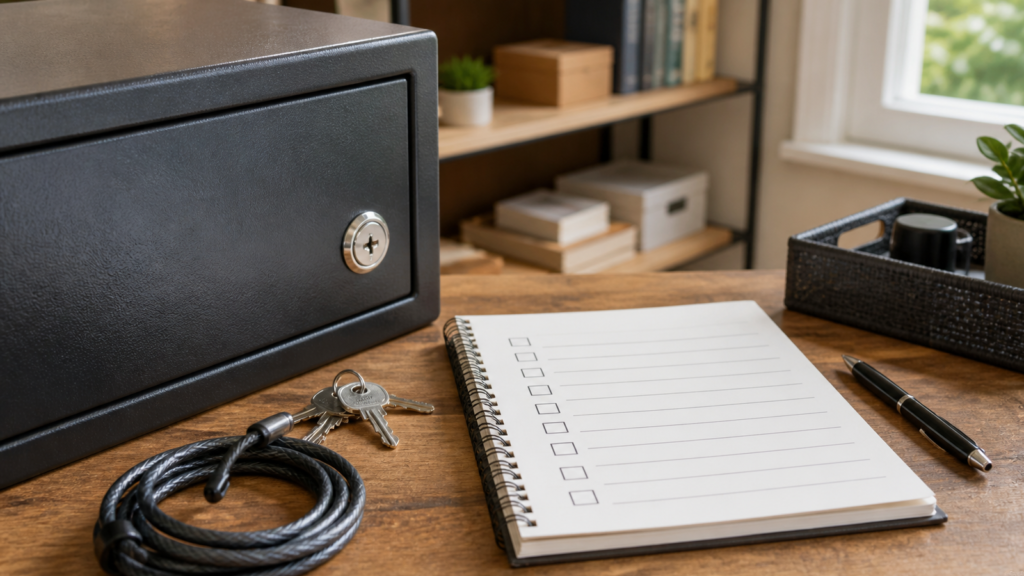
Control Keys, Codes, and Access
A lock is only as secure as its key or code. Keep keys and combinations away from the people you are securing firearms against, and do not store keys on top of or beside the safe. Change default codes, limit who knows a combination, and update access when circumstances change. Controlling access is often the difference between a storage method that works and one that only looks secure.
Store Ammunition Thoughtfully
Handle ammunition with the same care as the firearms. Where appropriate for your household, store ammunition separately from firearms and keep it secured against unauthorized access. Follow safe ammunition storage and handling practices, keep it in a cool, dry place, and keep it out of reach of children and unauthorized users. Separate, controlled ammunition storage adds another layer of safety, especially in homes with children or frequent visitors. If you are also reviewing storage-adjacent maintenance habits, our gun cleaning frequency guide is a useful next read.
Plan for Visitors, Children, and Shared Homes
Your storage plan should account for everyone who enters your home. Children are naturally curious, guests may not share your safety habits, and shared or multi-person households add more access points. Make sure firearms are secured before visitors arrive, talk with family members about access rules, and never assume a hidden firearm is a secure one. Storage should be planned around the realistic comings and goings of your household, not the ideal case.
Check Local Requirements
Storage laws and requirements vary by location and change over time. Check your current local and state storage rules, and consider household-specific risks beyond the legal minimum. This article does not provide a state-by-state legal guide, and you should confirm any legal obligation with current official sources for your area rather than relying on general guidance.
Common Gun Storage Mistakes
A handful of mistakes undermine otherwise good intentions. Leaving a firearm loaded or unverified before storage, hiding an unsecured firearm instead of locking it, and leaving keys or codes accessible are among the most common. Others include choosing a device that does not fit the firearm or the household, forgetting to secure firearms before guests arrive, and storing ammunition carelessly. Treating storage as a one-time setup rather than a daily routine is the underlying error behind most of these.
Frequently Asked Questions
What is the safest way to store a gun at home?
The safest approach is to store firearms unloaded and locked in a method that prevents access by children, guests, and prohibited users, with keys and codes controlled. The best device depends on your firearms and household. Pair secure storage with consistent safe-handling habits.
Should I store ammunition separately from firearms?
Storing ammunition separately and securely is a sensible added layer, especially in homes with children or visitors. Keep it in a cool, dry place, out of reach of unauthorized users, and follow safe storage and handling practices for both the ammunition and the firearm.
Is a gun safe legally required where I live?
It depends on your location. Storage laws vary and change over time, so confirm current requirements with official sources for your state and locality. This guide does not provide legal advice or a state-by-state breakdown.
What are the most important gun storage safety tips?
The most important gun storage safety tips are to confirm the firearm is unloaded before storage, lock it against unauthorized access, control keys and codes, store ammunition thoughtfully, and adjust the storage plan when children, visitors, or shared living arrangements are involved.
Do cable locks and trigger locks count as secure storage?
They add a layer of security and can prevent a firearm from being readily used, but they are not the same as a locked safe or lock box. Choose based on your household risk, and consider combining methods. No single device prevents every form of access or theft.
How do I store firearms safely with children in the house?
Keep firearms unloaded, locked, and inaccessible, store ammunition separately and secured, and control all keys and codes. Talk with your family about access rules, and secure firearms before visitors arrive. Responsible-ownership programs like Project ChildSafe focus on exactly this goal.
Final Responsible-Storage Recommendation
Good gun storage is a routine, not a product: unload and verify, lock firearms away from unauthorized access, control your keys and codes, store ammunition thoughtfully, and plan for everyone in your home. Match your method to your firearms and household, check your local rules, and keep the habit consistent. No device removes all risk, but these gun storage safety tips can help make responsible storage part of your normal safety routine.