



To train a hunting dog, build obedience first, then add field skills in small steps: recall, heel, sit or whoa, place, steadiness, retrieving, scent work, and calm exposure to hunting environments. A good hunting dog is not created by pressure alone; it is built through clear commands, consistency, safety, and trust.
This guide is for beginners who want a practical training roadmap. It does not replace a professional trainer, veterinarian, or experienced gun-dog mentor, especially if the dog shows fear, aggression, injury, or stress around field work.
Table of Contents
Quick Answer
The best way to train a hunting dog is to teach reliable obedience first, then introduce hunting tasks one layer at a time. Start with recall, leash manners, steadiness, and calm handling. After that, add retrieving, scent work, water or cover exposure, and field drills that match the type of hunting the dog will actually do.
Start With Foundation Obedience
A hunting dog that cannot listen at home will not become reliable in a noisy field. Foundation work should include name recognition, recall, sit, stay, heel, place, crate comfort, and calm handling. Keep sessions short and end before the dog becomes frustrated.
Positive reinforcement is useful because it teaches the dog what behavior earns reward. Humane World has a helpful overview of positive reinforcement training. Hunting dogs still need boundaries, but fair training starts with clarity, timing, and consistency.
Recall Is Non-Negotiable
Recall should be practiced in low-distraction places before moving to fields, woods, water, or birds. Use a long line or check cord until the dog is reliable. Do not gamble with an off-leash dog around roads, livestock, other hunters, or unsafe terrain.
Match Training to the Dog’s Purpose
Not every hunting dog is trained for the same job. Retrievers, pointers, flushers, hounds, and versatile breeds use different instincts. A duck retriever needs steadiness and water work. A pointing dog needs bird contact and steadiness. A tracking dog needs nose work and patience.
Groups such as the North American Versatile Hunting Dog Association are useful for understanding versatile hunting-dog testing and training culture. Use breed purpose as a guide, but train the individual dog in front of you.

Core Hunting Dog Field Skills
Steadiness
Steadiness means the dog can wait instead of breaking early. It protects the dog, prevents ruined hunts, and helps the handler stay in control. Practice steadiness with low excitement before adding bumpers, birds, water, or gunfire.
Retrieving
Retrieving starts with short, fun sessions. Teach the dog to go out, pick up, return directly, and deliver calmly. Avoid turning every session into a marathon; quality repetitions matter more than exhausting the dog.
Scent Work
Introduce scent work gradually with simple trails, bird wings where legal and appropriate, or controlled training setups. Let the dog learn how scent moves with wind and cover instead of rushing into advanced drills too soon.
Field Exposure
Field exposure should feel like education, not chaos. Walk the dog through light cover, short grass, different footing, shallow water edges, and quiet training areas before expecting polished work in a real hunt. Let the dog learn new surfaces, smells, and sounds in manageable pieces.
Keep early field sessions simple. A few calm retrieves, a short scent trail, or a clean recall from cover is better than a long session that ends with confusion. When the dog succeeds, stop and build from that success next time.
Gunfire and Field Noise
Do not surprise a young or unprepared dog with loud gunfire. Noise exposure should be slow, positive, and paired with confidence-building work. If a dog shows fear, stop and get help from an experienced trainer.
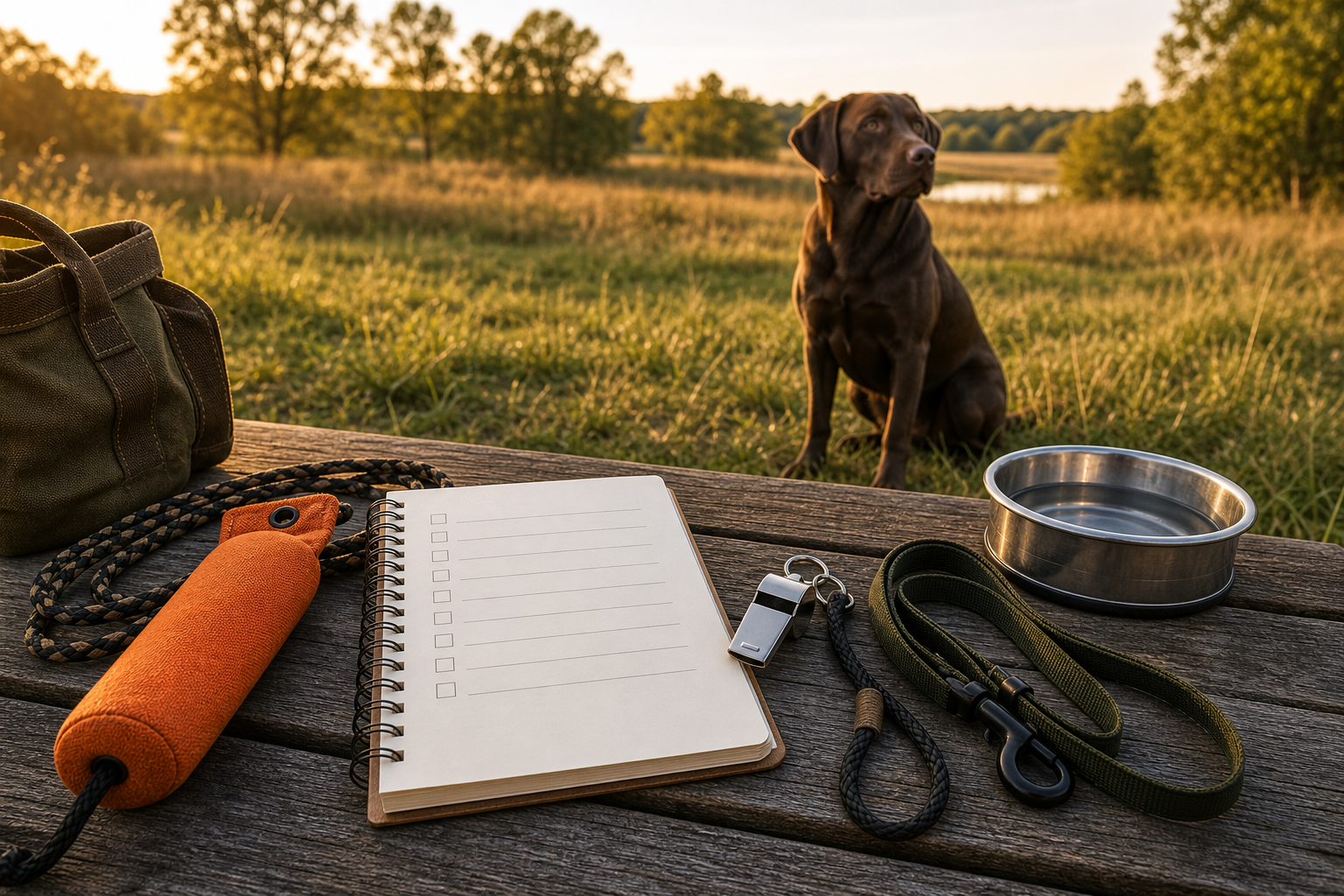
Training Checklist
- Short daily obedience sessions.
- Reliable recall on a long line before off-leash work.
- Calm leash and crate habits.
- Gradual exposure to fields, water, cover, decoys, and other dogs.
- Simple retrieving or scent drills matched to the dog’s job.
- Slow, careful noise conditioning.
- Rest days, hydration, paw checks, and injury monitoring.
Common Training Mistakes
- Skipping obedience and rushing straight to birds or bumpers.
- Training too long after the dog loses focus.
- Using harsh pressure when the dog does not understand the task.
- Introducing gunfire too quickly.
- Expecting one dog to excel at every hunting style.
- Ignoring fitness, heat, cold, paw injuries, and hydration.
Simple Training Timeline
A young dog should begin with socialization, confidence, handling, and short obedience. As the dog matures, add longer recalls, steadiness, retrieving, scent games, and controlled field exposure. Advanced work should come only after the foundation is reliable.
Do not compare your dog to a finished field-trial dog or a polished guide dog. The right pace is the one where your dog stays confident, healthy, and clear about what you are asking.
The Handler Matters Too
Many hunting dog problems begin with unclear handling. Use the same command words, reward timing, hand signals, and release cues every time. If one family member allows jumping, another corrects it, and a third repeats commands five times, the dog learns noise instead of rules.
Train yourself to be calm and predictable. A dog working around birds, water, other dogs, or field noise will make mistakes. Correct the setup first, simplify the drill, and help the dog understand the job before adding more pressure.
Frequently Asked Questions
When should hunting dog training start?
Basic manners and confidence-building can start early, but advanced field work should wait until the dog is physically and mentally ready. Keep puppy sessions short and positive.
Can any dog become a hunting dog?
Any dog can learn obedience and field manners, but breed traits and individual temperament matter. Some dogs are naturally better suited to retrieving, pointing, flushing, tracking, or scent work.
How long should training sessions be?
Short sessions are usually better than long ones. Stop while the dog is still engaged, and repeat consistently instead of trying to fix everything in one day.
Should I use an e-collar?
An e-collar should never be used to teach a command the dog does not understand. If you use one, learn from a qualified trainer and treat it as a communication tool, not a shortcut or punishment device.
Final Recommendation
The best hunting dog training plan is patient, fair, and specific. Build obedience first, match drills to the dog’s hunting role, introduce field pressure gradually, and protect the dog’s confidence and health. A steady, safe, responsive dog is more valuable than a rushed dog with unfinished basics.