


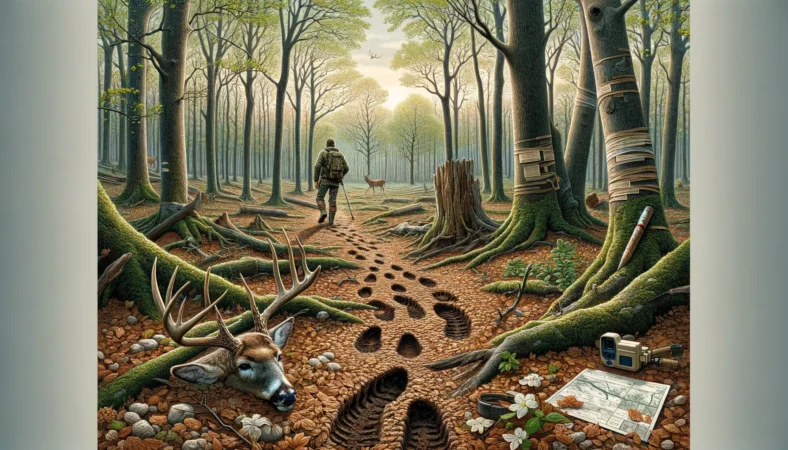
Postseason deer scouting is the work you do after the season ends to understand how deer used the property when hunting pressure, food, bedding cover, and weather all mattered. It is one of the best times to learn a property because you can walk more freely without risking tomorrow’s hunt.
The goal is not to disturb deer for no reason. The goal is to find bedding areas, travel routes, food sources, rub lines, scrapes, crossings, and access problems so next season’s plan is built on real sign instead of guesses.
Table of contents
- Quick Answer
- Why Postseason Scouting Matters
- Best Time To Scout After Season
- Find Bedding Areas
- Identify Late-Season Food Sources
- Map Travel Routes And Funnels
- Read Rubs, Scrapes, And Sign
- Trail Cameras, Maps, And Photos
- Use Shed Hunting As Scouting
- Evaluate Stand Sites And Access
- Turn Scouting Into A Plan
- Scout Without Creating Problems
- Postseason Scouting Checklist
- Common Mistakes
- FAQ
- Final Takeaway
Quick Answer
Postseason deer scouting works because old hunting pressure has ended, vegetation is thinner, and last season’s sign is still visible. Focus on bedding, food, travel routes, terrain funnels, access routes, rub lines, scrapes, and where deer avoided pressure.
The best scouting notes answer three questions: where deer felt safe, where they fed, and how they moved between those areas without exposing themselves.
Why Postseason Scouting Matters
During the season, hunters often avoid walking through sensitive areas because they do not want to ruin a stand. After the season, you can investigate those areas and learn why deer used or avoided certain spots.
Postseason scouting also reveals pressure. You may find that deer skirted a popular field edge, used a hidden creek crossing, bedded on a small point, or moved through a thick corner that looked unimportant on a map.
Best Time To Scout After Season
Late winter and early spring are often useful because trails, beds, rubs, and terrain features are easier to see before green-up. Snow, mud, or soft ground can also show fresh travel routes.
Check local property rules, shed hunting rules, public-land restrictions, and seasonal closures before entering. Some areas limit access to protect wildlife during stressful winter periods.
Find Bedding Areas
Bedding areas tell you where deer feel secure. Look for oval depressions, hair, droppings, nearby escape routes, wind advantage, visual cover, and terrain that lets deer detect danger.
Do not only mark the bed. Mark why the bed works. Is it a leeward ridge, thick brush, cattail edge, south-facing slope, island of cover, or overlooked pocket near pressure? Those reasons help you find similar spots elsewhere.
Identify Late-Season Food Sources
Postseason sign often points to the food sources deer relied on after pressure and weather changed. Cut crop fields, browse, mast, green plots, woody edges, and sheltered feeding areas can all matter depending on region.
For a deeper look at cold-weather patterns, connect your scouting notes with our late-season deer hunting tactics guide. Food and cover often explain why certain routes stayed active.
Map Travel Routes And Funnels
Travel routes connect bedding, food, water, and cover. Look for worn trails, crossings, saddles, pinch points, creek edges, fence gaps, logging roads, and terrain that naturally narrows deer movement.
Mark the route, the wind that would make it huntable, and the access path that avoids spooking deer. A good route with bad hunter access may need a different stand or a different wind.
Read Rubs, Scrapes, And Sign
Rubs and scrapes can help show buck travel and rut activity, but they need context. A single rub may not mean much. A line of rubs along cover, a scrape near a funnel, or repeated sign near bedding can be more useful.
For sign-reading basics, review our guide to tracking animals and reading signs. The best scouting combines sign, terrain, wind, and pressure rather than reading one clue alone.
Trail Cameras, Maps, And Photos
Trail cameras can support postseason scouting where they are legal, but they should not replace walking the property. Cameras show what passed one location. Boots-on-the-ground scouting explains why deer used that location and how they approached it.
Use map pins and photos to capture details you might forget: trail direction, bed orientation, wind advantage, rub size, food source condition, and possible stand trees. Label notes clearly so they still make sense when you review them months later.
Use Shed Hunting As Scouting
Shed antlers can confirm that bucks used an area after season, but they are not the whole story. Use shed hunting to study bedding, food, trails, and winter cover rather than only looking down for antlers.
Walk carefully and respect winter stress on deer. In some areas, pushing deer during harsh conditions can be harmful or restricted. Follow local rules and use common sense.
Evaluate Stand Sites And Access
Postseason is a good time to evaluate old stand sites honestly. Ask whether the stand matched the wind, whether entry was too noisy, whether deer crossed after dark, and whether the exit route educated deer.
If you find a better location, mark it and think through trimming, safety, prevailing winds, and how you will enter without crossing the best sign. Stand placement is only useful if access supports it.
Turn Scouting Into A Plan
Take photos, map pins, and notes while scouting. Record bedding, food, trails, rubs, scrapes, crossings, wind direction, access options, and pressure clues. A few notes today can save guesswork months later.
Use those notes to build a simple next-season plan: early season food, rut travel, late-season food, low-impact access, and backup stands for different winds.
Scout Without Creating Problems
Even after season, low-impact habits are useful. Avoid unnecessary pressure during harsh winter weather, respect neighboring properties, and do not cut or modify stand sites without permission. The information is valuable only if you can use it responsibly later.
When scouting public land, expect other hunters to read the same obvious sign. Look for overlooked access, subtle terrain edges, and spots that are hard enough to reach that deer may use them when pressure returns.
Postseason Scouting Checklist
Beds And Cover
Mark bedding areas, escape routes, thermal cover, and why deer felt safe there.
Travel Routes
Map trails, funnels, crossings, saddles, fence gaps, and terrain edges.
Food Sources
Identify what deer used when pressure, cold, or late-season conditions mattered.
Access Plan
Mark quiet entry and exit routes for different winds.
Common Mistakes
Only Looking For Sheds
Sheds are useful, but bedding, food, routes, and pressure clues matter more for planning.
Not Taking Notes
Memory fades before next season. Photos and map pins make scouting useful later.
Ignoring Access
A good stand location fails if every approach route spooks deer.
Overreading Old Sign
Old sign needs context. Match it with terrain, food, wind, and pressure before building a plan.
FAQ
When should postseason deer scouting start?
It can start after the season closes, but timing depends on local rules, access, weather, and wildlife stress. Late winter and early spring are often useful before vegetation hides sign.
Should I use trail cameras after season?
Trail cameras can help where legal, especially around food, bedding edges, and travel routes. Check local rules and avoid unnecessary disturbance.
Do shed antlers mean a buck lives there?
Not always. A shed shows a buck used the area during the shedding period, but you still need bedding, food, route, and season context.
Can I postseason scout public land?
Often yes, but rules vary. Check public-land access, shed hunting rules, seasonal closures, and trail camera restrictions before scouting.
Final Takeaway
Postseason deer scouting turns last season’s sign into next season’s plan. Walk carefully, study bedding, food, routes, rubs, scrapes, and access, then record what you learn so future hunts start with better information.