


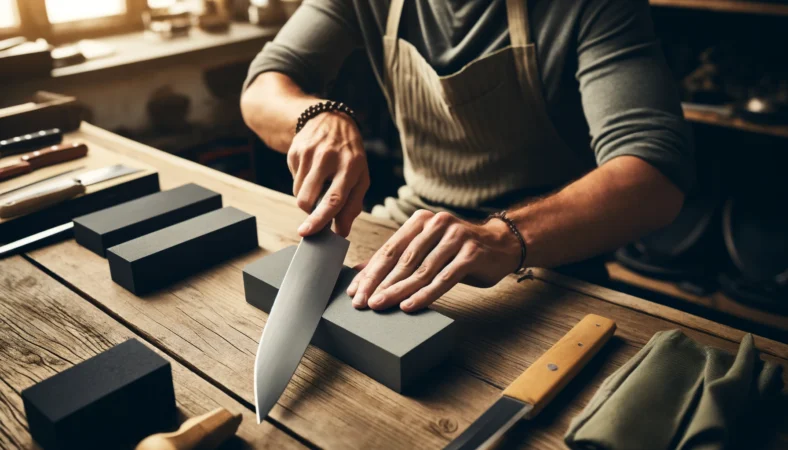
To sharpen a knife with a stone, soak or wet the stone if its instructions require it, hold the knife at a steady angle, make controlled strokes from heel to tip, raise a light burr on one side, repeat on the other side, then refine the edge with a finer grit and test it safely. The goal is not speed. The goal is a consistent angle, light pressure, and a clean edge you can maintain without grinding away more steel than needed.
Table of contents
- Quick sharpening overview
- Choose the right stone and grit
- Set up safely before sharpening
- Find and hold the sharpening angle
- Sharpen one side, then the other
- Use the burr as feedback
- Refine, deburr, and test the edge
- Common mistakes to avoid
- Clean and store the stone
- Frequently asked questions
- Final takeaway
Quick Sharpening Overview
A basic sharpening session has four parts: prepare the stone, keep the knife angle steady, sharpen until you can feel a burr, and refine the edge. Most outdoor, kitchen, and field knives can be maintained well with a medium stone and a finer finishing stone. Very dull or damaged knives may need a coarse stone first, but everyday touch-ups usually do not.
Knife sharpening is a skill, so expect the first few sessions to feel slow. Work carefully and keep your fingers clear of the edge. For general background on sharpening stones and abrasive types, the sharpening stone overview is a useful neutral reference.
Choose the Right Stone and Grit
Sharpening stones remove metal with abrasive particles. Coarser stones remove steel faster and repair dull edges. Medium stones rebuild a working edge. Fine stones polish and refine that edge. You do not need every grit to start; a medium/fine combination stone is enough for most beginners.
Coarse stone
Use a coarse stone only when the knife is very dull, chipped, rolled, or needs a new bevel. Coarse stones remove steel quickly, so use light pressure and check your progress often.
Medium stone
A medium stone is the main workhorse for restoring a practical edge. It is usually the best starting point for a knife that cuts poorly but is not damaged.
Fine stone
A fine stone refines scratch marks and makes the edge feel smoother. It is useful after the medium stone has already formed a clean edge. Do not expect a fine stone to fix a badly dull knife quickly.
Set Up Safely Before Sharpening
Place the stone on a stable surface where it cannot slide. A stone holder, damp towel, rubber mat, or non-slip base helps. Keep the work area clear, dry your hands when needed, and turn the knife away from your body during each stroke. If you are sharpening hunting or camping knives after a trip, clean dirt and grit from the blade first so you are not dragging debris across the stone.
Follow the stone maker’s instructions for water, oil, or dry use. Some water stones need soaking. Some splash-and-go stones need only surface water. Oil stones use honing oil. Diamond plates are often used with water or dry depending on the maker. Mixing the wrong lubricant with the wrong stone can clog the surface or make cleanup harder.
Find and Hold the Sharpening Angle
The sharpening angle is the angle between the blade and the stone. Many general-purpose knives fall somewhere around a moderate angle rather than extremely thin or extremely thick. The exact number matters less than consistency. If you keep changing the angle, the edge becomes rounded and dull instead of clean and sharp.
Use the existing bevel as your guide
Look closely at the current edge bevel. Try to match that angle unless you intentionally want to reprofile the knife. A marker trick can help: color the bevel with a permanent marker, make a few light passes, and see where the stone removes the ink. If ink remains at the shoulder or edge, adjust the angle slightly.
Keep pressure light
Heavy pressure is one of the easiest ways to damage the edge or lose control. Use enough pressure to make contact with the stone, then lighten up as the edge improves. Let the abrasive do the work.
Sharpen One Side, Then the Other
Start with the heel of the blade near one end of the stone. Move the knife across the stone so the contact point travels from heel to tip. The motion can be edge-leading or edge-trailing depending on your habit and stone type, but it should be controlled and repeatable. Keep the angle steady through the curve near the tip.
Do several strokes on one side, then check your progress. Repeat until you raise a small burr along the opposite side of the edge. Then sharpen the other side until the burr flips. Some sharpeners alternate sides more often, and that can work too. The important part is even work on both sides.
Use the Burr as Feedback
A burr is a tiny fold of metal that forms when you have sharpened all the way to the edge. It can feel like a slight rough wire when you gently check from the spine toward the edge. Do not run your finger along the edge. Check carefully and slowly.
The burr tells you the stone has reached the edge. If you never raise a burr, you may be holding the angle too low, using too fine a stone for the damage, or not sharpening long enough. Once you have a burr on both sides, move to lighter pressure and finer refinement.
Refine, Deburr, and Test the Edge
After the main sharpening work, use lighter strokes to reduce the burr. Move to a finer stone if you have one, then alternate sides with gentle pressure. A leather strop can help remove the last trace of burr, but stropping is not a substitute for proper sharpening on the stone.
Test the edge safely. Slice paper, shave a thin curl from a scrap of wood, or cut food prep material if it is a kitchen knife. Avoid dramatic tests that put fingers near the edge. For field knives, a clean controlled cut is more useful than a mirror polish. If you use knives around camp or hunting gear, pair sharpening with broader field-care habits like the ones in our bushcraft skills guide.
Common Mistakes to Avoid
- Using a fine stone when the knife needs a medium or coarse stone.
- Changing the angle every few strokes.
- Pressing too hard and grinding away more steel than needed.
- Skipping the burr check and guessing whether the edge is formed.
- Letting the stone slide around on the table.
- Testing sharpness with unsafe finger movements.
- Putting a wet or dirty stone away without cleaning and drying it properly.
Knife sharpening is also different from general tool maintenance. If you are preparing for a hunting or camping trip, sharpen at home first instead of learning under poor light at camp. That leaves more time for other preparation, like checking gear and reviewing your hunting trip kit.
Clean and Store the Stone
After sharpening, rinse or wipe the stone according to its instructions and remove metal swarf from the surface. Let water stones dry fully before storage so they do not develop problems in a sealed container. Keep oil stones from collecting grit and dust. Flatten water stones when they dish out, because a hollow stone makes it harder to hold a clean angle.
Clean the knife too. Dry the blade, wipe away abrasive residue, and protect carbon steel from rust if needed. A sharp knife stored carelessly can still become dull or unsafe.
Frequently Asked Questions
Do I need to soak every sharpening stone?
No. Some water stones need soaking, some need only a splash of water, oil stones use oil, and diamond plates often have their own instructions. Follow the stone maker’s directions.
What grit should a beginner use?
A medium/fine combination stone is the easiest starting point for most beginners. Use the medium side to build the edge and the fine side to refine it. Add a coarse stone later if you repair very dull or damaged blades.
How do I know when the knife is sharp enough?
The knife should cut cleanly with controlled pressure. Paper slicing, light wood shaving, or normal food prep tests are safer and more useful than touching the edge directly.
Can I ruin a knife on a sharpening stone?
You can remove too much steel, round the edge, scratch the blade, or create an uneven bevel if you use too much pressure or an inconsistent angle. Work slowly, use light pressure, and practice on a less expensive knife first.
Final Takeaway
Sharpening a knife with a stone is mostly about consistency. Choose a suitable grit, stabilize the stone, match the existing bevel, use light controlled strokes, form a burr, refine the edge, and test it safely. Once you learn the feel, a sharpening stone becomes one of the most reliable ways to maintain hunting, camping, kitchen, and utility knives without depending on powered sharpeners or guesswork.