


Store ammunition in a cool, dry location, away from heat, open flame, solvents, petroleum products, acids, ammonia, and other chemicals. Keep it in the original box or purpose-designed ammunition packaging when possible, and keep it inaccessible to children, guests, and other unauthorized people.
`r`n`r`n
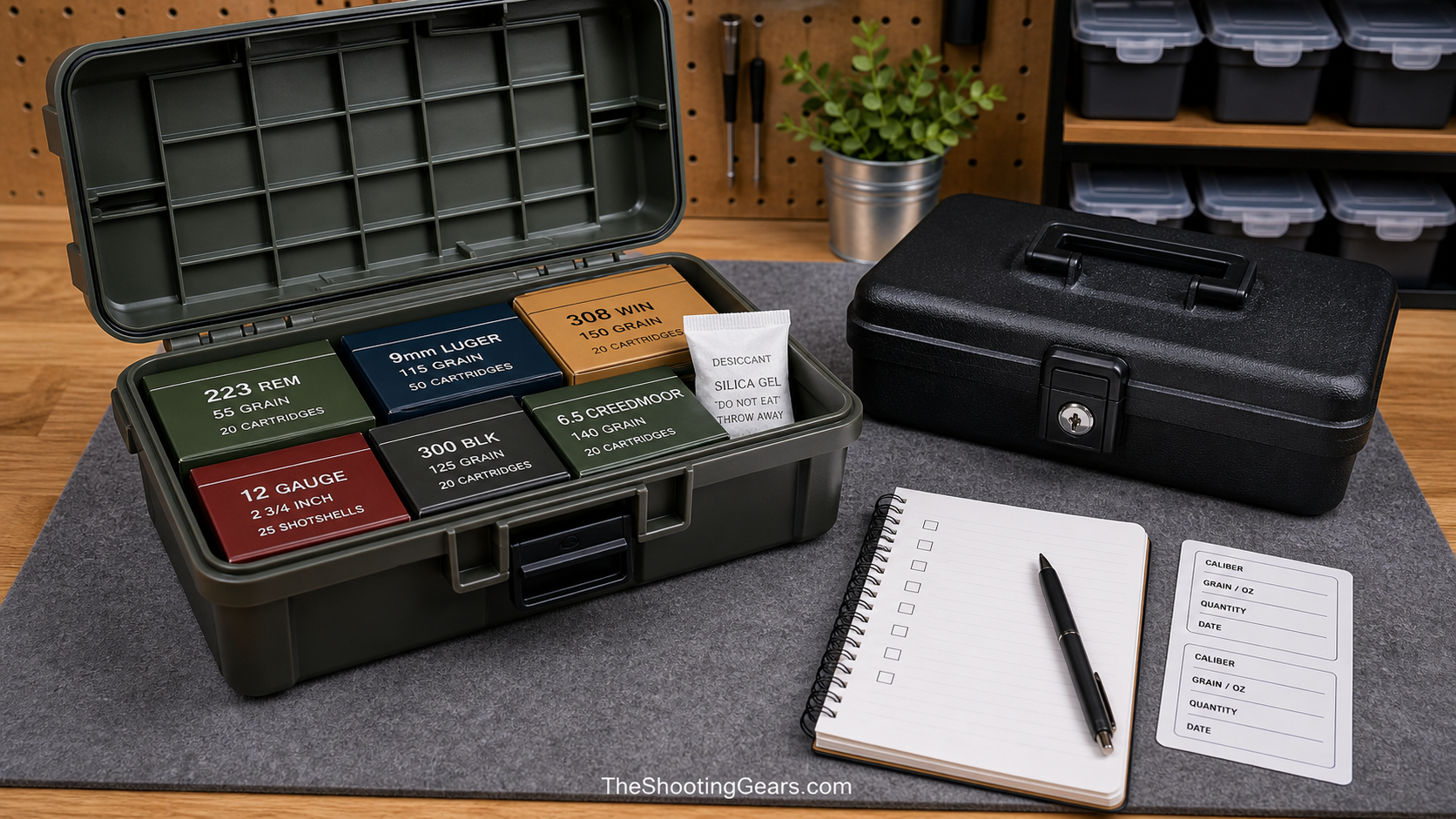
This guide explains safe ammunition storage and transport basics without pretending one article can replace current local law, product labels, or manufacturer instructions. It does not cover reloading, powder or primer storage, disposal, firefighting tactics, or state-by-state legal advice.
Table of Contents
Quick Answer: How To Store Ammunition Safely
The safest general approach is simple: keep ammunition cool, dry, properly packaged, separated from chemicals and heat sources, and controlled so unauthorized people cannot access it. That matches the practical direction in SAAMI ammunition storage and handling guidance.
- Cool and dry: avoid hot, damp, or rapidly changing storage conditions.
- Away from heat and chemicals: do not store ammunition next to solvents, petroleum products, acids, ammonia, open flame, or heat sources.
- Properly packaged: use original packaging or a purpose-designed ammunition container that keeps rounds identified and protected.
- Access-controlled: prevent access by children, guests, and anyone who should not handle it.
Why Ammunition Storage Conditions Matter
Storage conditions matter because heat, moisture, chemical exposure, and rough handling can affect ammunition over time. Good storage is mostly about controlling those risks before they become a problem.
Heat and humidity
Choose a location that stays moderate and dry rather than hot, humid, or exposed to wide temperature swings. A hot attic, damp basement, or vehicle interior is usually a poor default unless the environment is controlled.
Water and chemical exposure
Keep ammunition away from direct water contact and away from cleaning chemicals, fuels, petroleum products, acids, ammonia, and solvents. A separate shelf or cabinet away from gun-cleaning supplies is usually a cleaner setup than mixing everything together.
Physical damage and inspection
Handle ammunition carefully and keep it protected in proper packaging. Do not use ammunition that looks damaged, corroded, deformed, wet, or otherwise suspect.
Where To Store Ammunition At Home
A good home storage location is boring in the best possible way: dry, stable, labeled, and access-controlled. A cabinet, shelf, or dedicated storage container can work if it stays away from heat, moisture, chemicals, and unauthorized access.
Original boxes help you identify caliber, load, manufacturer, and lot information. If you move ammunition into a different purpose-designed container, keep it clearly labeled and avoid mixing loose, unidentified rounds.
For households with children or frequent visitors, access control matters as much as the environment. Project ChildSafe and the NSSF Project ChildSafe program are useful starting points for broader secure-storage thinking.
Where Not To Store Ammunition
- Direct sunlight or hot vehicles: temperatures can rise quickly and are hard to control.
- Damp basements without moisture control: moisture works against the dry-storage goal.
- Near solvents, oils, acids, ammonia, or fuels: keep ammunition away from chemical exposure.
- Loose in random containers: mixed loose rounds make identification and inspection harder.
- Accessible drawers or open shelves: any location reachable by children, guests, or unauthorized users fails the access-control test.
How To Transport Ammunition Safely
For normal range trips, keep ammunition packaged, protected from impact, and separated from loose tools, liquids, and cleaning chemicals. Use a sturdy range bag or container that keeps boxes from opening and keeps the ammunition identifiable.
Transport rules can change by state, locality, range, and travel method. This article does not give legal transport advice. If you are crossing state lines, flying, or transporting firearms and ammunition in a regulated situation, check current official rules before you travel.
Ammunition Storage Checklist
Use this checklist before you settle on a storage spot. It is not a legal checklist; it is a practical safety screen.
| Check | Safe direction | Why it matters |
|---|---|---|
| Temperature | Cool, stable location | Reduces avoidable heat exposure |
| Moisture | Dry storage area | Helps avoid dampness and corrosion risk |
| Packaging | Original or purpose-designed packaging | Keeps ammunition identified and protected |
| Chemicals | Away from solvents, petroleum products, acids, ammonia, and other chemicals | Avoids chemical exposure |
| Access | Inaccessible to children, guests, and unauthorized persons | Supports responsible home storage |
| Firearms | Consider separate storage based on household risk and local rules | Adds another layer of access control |
| Condition | Do not use damaged or suspect ammunition | Prevents use of questionable rounds |
What This Guide Does Not Cover
- Reloading procedures: no powder charges, primer substitutions, recipes, or troubleshooting are covered here.
- Powder and primer storage: those components need separate guidance.
- Disposal: contact a source-backed option such as local law enforcement, a shooting facility, the manufacturer, or local waste authority for damaged or unwanted ammunition.
- Firefighting tactics: follow local fire department and official emergency guidance.
- State-by-state law: requirements vary, so verify current rules where you live and travel.
Frequently Asked Questions
Can ammunition be stored in a garage?
A garage can work only if it stays cool, dry, chemical-free, and access-controlled. Many garages get hot, humid, or hold solvents and fuels, which are the conditions to avoid. If a garage cannot stay controlled, choose a better indoor location.
Should ammo stay in the original box?
Original packaging is usually the best default because it helps identify the ammunition and protects it from unnecessary handling damage. Purpose-designed ammunition containers can also work if they keep the contents clearly labeled and protected.
Can ammo be stored with a firearm?
It depends on household risk, space, and current local rules. Storing ammunition separately from firearms is a commonly cited safety practice because it adds another access-control layer, but this article does not claim one universal legal rule applies everywhere.
What should I do with damaged ammunition?
Do not use ammunition that looks damaged, corroded, wet, deformed, or otherwise suspect. For disposal, contact local law enforcement, a shooting facility, the manufacturer, or a local waste authority. Do not guess or improvise disposal methods.
Is ammunition dangerous in a house fire?
Ammunition can be affected by fire, which is one reason storage guidance emphasizes keeping it away from heat sources and open flames. This article does not provide firefighting tactics; follow your local fire department and official emergency guidance.
Is this legal advice for transporting ammunition?
No. This is a safety and organization guide, not legal advice. Transport rules vary by location and travel method, so check current official rules before transporting ammunition, especially across state lines or by air.
Final Recommendation
The practical ammunition-storage standard is consistent: cool, dry, away from heat and chemicals, properly packaged, and inaccessible to unauthorized persons. Do not use damaged or suspect ammunition, keep it away from cleaning chemicals, and verify current local rules for storage or transport questions.