



Reloading ammunition can be a careful, technical hobby, but this page is a safety-first overview, not a load-data manual. The safe starting point is always the current manual or data from your powder, bullet, press, and component manufacturers. If a recipe, tool setup, or component combination is not listed in a trusted current source, do not improvise it.
The goal of this guide is to help beginners understand the workflow, the safety decisions, and the mistakes to avoid before buying tools or sitting at a bench. Treat it as a planning checklist, then learn from published manuals, manufacturer instructions, and a qualified mentor before producing live ammunition.

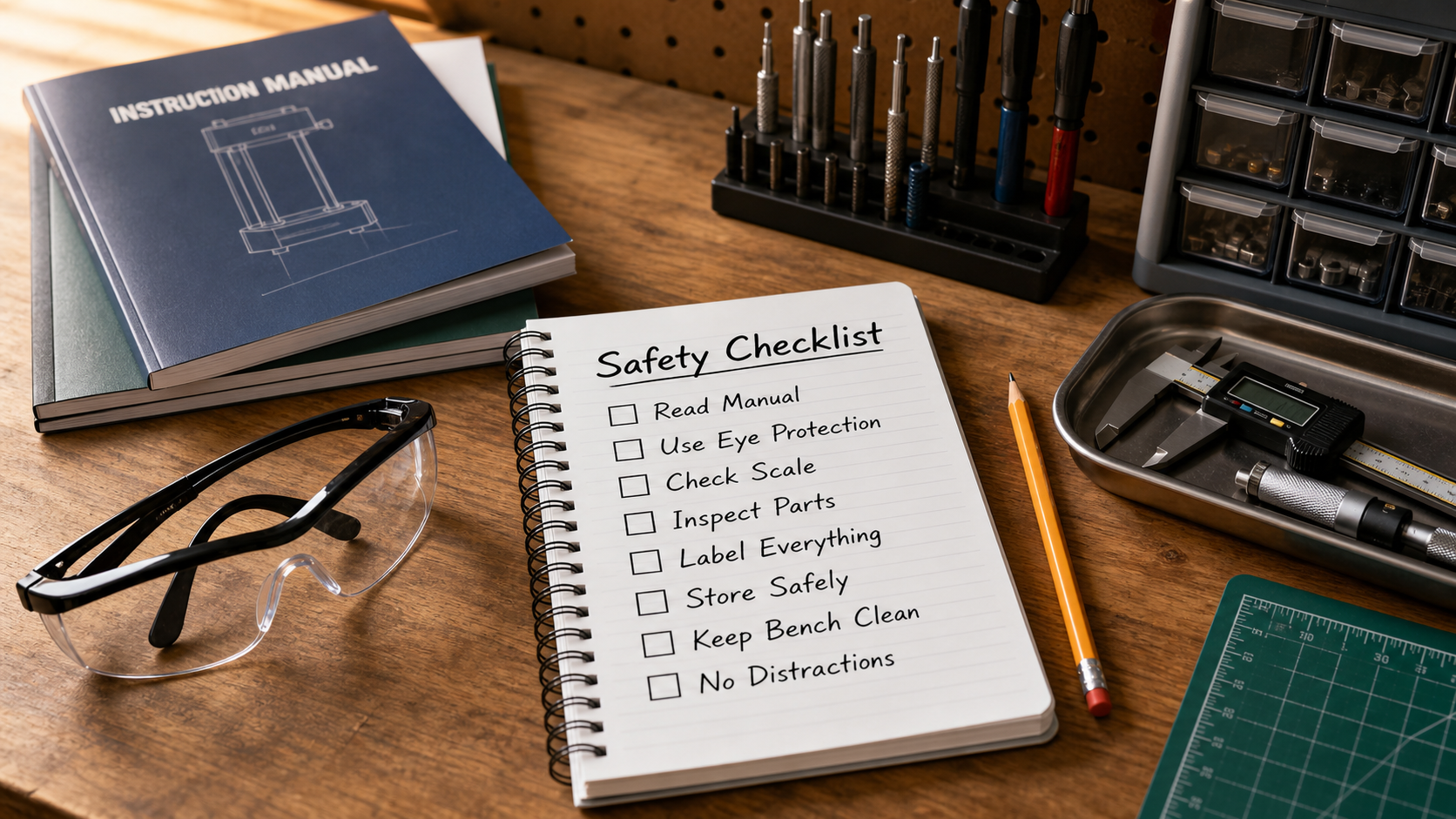
Table of Contents
What Reloading Is
Reloading, often called handloading, is the process of assembling ammunition from components such as cases, primers, powder, and bullets using dedicated tools. It is not the same as casually repairing a cartridge or copying a load from the internet. Every component choice affects pressure, reliability, and safety, which is why published data and exact component matching matter.
Many shooters are interested in reloading for better supply control, tailored practice loads, or learning more about their firearms. Those are reasonable goals, but they do not remove the risk. A beginner should think of reloading as a controlled technical process where the manual, the scale, the labels, and the inspection routine are more important than speed.
Before You Buy Equipment
Before buying a press or kit, decide what cartridge you want to load, why you want to load it, and whether you can get current component data from reliable sources. A starter kit may include a press, scale, priming tool, case prep tools, and a manual, but no kit replaces careful reading. If the equipment manual and the load-data source disagree, pause and contact the manufacturer or an experienced instructor.
Choose One Cartridge First
Beginners should learn one cartridge and one published component combination at a time. Jumping between cartridges, powders, primer types, and bullets makes it harder to notice mistakes. It also makes labeling and troubleshooting more confusing. Keep your first setup boring, documented, and repeatable.
Read the Manual Before the Bench
Read the front safety chapters of a current reloading manual before touching components. The data tables are only one part of the manual; the safety explanations, pressure warnings, measurement notes, and component-change warnings are the foundation. The SAAMI technical information pages are also useful background for understanding industry standards and terminology.
Safe Bench Setup
A safe bench is clean, stable, well lit, and free from distractions. Keep only the components for the current session on the bench. Put phones, unrelated tools, open drink containers, and extra powders away. A cluttered bench turns small mistakes into hard-to-trace problems.
Keep One Powder on the Bench
Only one powder container should be open and visible during a session. Leave it in the original labeled container until the moment you use it, then return it when you are done. Never put unknown powder back into a container, and never rely on memory to identify loose powder.
Use Eye Protection and Think About Lead
Wear eye protection while working with primers and components. If you handle fired brass, cast bullets, or residue, think about lead exposure and hygiene. Wash hands after handling components, keep food away from the bench, and avoid bringing residue into living spaces. OSHA’s lead guidance is written for workplace exposure, but it explains why dust and residue deserve respect.
Use Published Load Data Only
This is the most important rule: use current published load data from a trusted source and match the listed components as closely as the manual requires. Do not copy anonymous forum data, do not average two recipes together, and do not substitute components because they look similar. Pressure can change when a bullet, primer, case, powder, seating depth, or firearm changes.
Manufacturer data centers such as Hodgdon Reloading are useful because they come from the component source rather than a random post. Even then, follow the current warnings and instructions attached to that data. When in doubt, stop and verify before continuing.
Components to Understand
Reloading safety depends on understanding what each component does. You do not need to become an engineer before starting, but you do need enough knowledge to avoid careless substitutions.
Cases, Primers, Powder, and Bullets
Cases hold the assembled round and must be inspected. Primers start ignition and require careful handling. Powder type must match the published data exactly. Bullets vary by weight, profile, jacket, material, and seating behavior. A change in any one of these can change pressure or function, so treat every substitution as a new data question, not a casual swap.
Tools and Measurement
A press, dies, scale, calipers, case tools, and manual are common parts of a bench. The scale and measurement tools deserve special care because small measurement errors can matter. Follow the tool maker’s calibration and setup instructions every session. If a reading seems odd, stop and check the tool instead of guessing.
Case Inspection and Quality Control
Case inspection is where beginners build good habits. Look for cracks, splits, damage, loose primer pockets, unusual bulges, corrosion, or anything that does not match normal brass condition for that cartridge. A questionable case is not worth saving. If you are unsure, discard it safely or ask a qualified mentor.
Quality control should happen throughout the process, not only at the end. Work in small batches, keep your data sheet beside the bench, and compare each step against the manual. If you are interrupted, mark where you stopped. If you cannot prove what step a case has reached, do not continue as if everything is fine.
Labeling and Storage
Every box of handloads should be labeled clearly with the cartridge, component details, data source, date, and any notes needed to identify the load later. Labels prevent mystery ammunition, and mystery ammunition should not be fired. Keep records in a notebook or spreadsheet so you can trace what you made and why.
Store powder and primers in their original containers and follow the manufacturer’s storage instructions. Keep components away from heat, moisture, ignition sources, and unauthorized access. Also keep finished ammunition labeled and separated from factory ammunition so nothing gets mixed by mistake.
When to Stop and Get Help
Stop immediately if you find conflicting data, damaged components, odd measurements, a tool that will not adjust correctly, or a cartridge that does not look right. Do not solve a reloading problem by forcing the press handle, guessing at a setting, or continuing because you are almost finished.
Also stop if you are tired, distracted, rushed, or unsure. Safe firearm handling still applies around reloading work, so review the NRA gun safety rules and keep firearms and live ammunition handling separate from the bench process unless your manual or range procedure requires a specific check in a safe setting.
FAQ
Is reloading ammunition safe for beginners?
It can be learned safely, but only with current manuals, correct tools, careful records, and strict attention. Beginners should avoid shortcuts and learn from reliable published sources or an experienced mentor.
Can I use load data from online forums?
No. Treat forum data as unverified discussion, not a safe recipe. Use current data from powder, bullet, and manual publishers, then follow the warnings attached to that data.
What is the biggest beginner mistake?
The biggest mistake is improvising: substituting components, trusting memory, or continuing after a confusing measurement. Reloading rewards boring consistency, not guesswork.
Do I need a reloading manual if I use online data?
Yes. Online manufacturer data can be useful, but a manual teaches the process, safety warnings, terminology, and inspection habits that a simple data table may not explain.
Final Takeaway
Reloading ammunition is not about rushing to make rounds. It is about following published data, controlling your bench, checking each component, labeling everything, and stopping when something is uncertain. If you build those habits first, every later equipment decision becomes safer and easier to evaluate.

