


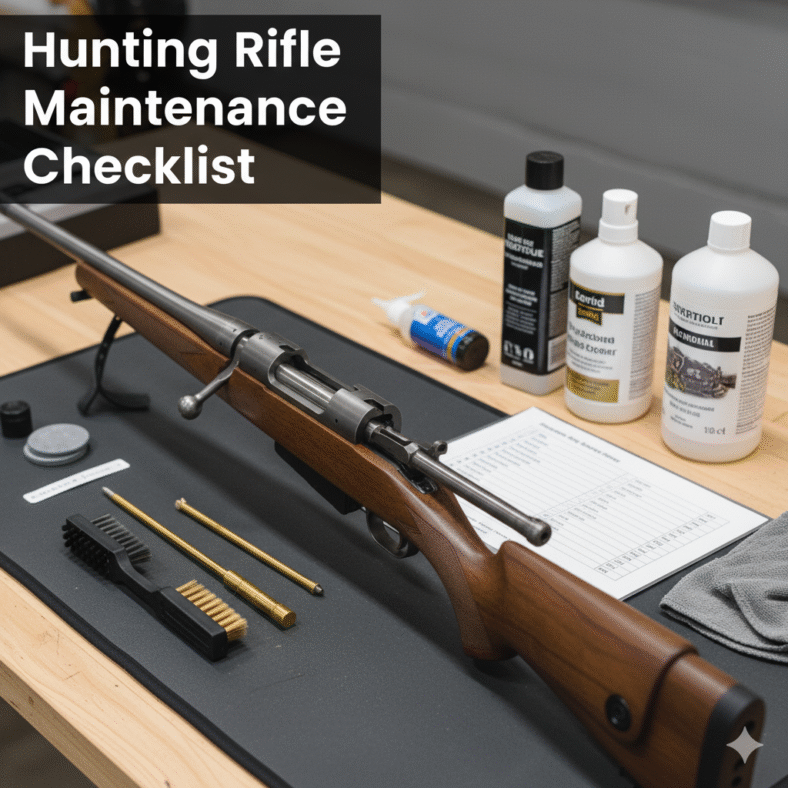
A good hunting rifle maintenance checklist starts with safety, then moves through unloading, inspection, cleaning, lubrication, optic/mount checks, ammunition storage, field protection, and post-hunt care. The goal is not to over-clean or modify the rifle; it is to keep the rifle reliable, protected, and ready for the next legal hunt or range session.
This guide is written for hunters who want a simple routine. Always follow your rifle manual, ammunition guidance, and local range rules. If you find damage, abnormal wear, stuck parts, a blocked bore, or repeated malfunctions, stop using the rifle and get help from a qualified gunsmith or manufacturer support.
Table of Contents
Safety-First Check
Unload and Verify
Before any maintenance, point the rifle in a safe direction, remove the magazine if applicable, open the action, and verify the chamber is clear according to the manual. Do not rely on memory or assume the rifle is unloaded because it was stored that way.
Separate Ammunition
Move live ammunition away from the cleaning bench. This keeps maintenance work focused and reduces the chance of a handling mistake. The NSSF firearm safety rules are a useful baseline before cleaning or inspecting any firearm.
Before the Hunt
Check the Bore and Action
Confirm the bore is clear, the action cycles normally, and the safety/control functions feel normal. If mud, snow, water, oil, or debris enters the bore, stop and clear it safely before firing.
Confirm Zero
A rifle can shift zero after travel, bumps, new ammunition, or mount changes. Confirm zero at the range before the season when possible. Do not discover an issue on a live animal.
Inspect Ammunition
Use ammunition that matches the rifle markings and manual. Avoid cartridges with corrosion, dents, loose bullets, oil contamination, or moisture damage. SAAMI’s firearm safety information is a good reference for safe ammunition matching and handling principles.
After the Hunt
Dry Moisture First
Rain, snow, sweat, and condensation can create rust risk. After a wet hunt, unload safely, wipe exterior metal, dry the stock and sling area, and let the rifle return to room temperature before long-term storage.
Look for Damage
Check for loose screws, cracked stock areas, damaged sling studs, shifted optic mounts, rust spots, and unusual marks on the bolt or cycling parts. If anything looks abnormal, stop and get qualified help.
Cleaning and Lubrication
Clean for the Conditions
A rifle used in dry, clean conditions may not need the same cleaning as one exposed to rain, dust, mud, salt air, or heavy shooting. Follow the manual for bore cleaning, solvent use, and parts that should or should not be lubricated.
Use Light Lubrication
Too much oil can attract dust, migrate into places it does not belong, or affect ammunition if stored carelessly. Use the correct lubricant sparingly and wipe away excess according to the manufacturer’s guidance.
Avoid Unneeded Disassembly
Field-stripping or basic owner cleaning is different from gunsmithing. Do not remove trigger components, bedding parts, or safety-related parts unless the manual allows it and you are qualified.
Optic and Mount Checks
Check that the scope, rings, bases, and lens covers are secure. Do not guess torque values. If screws are loose or mounts have shifted, follow the optic/ring instructions or ask a gunsmith. After any mount adjustment, confirm zero again.
Clean lenses with lens-safe tools only. Shirt sleeves, rough cloth, dirt, and paper products can scratch coatings. Keep caps closed during rough travel and wet weather.
Seasonal Maintenance Plan
Pre-Season
Before the season, inspect the rifle slowly instead of waiting until the night before opening day. Check screws, sling, optic, bore condition, ammunition, and zero. If you changed ammo, rings, bases, or scope settings, schedule range time before the hunt.
In-Season
During the season, keep the routine simple: protect the muzzle from debris, wipe off moisture, check the optic, and inspect the rifle after rough travel. A quick inspection after every outing prevents small problems from becoming field problems.
Post-Season
After the season, do a more complete cleaning and inspection before storage. Look for rust beginning under sling swivels, around scope mounts, near the muzzle, and in areas touched by wet hands or clothing. Store the rifle only after it is dry and protected.
Storage and Transport
Store the rifle unloaded, protected from unauthorized access, and in conditions that reduce rust risk. Project ChildSafe provides practical secure storage resources for firearm owners. Use a case for transport, but avoid leaving a damp rifle sealed in a soft case for long periods.
Common Maintenance Mistakes
- Cleaning while rushed: hurried work leads to missed chamber checks, spilled solvent, and skipped inspection steps.
- Using too much oil: excess lubricant can collect grit and move into places where it is not wanted.
- Skipping the optic: loose rings or a shifted scope can ruin an otherwise good rifle setup.
- Forgetting the sling and stock: water can hide around sling studs, stock inlets, and soft-case contact points.
- Changing ammunition without checking zero: a new load can shift point of impact.
- Storing after wet weather: a rifle that looks dry outside can still have moisture in hidden areas.
The best habit is to keep maintenance boring and repeatable. Use the same safe order every time: unload, verify, separate ammunition, inspect, clean only as needed, lubricate lightly, and store securely. A short written checklist can help you avoid skipping steps when travel or weather makes the day hectic.
Quick Checklist
- Unload and verify chamber clear.
- Move ammunition away from the cleaning bench.
- Inspect bore, crown, action, and safety/control feel.
- Check optic, rings, bases, sling, and stock condition.
- Wipe moisture and dirt after every field outing.
- Clean bore and action based on use and conditions.
- Lubricate lightly according to the manual.
- Inspect ammunition before loading for range or hunt use.
- Confirm zero after travel, bumps, mount work, or ammo changes.
- Store unloaded and secured from unauthorized access.
FAQ
Should I clean my hunting rifle after every hunt?
At minimum, inspect and wipe it down after every hunt. A full bore cleaning depends on weather, dirt, moisture, number of shots, and the rifle manual.
Can over-cleaning hurt accuracy?
Aggressive or improper cleaning can damage crowns, bores, or finishes. Use correct tools and follow the manual instead of scrubbing blindly.
When should I confirm zero?
Confirm zero before hunting season, after travel, after hard bumps, after scope/mount work, and when changing ammunition.
Should I oil the inside of the barrel for storage?
Follow the rifle manual and product instructions. If a bore is stored with oil, clear and inspect it according to the manual before firing.
What if my rifle gets soaked?
Unload safely, dry exterior surfaces, inspect for water in the bore or action, and clean/lubricate according to the manual. If you suspect hidden water, rust, or damage, get qualified help.
Final Takeaway
Hunting rifle maintenance is mostly about safe habits and regular inspection. Keep the rifle unloaded during maintenance, protect it from moisture and dirt, clean according to use, confirm zero when needed, and store it securely. A simple routine done consistently is better than rushed cleaning right before the hunt.

