



The most common rifle scope mistakes are mounting the scope at the wrong height, setting eye relief incorrectly, over-tightening the rings, skipping leveling checks, and zeroing without a stable process. Most of these problems come from rushing the setup or using generic advice instead of the instructions for the exact scope, rings, mount, and rifle.
This guide explains what to watch for and how to avoid the big mistakes without giving universal torque values or model-specific gunsmithing instructions. Always confirm the firearm is unloaded and follow safe handling rules before doing any setup work.
Table of Contents
The Most Common Rifle Scope Mistakes
Most scope problems are setup problems, not necessarily optics problems. A scope that is mounted, leveled, and zeroed carefully is much more likely to perform as intended. A rushed install can create shifting impacts, eye strain, inconsistent cheek weld, or damaged hardware.
Mounting The Scope Too High Or Too Low
Scope height affects how naturally your eye lines up with the optic. If the rings are too high or too low for your rifle, face position, and scope objective, you may strain your neck or lift your head to see a full sight picture. Choose ring height based on your setup and confirm you can get a comfortable, repeatable cheek weld.
Ignoring Eye Relief
Eye relief is the distance between your eye and the scope where you see a full, clear image. Too little eye relief on a recoiling rifle can be uncomfortable or unsafe. Set eye relief in the position you actually shoot from, not just while the rifle sits on the bench, and follow the scope manufacturer’s stated range for that model.
Over-Tightening The Rings
Over-tightening ring and base screws can damage the scope tube or strip fasteners. Rings work through correct, even clamping, not maximum force. Use a proper torque tool and the value published by the ring or mount manufacturer. Do not apply a generic number from a different product.
Skipping Leveling And Tracking Checks
A scope that is not level with the rifle can make reticle cant harder to spot and can make adjustments less predictable. Follow the scope or mount maker’s setup guidance for leveling, and confirm the optic behaves consistently before relying on it.
Zeroing Without A Stable Process
Zeroing from an unstable position creates an unreliable zero. Use a safe range, a stable supported position, a consistent process, and enough shots to confirm a pattern before making final adjustments. Follow the scope manual for how its turrets move per click.

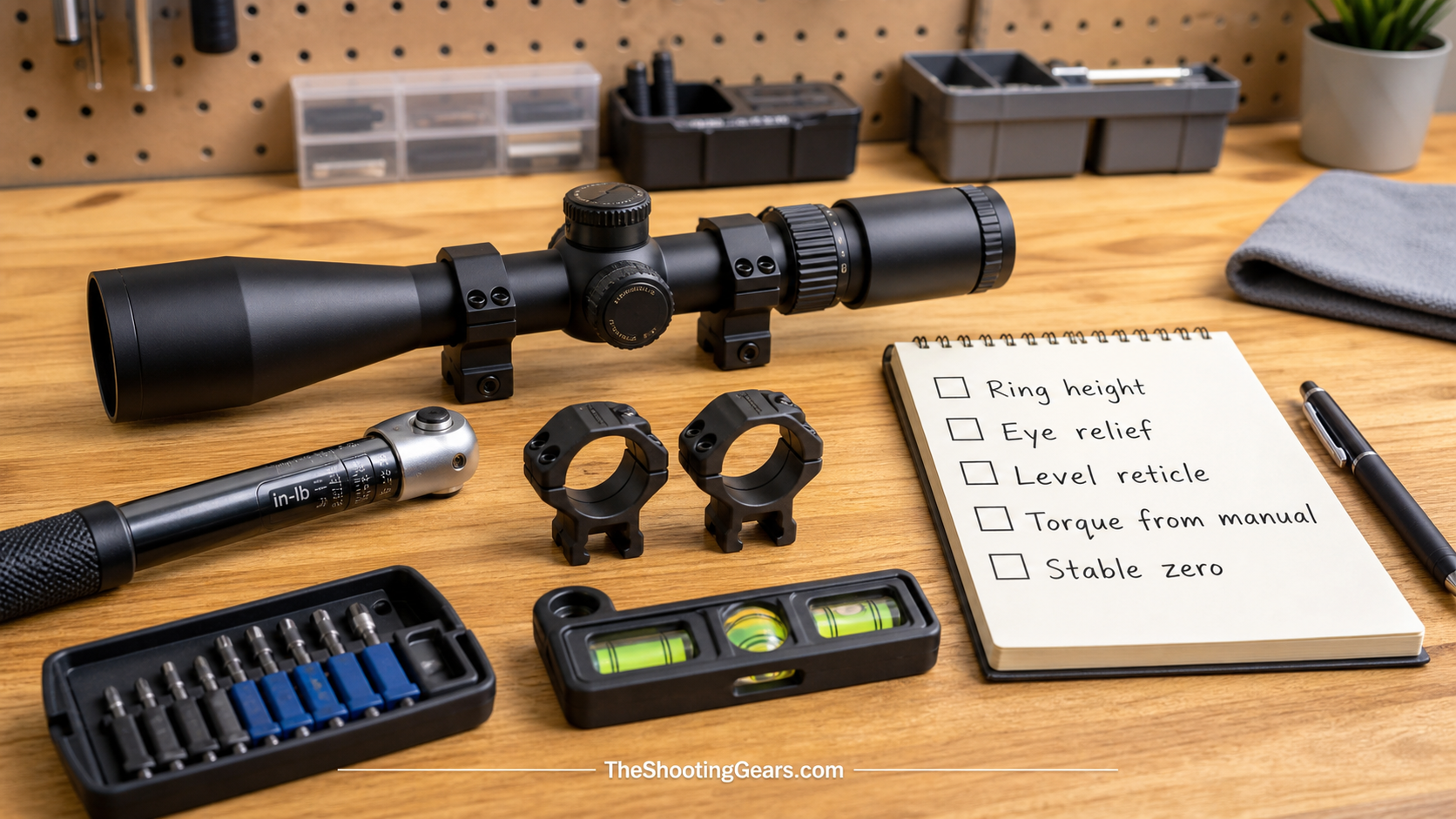
How To Avoid Scope Setup Problems
You avoid most scope mistakes by slowing the setup down and treating it like a checklist. Before working around any firearm, follow basic safety rules such as those published by the National Shooting Sports Foundation.
- Confirm the firearm is unloaded before setup work.
- Read the manuals for the scope, rings or mount, and rifle.
- Choose ring height that gives a natural cheek weld and full sight picture.
- Set eye relief in your real shooting position.
- Level the reticle using a method recommended by the optic or mount maker.
- Tighten fasteners evenly to the manufacturer’s specified torque with a proper tool.
- Zero from a stable, supported position at a safe range.
- Recheck zero and fasteners after the first range session.
For a manufacturer example of the workflow, Vortex publishes a riflescope mounting guide. Use it as a setup reference, then defer to the manual for your exact scope, rings, and rifle.
When To Ask A Gunsmith Or Scope Technician
Some scope work is better handled by a qualified gunsmith or scope technician. Ask for help when ring height or fitment is unclear, fasteners do not seat correctly, the rifle lacks a suitable base, or the scope will not hold zero after a careful setup. This article covers general setup concepts, not machining, model-specific gunsmithing, or rifle modifications.
Frequently Asked Questions
What is the most common rifle scope mistake?
Incorrect eye relief and rushed mounting are among the most common mistakes. Setting eye relief in your actual shooting position and choosing ring height that gives a comfortable sight picture prevent many problems.
How tight should rifle scope rings be?
Tighten scope rings to the torque value specified by the ring or mount manufacturer, using a proper torque tool. The correct number depends on the exact hardware, so this article does not provide a universal value.
How do I set eye relief on a rifle scope?
Set eye relief by positioning the scope so you see a full, clear sight picture at a comfortable distance in your normal shooting position. Stay within the eye relief range listed by the scope manufacturer.
Why won’t my rifle scope hold zero?
A scope that will not hold zero often traces back to loose or unevenly torqued fasteners, a poor mount fit, an inconsistent zeroing process, or a mechanical issue. Recheck the setup against the manuals, then ask a gunsmith or scope technician if it still drifts.
Do I need a gunsmith to mount a rifle scope?
Many shooters can mount a scope by following the scope, ring, and rifle manuals with the right tools. Use a gunsmith or technician when fitment is unclear, the rifle needs base work, or the scope will not hold zero after careful setup.

