


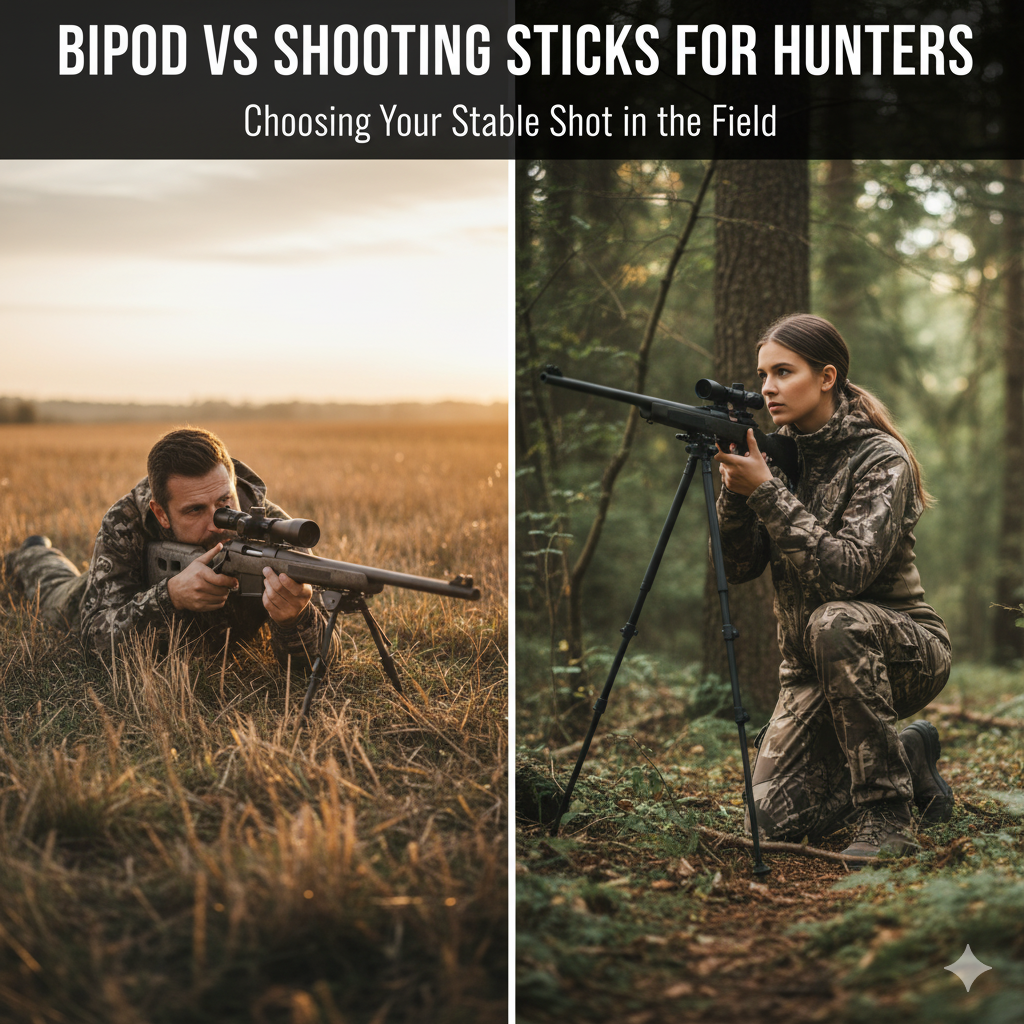
There is no single winner between a bipod and shooting sticks for hunting. The better support depends on your terrain, how far you carry your gear, how quickly you need to set up, and whether you normally shoot from prone, sitting, standing, a blind, or a stand. A bipod gives a low, rifle-mounted platform. Shooting sticks are a separate support that can work at sitting or standing height.
For many hunters, a bipod is the steadier choice when the ground is flat enough for prone or low bench-style shooting. Shooting sticks are usually more flexible in brush, tall grass, slopes, blinds, and elevated positions. Neither option makes a shot safe, legal, ethical, or guaranteed. Safe muzzle direction, target identification, a clear backstop, and current local rules still come first.
Table of Contents
Quick Answer: Bipod vs Shooting Sticks
Choose a bipod if you often shoot from prone, use flat ground or a bench, and want the support attached to the rifle. Choose shooting sticks if you hunt from seated or standing positions, move through brush, use blinds or stands, or need height adjustment. If your hunts change a lot, the best choice may be the one you will actually carry and practice with.

What Is a Rifle Bipod?
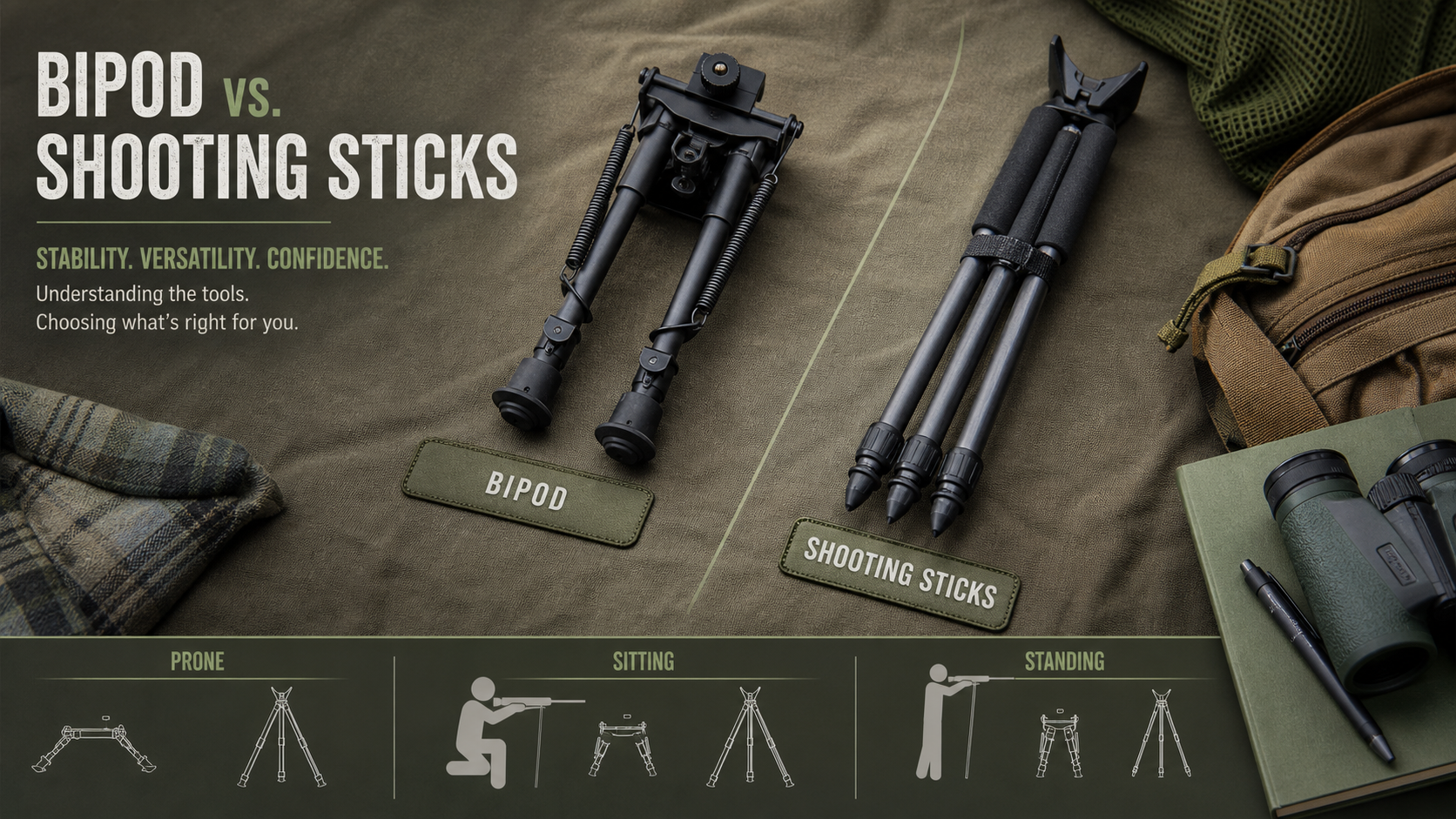
A rifle bipod is a two-legged support that mounts to the rifle, usually near the front of the stock or rail. It folds against the rifle when not in use and deploys when you need a low rest. Many models have adjustable legs, and some allow cant or swivel so the rifle can be leveled on uneven ground.
Where a Bipod Works Best
A bipod works best when you can get low and build a stable position on firm ground, a bench, a mat, or a flat field edge. Because it is attached to the rifle, it is always available. The tradeoff is that it adds weight to the front of the rifle and may be awkward in tall grass, brush, tight blinds, or elevated windows.
What Are Hunting Shooting Sticks?
Shooting sticks are a separate support that you carry and set up in the field. Common styles include monopod, bipod stick, and tripod stick designs. Instead of attaching to the rifle, they give you a rest point where the fore-end can sit while your hands still control the firearm.
Where Shooting Sticks Work Best
Shooting sticks are useful when you need height. They can work from sitting, kneeling, or standing positions, which makes them practical in ground blinds, box blinds, elevated stands, brushy edges, and hilly terrain where prone is not realistic. Tripod sticks are usually the steadiest. Monopods are lighter and faster, but they give less side-to-side stability.
Bipod vs Shooting Sticks Comparison Table
| Factor | Rifle bipod | Shooting sticks |
|---|---|---|
| Typical position | Prone or low bench | Sitting, kneeling, or standing |
| Stability | Very steady when low and planted | Varies by style; tripod is usually steadiest |
| Mobility | Always attached to the rifle | Separate item to carry and deploy |
| Setup speed | Fast if you can get low | Fast for monopod, slower for tripod |
| Terrain fit | Best on flat, firm ground | Better in brush, grass, slopes, blinds, and stands |
| Weight feel | Adds weight to the rifle | Adds carried weight but keeps rifle lighter |
| Main limitation | Hard to use where prone is not possible | Less steady than a solid prone position |
How They Affect Firearm Control
Both supports are meant to reduce wobble, not replace safe firearm handling. With a bipod, the rifle is attached to the legs, so the whole setup points where the muzzle points. With shooting sticks, the rifle rests on the support and can shift if you relax your hands. In both cases, stay deliberate when repositioning.
The basic safety rules still apply: keep the muzzle in a safe direction, keep your finger off the trigger until ready, know your target, and know what is beyond it. The NSSF firearm safety rules are a useful baseline, and hunter education resources such as Hunter-Ed firearm safety guidance reinforce the same point.
Decision Matrix by Hunting Style
Use this matrix as a starting point, not a rule. Your terrain, body position, comfort, and local regulations matter more than a generic label.
| Hunting style | Often fits | Why | Watch out for |
|---|---|---|---|
| Ground blind | Tripod or bipod sticks | Seated positions need adjustable height | Limited room inside small blinds |
| Box blind | Sticks or a stable rail/bag rest | Window height usually sits above bipod height | Hard surfaces can be noisy |
| Deer stand | Bipod or tripod sticks | Elevated seated setups favor height control | Manage support carefully at height |
| Predator calling | Tripod sticks | Steady seated hold while scanning | Quiet setup matters |
| Mountain or backcountry | Lightweight bipod or monopod | Carry weight matters on long climbs | The lightest option may be less steady |
| Range practice | Rifle bipod | Flat benches and prone lanes suit low supports | Confirm range rules first |
Terrain and Carry Weight Notes
Terrain often decides the choice before preference does. If you hunt flat fields, open cuts, or places where prone is possible, a bipod can be simple and stable. If the shot lane is blocked by grass, brush, snow, a blind wall, or uneven ground, shooting sticks may give you a usable position that a bipod cannot.
Weight on the Rifle vs Weight in the Pack
A bipod moves weight onto the rifle, usually toward the front. Some hunters like that because there is nothing separate to forget. Others dislike the nose-heavy feel during long carries. Shooting sticks keep the rifle lighter but add another item to pack, adjust, and manage quietly.
Limitations to Keep in Mind
Neither support fixes an unstable surface, poor target visibility, unsafe background, or lack of practice. A bipod is limited when you cannot get low. Shooting sticks are less steady than a solid prone rest and can shift if the legs are planted poorly. Test the position before relying on it, and pass on any shot where the setup does not feel controlled.
If you already own a bipod, our guide to the advantages of using a bipod explains where that setup shines. If you are working on rifle setup more broadly, the rifle scope sight-in guide is a useful next read. For bench support, compare the difference with our shooting bags guide.
Related Guides
Frequently Asked Questions
Is a bipod or shooting sticks better for hunting?
Neither is better for every hunt. A bipod is usually better for low, steady prone positions. Shooting sticks are usually better when you need a seated or standing rest in brush, blinds, stands, or uneven terrain.
Are shooting sticks steady enough for hunting?
Shooting sticks can be steady enough when properly planted and matched to the position. Tripod sticks are usually steadier than bipod or monopod sticks, but they also take more setup time.
Do bipods work in a ground blind or deer stand?
Sometimes, but many rifle bipods are too low for seated blind windows or stand positions. Adjustable-height shooting sticks, a stable rail, or a bag rest may fit those setups better.
Can I use both a bipod and shooting sticks?
Yes. Some hunters use a bipod for prone or range work and carry shooting sticks for seated or standing field positions. The downside is extra weight and more gear to manage.

