



Coyote trapping is heavily regulated and ethically sensitive. Before anyone considers it, they need to verify state rules, land permission, trap-check requirements, non-target animal procedures, and humane dispatch laws. This article is a legal-readiness and ethics overview, not a step-by-step trapping manual.
If your goal is wildlife conflict prevention around pets, livestock, or neighborhoods, start with prevention, attractant removal, fencing, supervision, and local wildlife guidance before assuming trapping is the right answer.
Table of Contents
Quick Answer
The most important part of coyote trapping is not the trap. It is confirming whether trapping is legal, necessary, humane, and appropriate for the exact location. State wildlife agencies, local ordinances, land managers, and trained nuisance-wildlife professionals should guide the decision.

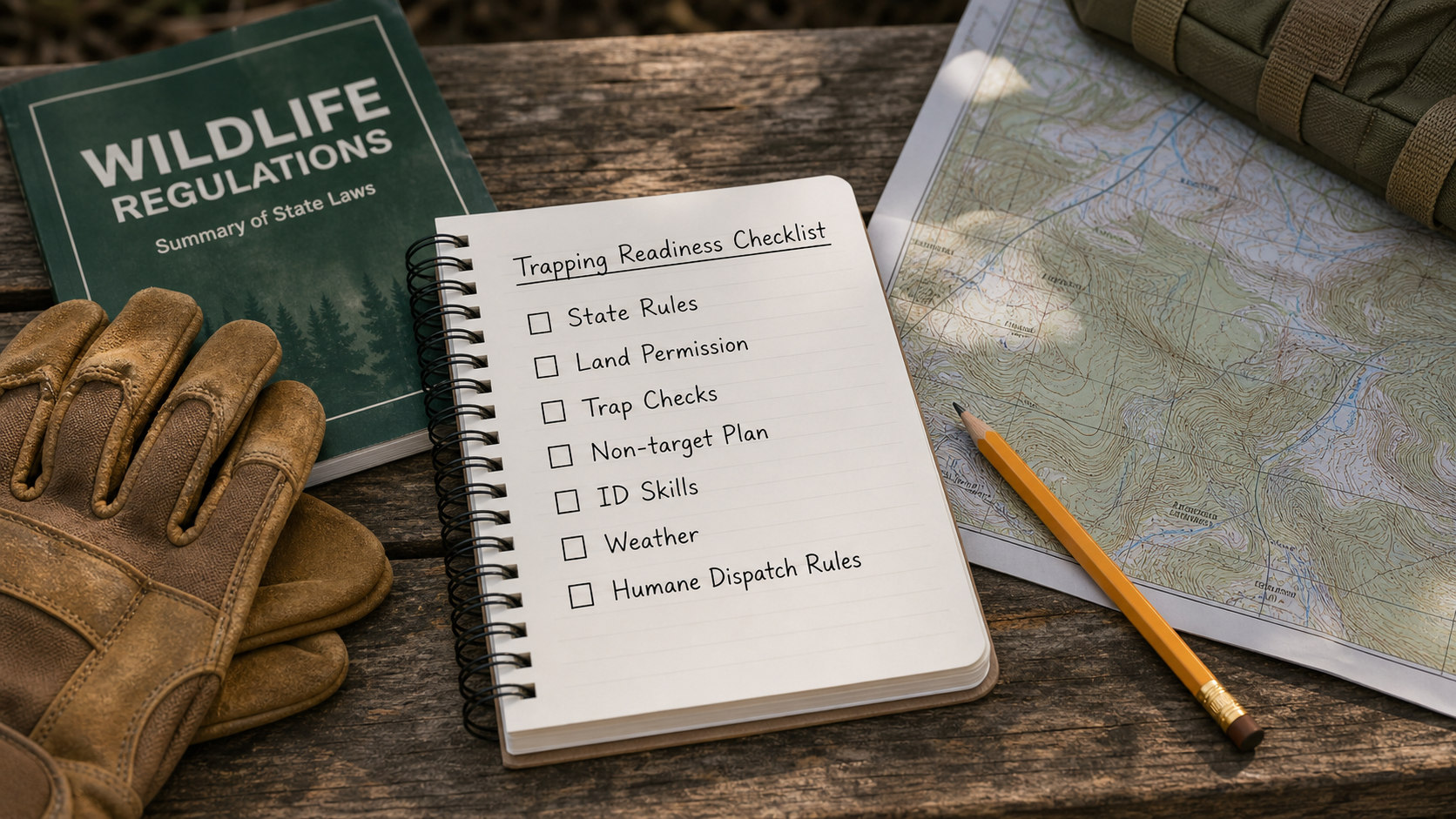
Trapping Readiness Checklist
Use this checklist before taking any action. If any item is uncertain, stop and verify it with an official source or qualified professional.
- State rules: Confirm season, license, trap type, tagging, education, and reporting requirements.
- Local rules: Check city, county, public-land, or homeowners association restrictions.
- Permission: Confirm written permission on private land and special rules on public land.
- Trap checks: Know the required check interval and weather considerations.
- Non-target plan: Know what to do if a pet, livestock animal, or protected wildlife is caught.
- Identification: Be able to distinguish coyote sign from domestic dogs and other wildlife.
- Humane dispatch: Confirm what the law allows and what training is required.
Legal Checks Come First
Trapping laws vary widely by state and sometimes by county, municipality, public land area, and species. Some places require licenses, trapper education, trap tags, daily checks, specific trap types, written permission, or harvest reporting. Some areas restrict methods near roads, homes, trails, or public access points.
For federal lands or refuges, start with the managing agency and official hunting/trapping pages such as the U.S. Fish and Wildlife Service hunting information. For state land or private land, use your state wildlife agency and local rules. Do not rely on old forum posts or videos.
Why Old Advice Is Risky
Trapping rules can change with seasons, disease concerns, non-target species protection, public complaints, and local ordinances. Advice that was legal in one state or one year may be illegal somewhere else. Save the current regulation page or PDF for your records, but check for emergency updates before acting.
Ethical Questions to Ask
Ethical trapping starts with need. Ask whether the problem can be solved by removing attractants, securing pets, improving fencing, changing livestock practices, or contacting local wildlife officials. In many residential situations, prevention and hazing guidance may be more appropriate than trapping.
The Humane Society’s coyote encounter guidance is useful for non-lethal conflict reduction around people and pets. Even if a landowner later chooses legal control methods, prevention should still be part of the plan.
Avoid Mastery Thinking
Coyote behavior is adaptive. A person should not approach trapping as a trick to master quickly. Misidentification, poor placement, bad timing, weather, and nearby domestic animals can create serious problems. Training and local expertise matter.
Non-Target Animal Risk
Non-target animals are one of the biggest reasons coyote trapping requires caution. Pets, livestock, protected wildlife, and other furbearers may use the same travel corridors or food sources. Before any trapping decision, know the law and the emergency release or reporting procedure for non-target captures.
Weather also matters. Heat, freezing rain, snow, and flooding can affect animal welfare and trap-check timing. If you cannot meet the required check schedule in the actual conditions, do not set traps.
Property, Neighbors, and Public Land
Trapping near homes, roads, trails, livestock, pets, or public access points adds risk. Written landowner permission is not the only concern; neighboring animals and public safety matter too. If an area has frequent dog walkers, kids, trails, or shared access, professional guidance is especially important.
On public land, rules can be stricter than statewide rules. Check land-manager regulations, signage, closures, and local maps before assuming a statewide season gives permission.
Document Before Action
Before any control decision, document what is actually happening. Note dates, times, photos of damage, tracks, scat, camera evidence, livestock losses, pet encounters, and attractants such as unsecured trash or feed. This helps separate real coyote problems from guesswork, domestic dog activity, scavenging, or old sign.
Documentation also makes conversations with wildlife officers, landowners, neighbors, and professionals more useful. Instead of saying “there are coyotes around,” you can explain the pattern, the property, the risk, and the non-lethal steps already tried. Better information usually leads to better and more responsible decisions.
When to Call Professionals
Call a state wildlife agency, local conservation officer, licensed nuisance-wildlife operator, or experienced trapper education program if the situation involves pets, livestock losses, repeated neighborhood encounters, non-target risk, or unclear laws. Professional help is also wise when the person involved lacks identification skills, equipment knowledge, dispatch training, or time for legal trap checks.
For general hunter and outdoor responsibility, education resources such as Hunter Ed can help reinforce safety, planning, law-checking, and ethical decision-making before entering the field.
FAQ
Is coyote trapping legal?
It depends on the state, season, location, license, method, and land rules. Check your current state wildlife agency regulations and local ordinances before doing anything.
How often do traps need to be checked?
Check intervals are set by law and vary by place and trap type. Verify the exact rule for your state and location. If you cannot meet the required interval, do not trap.
What if a non-target animal is caught?
Follow your state rule and contact the proper authority if required. This is one reason beginners should get training before attempting any trapping activity.
Should homeowners trap coyotes themselves?
Usually, homeowners should start with attractant removal, pet supervision, fencing, and local wildlife guidance. If trapping is being considered, consult the wildlife agency or a licensed professional first.
Final Takeaway
Coyote trapping should never be treated as a quick trick or casual project. Start with legal verification, prevention, permission, non-target planning, humane requirements, and qualified guidance. If any part of that plan is unclear, the responsible choice is to stop and verify before acting.

