


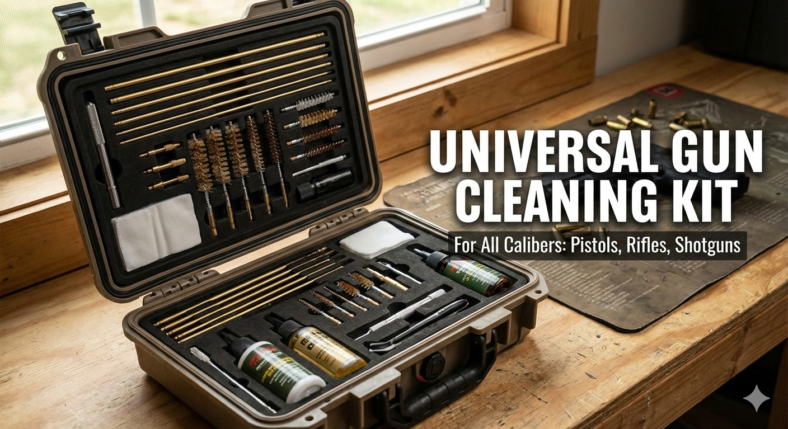
A universal gun cleaning kit for all calibers is best understood as a broad firearm-maintenance kit, not proof that one box covers every firearm you may own. A good kit gives you rods or cables, brushes, jags, patches, picks, oil, and solvent options for common pistols, rifles, and shotguns. The safest choice is still the kit that matches your firearm manual, bore size, cleaning direction, and storage habits.
Table of Contents
Quick Answer
The best universal gun cleaning kit is one that covers your actual firearms, includes caliber-marked tools, uses non-damaging rods or pull-through cables, stores parts clearly, and leaves room for firearm-specific extras. Before buying, check the listed bore brushes, jags, patch loops, shotgun adapters, rod material, case layout, and whether you still need separate solvent, oil, chamber brushes, or specialty tools.

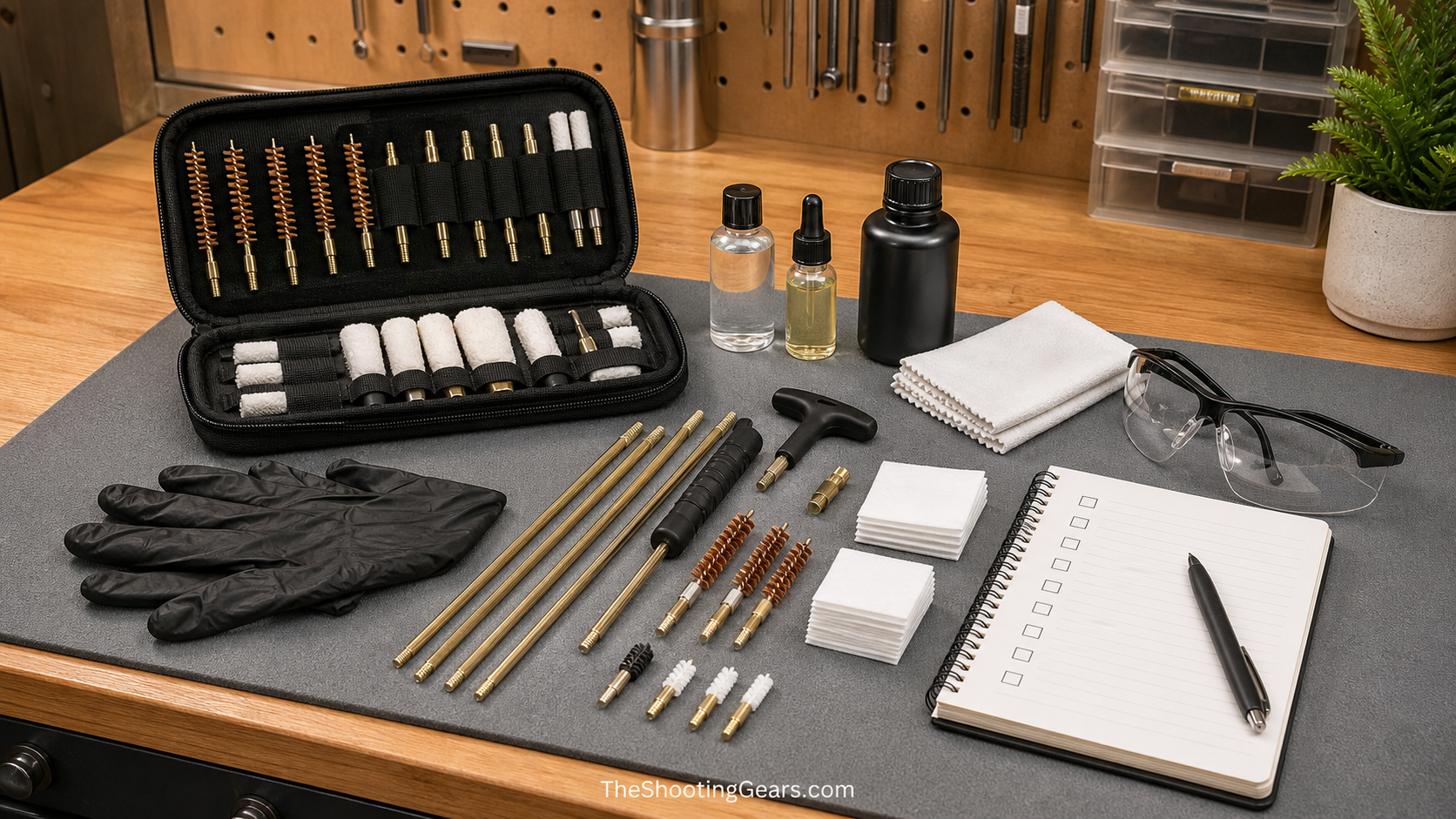
Universal Gun Cleaning Kit Checklist
- Firearm safety first: Unload and clear the firearm before any cleaning session.
- Manual match: Confirm the kit works with your firearm model and manufacturer cleaning instructions.
- Caliber coverage: Check the exact brushes, jags, loops, and adapters included.
- Rod or cable quality: Avoid rough, poorly threaded, or misaligned tools that can damage finishes or crowns.
- Solvent/oil plan: Use products that match your firearm materials and cleaning environment.
- Ventilation and skin protection: Use good airflow, gloves, and eye protection when working with chemicals.
- Storage: Keep brushes, patches, small adapters, and chemical products organized and labeled.
Start with the safety basics. The NSSF firearm safety rules are a good reminder that every maintenance task begins with safe handling. If you clean after range sessions, also pay attention to residue exposure; CDC/NIOSH guidance for firing ranges explains why lead and residue control matter around shooting environments.
What Universal Really Means
In cleaning-kit language, universal usually means broad compatibility across common calibers and firearm types. It does not mean every tool fits every gun. A kit may include pistol, rifle, and shotgun brushes, but still miss a specialty chamber brush, muzzle-device tool, bore guide, or brand-specific accessory your firearm needs.
This is why the word all should be treated carefully. If you own only a few common calibers, a universal kit may be efficient. If you own unusual calibers, precision rifles, older firearms, suppressor-host setups, or specialized shotguns, you may need dedicated add-ons.
Good Fit For
- Owners with several common pistol, rifle, or shotgun calibers.
- Beginners who want one organized starter kit.
- Range users who need basic cleaning tools in one case.
- People who want a kit they can upgrade over time.
Weak Fit For
- Very specific match-rifle maintenance routines.
- Firearms that require manufacturer-specific tools.
- Owners who already have high-quality caliber-specific tools.
- Anyone expecting one kit to replace the firearm manual.
Core Tools to Look For
A useful kit should include cleaning rods or a pull-through cable, bore brushes, jags or patch loops, cotton patches, a nylon utility brush, picks, a cleaning cloth, and a compact case. For shotguns, look for correct gauge brushes and mops. For rifles and pistols, look for clearly marked caliber brushes so you are not guessing during cleaning.
Rod quality is one of the biggest differences between cheap kits and better kits. Poorly finished or badly aligned rods can be frustrating and may risk unnecessary wear if used carelessly. Coated rods, brass rods, or pull-through systems each have tradeoffs. The right choice depends on the firearm, manual instructions, and your cleaning style.
Useful Extras
- A bore guide for compatible rifles.
- A chamber brush when the firearm manual recommends one.
- Extra patches in the sizes you actually use.
- Disposable gloves and eye protection for solvent work.
- A small notebook for round count, cleaning date, and maintenance notes.
Caliber Fit and Compatibility
Do not assume that a brush is correct because it is close. A too-small brush may not clean well, and a too-large brush can bind or cause unnecessary force. Use the firearm manual and the cleaning-kit chart together. If the kit chart is vague, that is a buying red flag.
Also check thread compatibility. Some rods and accessories use different thread standards, which can make replacement brushes and adapters annoying later. If you expect to use the kit for years, replacement-part availability matters as much as the number of pieces in the box.
Solvent, Oil, and Safety Basics
Cleaning chemicals deserve respect. Use solvents and oils according to their labels, keep the area ventilated, avoid mixing chemicals, and wash hands after handling residue. Eye protection and gloves are simple habits that make cleaning less messy and more controlled.
Residue management matters too. Range dust and firearm residue can contain lead or other contaminants, so avoid eating or drinking while cleaning and keep cleaning supplies away from children. For storage, keep chemicals capped, upright, and away from heat sources.
Storage and Organization
A universal kit is only useful if you can find the right part quickly. Look for a case with marked slots, labeled compartments, or enough space to add your own labels. Loose brushes and adapters in a big plastic tray become frustrating fast, especially when several calibers look similar.
Keep chemicals separate from patches and cloths if leakage is possible. Replace dirty patches, worn brushes, cracked jags, and bent rods before they cause problems. A small maintenance log helps you remember what was cleaned, when it was cleaned, and what parts may need attention next time.
After cleaning, return the firearm and cleaning chemicals to secure storage. General safety programs such as Project ChildSafe are useful reminders that maintenance routines and storage routines should work together, especially in homes with children or visitors.
Common Mistakes to Avoid
- Buying by piece count instead of useful caliber coverage.
- Using a brush or jag that does not match the bore.
- Skipping the firearm manual before disassembly or cleaning.
- Using too much oil and leaving parts wet or sticky.
- Mixing cleaning chemicals or ignoring product labels.
- Cleaning in a poorly ventilated space.
- Forgetting to replace worn patches, bent rods, or damaged brushes.
FAQ
Does one universal cleaning kit really fit all calibers?
No. Universal usually means broad coverage, not perfect coverage. Always compare the included brush, jag, loop, and adapter sizes with the firearms you actually own.
Should I buy a universal kit or caliber-specific tools?
A universal kit is convenient for a mixed collection. Caliber-specific tools are better when you want higher-quality rods, exact brushes, or a more careful routine for one firearm.
What is the most important tool in a cleaning kit?
The most important part is the correct-size tool for the job. A quality rod or cable, proper brush, correct patches, and firearm-safe solvent matter more than a large piece count.
Can over-cleaning damage a firearm?
Careless cleaning can cause problems, especially if you use poor tools, force parts, skip manufacturer guidance, or use chemicals incorrectly. Follow the firearm maker’s maintenance guidance.
Do I still need separate solvent and oil?
Often, yes. Some kits include small bottles, but many users prefer separate solvent and oil that match their firearm, climate, and cleaning routine.
Final Takeaway
A universal gun cleaning kit is worth considering when it covers your real calibers, stores tools clearly, and leaves room for firearm-specific upgrades. Do not buy only by piece count. Buy for compatibility, safe handling, chemical care, and the parts you will actually use.

