


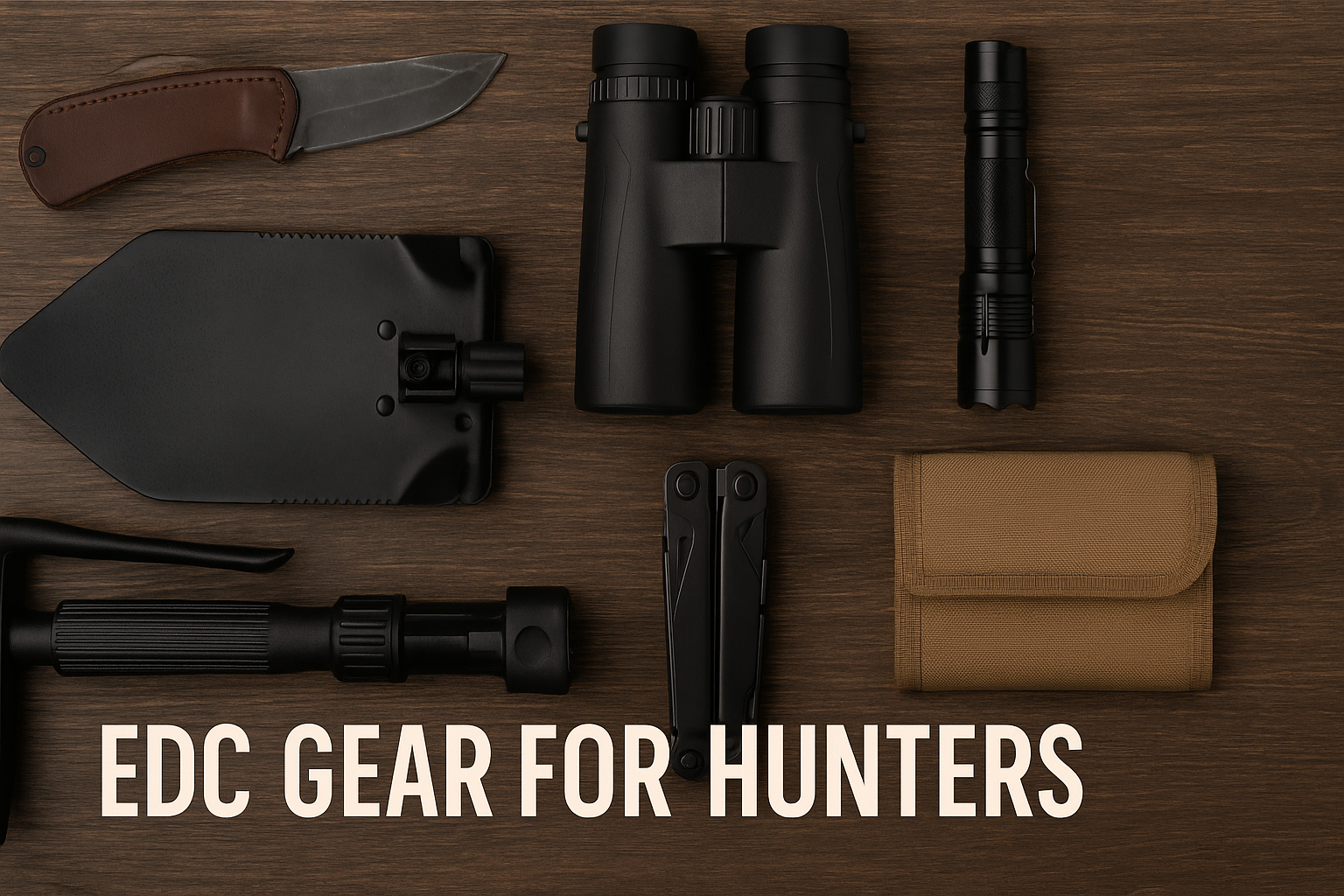
A hunting field carry checklist is the set of safety, navigation, weather, water, light, and paperwork essentials you bring so a normal hunt stays manageable if conditions change. Here, “EDC” simply means everyday field essentials for a lawful hunt, not tactical gear or self-defense carry.
Use this checklist as a starting framework, then adapt it to your season, terrain, weather, distance from help, physical needs, and current local rules. It is general preparedness information, not legal or medical advice.
Table of Contents
What This Checklist Means by Field Essentials
Field essentials are the practical items that help a hunter stay oriented, reachable, warm and dry, hydrated, visible, and prepared for minor problems. A short morning sit close to the truck does not need the same pack as a long backcountry day, so the goal is a thoughtful kit rather than a huge one.
Recognized outdoor preparedness frameworks cover similar ground. The National Park Service Ten Essentials is a useful high-level reference, and IHEA-USA is a good starting point for hunter education context.
Navigation
Carry a way to know where you are and how to get back. Many hunters use a GPS device or phone app, but electronics can fail, lose signal, or run out of battery. A map and compass remain useful backups if you know how to use them.
Before you leave, tell someone where you are going, your expected return time, and what vehicle you are using. For device-specific context, see our guide to GPS devices for tracking hunting locations.
Communication
A charged phone is the common primary communication tool, and a power bank is a simple backup. In areas with poor or no cell service, hunters may consider a two-way radio, satellite communicator, or personal locator beacon and should learn how it works before relying on it.
An emergency contact card in your pack is also useful. Include your name, emergency contact, relevant medical notes, and the area you planned to hunt.
Weather Protection
Weather can change quickly in the field. Pack for conditions worse than the forecast, especially when cold, rain, wind, or heat could affect your return. A layered clothing system, waterproof or wind layer, and season-appropriate hand and head protection are common starting points.
Cold and wet conditions raise exposure risk, while hot weather increases dehydration and heat-stress risk. Check the forecast before leaving and adjust your route, clothing, and water plan accordingly.
First Aid
Carry a basic first aid kit sized to the hunt and know how to use what is inside. Common contents include supplies for cuts, blisters, minor wound care, and any personal medications you need. The kit should match your skill level; gear you cannot use is not much help under stress.
This is general preparedness, not medical advice. For remote hunts or longer trips, a first aid or wilderness first aid course is worth considering.
Water and Hydration
Bring enough water for the planned hunt plus a margin. Dehydration reduces focus, stamina, and decision-making, and it can make both heat and cold stress worse. On longer hunts, carry a way to filter or treat water and follow the product instructions.
Plan water by hunt length, exertion, temperature, and available refill options. There is no single amount that fits every hunter or every day.
Visibility and Safety Marking
Visibility gear helps other people see you in shared hunting areas. Many states require hunter orange or blaze orange for certain seasons and species, but the exact rule depends on the state, hunt type, and current regulation.
Confirm the current requirement with your state wildlife agency before you go. A whistle or other simple signaling item can also help others locate you if you need assistance.
Light
Carry a headlamp or flashlight plus spare batteries or a backup light, even on a day hunt. Hunters often move near dawn or dusk, and plans can run longer than expected. A headlamp keeps your hands available for navigation and pack work.
Licenses, Tags, and Rules
Carry the licenses, tags, permits, and identification your hunt requires. Rules differ by state, season, species, public/private land, and weapon type, and they can change. Check current official regulations before the hunt rather than relying on memory from last season.
For broader gear planning, our guides on key hunting gear essentials and a crucial hunting gear checklist can help you build the rest of the pack.
Safe Transport Considerations
Transport rules for hunting equipment, firearms, bows, ammunition, vehicles, and public land vary by state and situation. This guide cannot give legal certainty. Follow current state wildlife agency rules, applicable transport laws, and manufacturer guidance for safe carry and storage.
When rules are unclear, check the official source or ask the relevant authority before traveling. Do not treat a general gear article as legal advice.
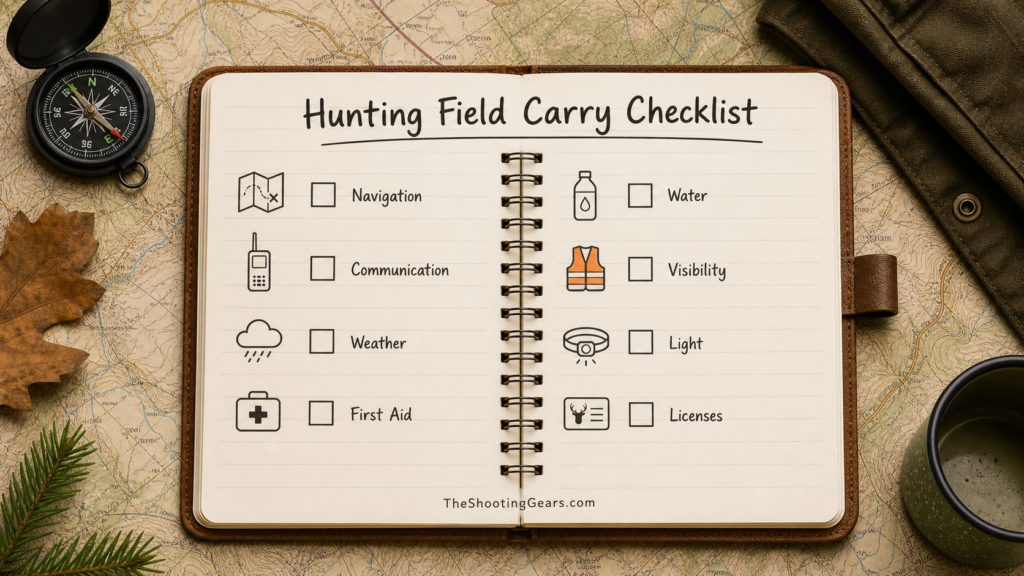
Hunting Field Carry Checklist
Use this as an adaptable starting checklist. Add, remove, or change items based on your hunt, conditions, and local rules.
| Category | Starting Items to Consider |
|---|---|
| Navigation | Map and compass, GPS device or app, known route, shared plan |
| Communication | Charged phone, power bank, radio or satellite messenger where coverage is poor, emergency contact card |
| Weather | Layered clothing, waterproof or wind layer, hand and head protection |
| First aid | Basic kit sized to the hunt, personal medications, wound-care basics |
| Water | Enough for the trip plus margin, treatment method on longer hunts |
| Visibility | Hunter orange where required, simple signaling item |
| Light | Headlamp or flashlight, spare batteries or backup light |
| Licenses and rules | Required licenses, tags, permits, and current regulations reviewed |
| Transport | Current state rules and manufacturer guidance for safe carry and storage |

Frequently Asked Questions
What should every hunter carry in the field?
Most hunters plan around navigation, communication, weather protection, first aid, water, visibility, light, and required licenses or tags. Scale each category to your terrain, weather, hunt length, and local rules.
Is this a tactical or self-defense EDC list?
No. In this article, EDC means everyday field essentials for safety, navigation, and comfort on a lawful hunt. It is not a tactical loadout or self-defense carry guide.
Do I have to wear hunter orange?
It depends on your state, season, and species. Many states require hunter orange for certain hunts, and the rules vary. Confirm the current requirement with your state wildlife agency before you go.
How much water should I bring hunting?
Bring enough for your planned time outdoors plus a margin, adjusted for exertion and temperature. On longer hunts, carry a way to filter or treat water and know how to use it.
What navigation gear do I need?
Carry a reliable way to know your location and route, commonly a map and compass plus a GPS device or app. Learn the area first and share your plan and expected return time with someone you trust.
Final Takeaway
A good hunting field carry checklist is practical, legal, and adaptable. Start with navigation, communication, weather protection, first aid, water, visibility, light, licenses, and transport rules, then adjust the kit to the specific hunt instead of copying a fixed loadout.