


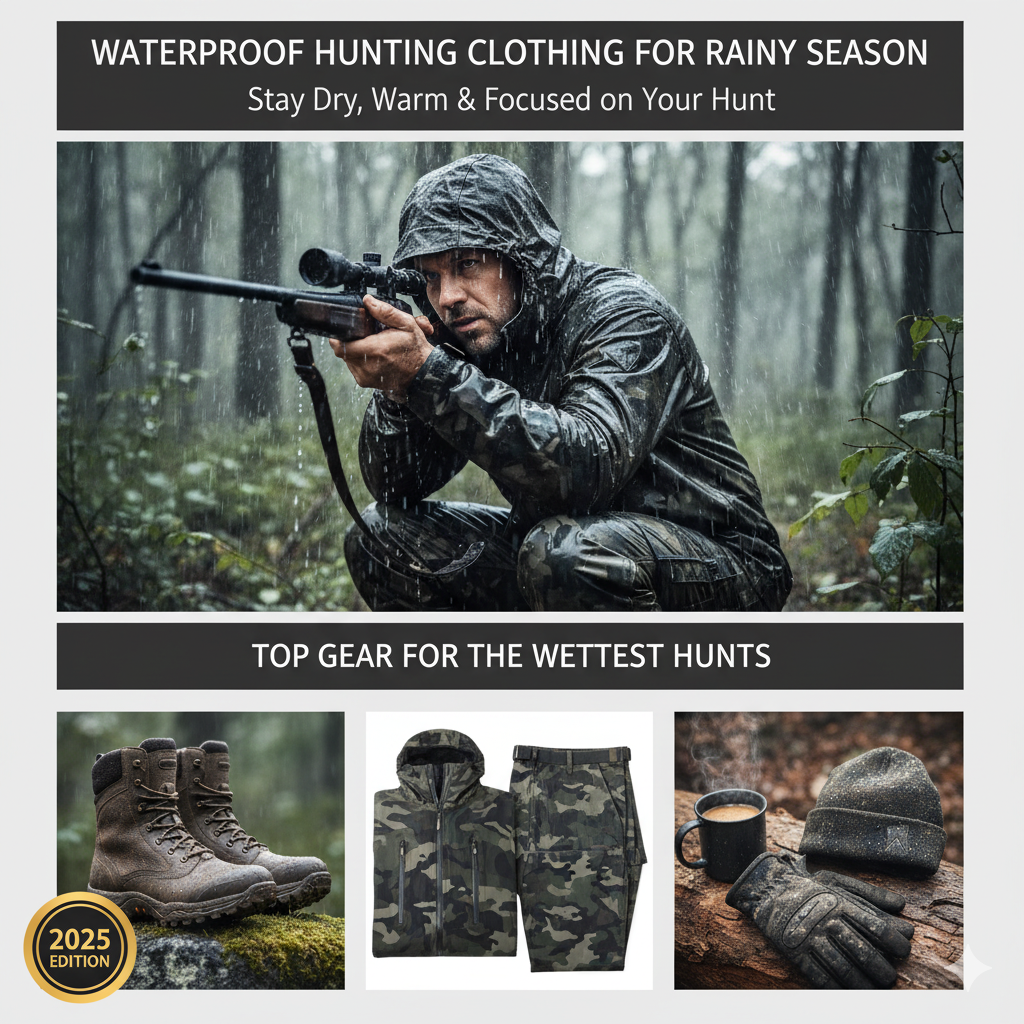
Waterproof hunting clothing keeps rain and wind out while letting some body moisture escape, and it works best as part of a layering system rather than as a single jacket. The key parts are a waterproof, breathable outer shell built around a membrane or coating, a durable water repellent (DWR) finish on the face fabric, and sealed seams that block water at the stitching. No clothing stays dry in every condition forever, so the realistic goal is choosing the right layers for your hunt and caring for them so they keep performing.
Table of contents
Start With a Layering System
Staying dry and comfortable in the field is about the whole system, not one waterproof jacket. The common three-layer approach gives you the flexibility to handle changing weather and effort levels.
- Base layer. Sits against the skin and moves sweat away from your body. Wool and synthetic fabrics manage moisture well, while cotton holds water and is generally avoided in cold or wet conditions.
- Mid layer. Provides insulation by trapping warm air. Fleece and synthetic or down insulation are typical choices, adjusted to the temperature.
- Outer shell. The waterproof, breathable layer that blocks rain and wind while letting some moisture escape from the layers beneath.
The point of layering is control. You add or shed layers as you warm up climbing a ridge or cool down sitting on a glassing point, which keeps you from sweating through your clothes and then getting chilled. A waterproof shell over a sweat-soaked base layer can still leave you cold, so managing the inside moisture matters as much as blocking the rain outside.
How Waterproof Breathable Fabrics Work
Waterproof breathable fabric does two opposing jobs at once: it stops liquid water from getting in while allowing water vapor from sweat to pass out. It manages this because liquid water droplets are far larger than individual water-vapor molecules, so a barrier can block one while passing the other.
Membranes and Coatings
Most waterproof breathable garments use either a membrane or a coating bonded to the inside of the face fabric. Membranes are thin films laminated to the fabric. Some are microporous, with pores too small for liquid water but large enough for vapor, and others are nonporous films that pass moisture through the material itself. Coatings are applied as a layer rather than a separate film. Both approaches aim for the same balance of keeping rain out and letting vapor escape, and the right choice depends on the activity and conditions more than on any single technology being best.
Breathability has limits. In heavy rain, high humidity, or hard exertion, even a good fabric cannot move sweat out as fast as you produce it, and you may feel damp from the inside. That is normal physics, not a defect, and it is why pit zips and ventilation features exist on many hunting shells.
DWR: The Finish That Makes Water Bead
Durable water repellent, or DWR, is a treatment applied to the outer face fabric so water beads up and rolls off instead of soaking in. DWR is not the waterproof barrier itself; that job belongs to the membrane or coating underneath. Instead, DWR keeps the face fabric from “wetting out,” which is when the outer fabric saturates, feels heavy and cold, and blocks breathability even though the membrane is still keeping you dry.
DWR wears off with use, abrasion, dirt, and washing, which is why a jacket that beaded water when new may start wetting out over time. The good news is that DWR can usually be revived by cleaning the garment and either applying heat per the care label or using a wash-in or spray-on DWR product. Restoring DWR is one of the simplest ways to bring an aging shell back to life.
Seam Sealing and Construction
Every stitch in a garment is a small hole, so a jacket can use a fully waterproof fabric and still leak at the seams if they are not sealed. Quality waterproof garments use taped or sealed seams, where a thin waterproof tape is bonded over the stitching on the inside to block water from passing through the needle holes.
Construction details decide how well a shell keeps water out in practice. Storm flaps over zippers, waterproof or treated zippers, adjustable hoods and cuffs, and a drawcord hem all reduce the places water sneaks in. When evaluating a piece of waterproof hunting clothing, look at how the openings are protected, not just the fabric claim on the tag.
Understanding Waterproof and Breathability Claims
Manufacturers often rate fabrics with numbers for waterproofness and breathability. Waterproof ratings are commonly given as a hydrostatic head measurement in millimeters, where a higher number indicates the fabric resists more water pressure before leaking. Breathability is often expressed as a moisture vapor transmission rate, where a higher number suggests more vapor can pass through.
Treat these numbers as general guidance, not guarantees. Test methods vary between manufacturers, real-world wear adds abrasion and dirt that lab tests do not, and a high rating on the fabric does not help if the seams, zippers, or DWR fail. Use ratings to compare roughly within a brand and to gauge whether a garment is built for light showers or sustained downpours, while remembering that no rating means a garment stays dry in all conditions.
Choosing for Your Hunt
The best waterproof hunting clothing for you depends on your climate, season, and how active you are. Match the gear to the hunt rather than buying the heaviest-duty option for every situation.
Hard Shells
Hard shells use a sturdy waterproof breathable fabric and prioritize weather protection and durability. They suit sustained rain, wind, and rough country. The tradeoff is that they can feel less breathable during hard exertion and may be noisier, which matters when game can hear you.
Soft Shells and Water-Resistant Layers
Soft shells and water-resistant pieces trade full waterproofing for more breathability, stretch, and quiet fabric. They handle light precipitation and active hunts well but are not built for prolonged downpours. Many hunters carry a packable waterproof shell as backup over a more breathable, quieter layer.
Quiet Fabric and Fit
For hunting specifically, fabric noise and fit matter alongside waterproofing. A crinkly shell can spook game, and a jacket too tight to layer under or too loose to move in undercuts its purpose. Consider how the garment will sound and move during the kind of hunt you actually do.
Caring for Waterproof Clothing
Waterproof clothing performs better and lasts longer with proper care, and dirty gear is one of the most common reasons a shell seems to stop working. Always follow the garment’s care label first, since products differ.
- Wash when dirty, since body oils, sweat, and grime clog the fabric and reduce both water repellency and breathability.
- Use a cleaner suited to technical fabrics rather than regular detergent or fabric softener, which can leave residues that harm DWR.
- Reactivate or reapply DWR when water stops beading, using heat per the care label or a dedicated DWR product.
- Store the garment clean and dry, hung or loosely folded rather than stuffed away damp.
- Repair small tears and worn seam tape promptly with appropriate gear-repair products before they spread.
For specific products such as a particular jacket or treatment, follow the manufacturer’s instructions, which override general advice and protect any warranty.
Frequently Asked Questions
What is the difference between waterproof and water-resistant?
Water-resistant clothing sheds light rain and splashes for a while but soaks through under sustained wetting. Waterproof clothing uses a membrane or coating plus sealed seams to keep liquid water out far more effectively. Neither term means a garment stays dry forever in every condition, so match the level of protection to your hunt.
Why is my waterproof jacket leaking or feeling wet inside?
Often the membrane is fine and the issue is wetting out, where worn DWR lets the face fabric saturate and block breathability so sweat builds up inside. Cleaning the jacket and reviving the DWR usually helps. Damp inside can also simply be sweat that breathability cannot keep up with during hard effort.
Do I need waterproof clothing for every hunt?
Not always. For dry climates or short, active hunts a breathable water-resistant layer may serve better, with a packable waterproof shell as backup. For sustained rain, wind, or wet snow, a true waterproof shell earns its place. Check the forecast and match the gear to the conditions.
Can I wash waterproof hunting clothing in a regular machine?
Usually yes, if you follow the care label, but avoid regular detergent and fabric softener, which can leave residues that harm the DWR finish. A cleaner made for technical fabrics is the safer choice. The garment’s own instructions always take priority over general advice.
Final Takeaway
Waterproof hunting clothing works best understood as a system: a moisture-managing base layer, an insulating mid layer, and a waterproof breathable shell built on a membrane or coating, with DWR on the surface and sealed seams at the stitching. Ratings help you compare roughly, but no garment stays dry in all conditions, and care matters as much as the original spec. Match your layers to your climate and effort, keep them clean, revive the DWR when water stops beading, and follow each product’s own instructions.