


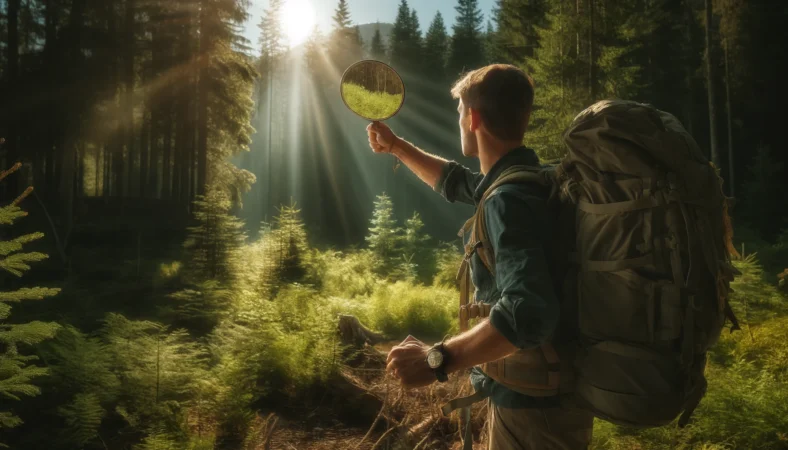
The most reliable ways to signal for help in the wilderness are a loud whistle, a signal mirror, fire and smoke, large ground-to-air symbols, and an electronic distress beacon such as a personal locator beacon (PLB) or satellite messenger. Each method works best in different conditions, so the strongest plan is to carry more than one and know how to use each before you head out. None of these replace the most important step, which is telling someone where you are going and when you expect to return, so a search can start early if you do not come back.
Table of contents
Prevention Comes Before Any Signal
A signal only helps after something has already gone wrong. The single best thing you can do is reduce the chance you ever need to use one, and make sure rescuers know to come looking quickly if you do. Before any trip into remote country, leave a written trip plan with a reliable person. It should list where you are going, your route, when you expect to return, what vehicle you are driving, and who to call if you are overdue. Many search efforts start late simply because no one knew the person was missing.
Pack the gear that lets you both survive and signal. The National Park Service publishes a widely used Ten Essentials list that includes navigation tools, a light source, extra food and water, insulation, and a way to start a fire. Build your signaling tools into that kit rather than treating them as an afterthought. Treat every improvised method described below as a backup to a real, dedicated signaling device.
Sound Signals: The Whistle
A whistle is the simplest and most dependable sound signal, and it carries far further than your voice while using far less energy. Shouting tires you quickly and strains your throat, especially if you are cold, injured, or dehydrated. A pealess plastic whistle weighs almost nothing, works when wet, and can be heard well beyond the range of a yell.
A Common Distress Pattern
Three repeated signals is a commonly taught distress pattern in North America. Three sharp whistle blasts, a pause, then three more, tells anyone within hearing range that this is an emergency and not a casual call. Repeat the pattern at intervals and listen between sets for a reply. Keep a whistle on a lanyard or clipped to a pack strap where you can reach it even if you cannot move much.
Visual Signals You Can See for Miles
Visual signals work best in open terrain and clear weather, when a searcher on the ground or in the air can scan a wide area. The two most useful tools are a signal mirror and bright, contrasting material.
Signal Mirror
A signal mirror reflects sunlight in a focused flash that can be visible over long distances on a clear day. Purpose-built signal mirrors have a small sighting hole that helps you aim the flash toward an aircraft, vehicle, or distant person. To aim one, hold it near your eye, find the bright spot of reflected light on a nearby surface such as your other hand, then sweep that spot toward your target. A mirror needs direct sun to work, so it is a fair-weather tool, not an all-conditions one.
Bright Colors and Contrast
Anything brightly colored that contrasts with its surroundings can draw attention. An orange poncho, a space blanket, or gear laid out in an open area stands out against natural greens and browns. Lay items in a clearing, on snow, or on bare ground rather than under tree cover. Movement also catches the eye, so waving a bright item is more noticeable than letting it sit still.
Fire and Smoke Signals
Fire is a strong signal because it works day and night. At night the flames are visible from a distance, and during the day you can add green vegetation or damp material to create thick smoke. Three fires arranged in a triangle or a line is a recognized distress pattern when you have the materials and a safe place to build them.
Fire carries real risk. A signal fire that escapes can become a wildfire that endangers you and others. Build only on bare mineral soil or rock, clear a wide ring of flammable material, keep the fire small and controlled, and never leave it unattended. Follow the Leave No Trace guidance on responsible fire use, including current local fire restrictions, which the Leave No Trace principles address directly. In dry or windy conditions, or where fires are banned, choose a different signal.
Ground-to-Air Symbols
If you cannot move and you expect an aircraft to search the area, large ground symbols can communicate your situation from above. Make them as big as you can, ideally tens of feet across, using logs, rocks, branches, stamped patterns in snow, or contrasting material. Bigger and higher-contrast is better, because a small mark is easy to miss from altitude.
Ground-to-air emergency codes can vary by context, but common survival references use a large V for assistance needed and a large X for medical help. A straight line can indicate the direction you intend to travel. Place symbols in the most open spot available so they are not hidden by trees or terrain. These are general internationally recognized markings; defer to instructions from any rescue authority you are able to reach.
Electronic Beacons and Satellite Messengers
For remote travel beyond cell coverage, a dedicated electronic distress device is the most direct way to summon help. A personal locator beacon (PLB) sends a one-way distress signal with your location to a government search-and-rescue network such as the Cospas-Sarsat system. A satellite messenger uses a commercial satellite service, often allowing two-way text messaging and an SOS function. Both work in places where a phone has no signal, which describes most backcountry hunting and hiking areas.
How to Use One Responsibly
Register your device with the appropriate authority before your trip and keep the registration current, because accurate contact details speed up any response. In the United States, NOAA explains how to register a 406 MHz beacon. Carry it on your body, not buried in a pack, so you can reach it if you are injured or separated from your gear. Learn how to trigger the SOS function at home, not in a crisis. Activate the distress function only for a genuine emergency, since false alerts pull rescuers away from real ones. A device does not replace a trip plan; it works alongside one.
What to Do While You Wait for Help
Once you have sent a signal, your job shifts to staying findable and staying alive. If you have told someone your plan or activated a beacon, staying put usually makes you easier to locate than wandering. Move only if your location is unsafe or if you have a clear, reachable destination.
- Stay where searchers expect you to be unless the spot is dangerous.
- Protect yourself from cold, heat, wind, and rain to avoid a second emergency.
- Keep your signaling tools ready so you can respond the moment a searcher appears.
- Conserve energy, water, and any device battery.
- Repeat your signals at intervals rather than constantly, and listen and watch between sets.
For life-threatening situations where you have any communication, contacting 911 or local emergency services connects you with the agencies that coordinate search and rescue. Follow their instructions over any general advice here.
Frequently Asked Questions
What is the universal signal for distress in the wilderness?
Three of anything is the widely recognized distress signal. That means three whistle blasts, three fires, three flashes, or three shouts, repeated at intervals. The pattern of three tells others your call is an emergency rather than ordinary noise.
Is a cell phone enough to signal for help?
A cell phone is useful where there is coverage, but most remote backcountry has no signal. Treat a phone as one tool among several. For travel beyond cell range, a PLB or satellite messenger is far more reliable, and simple tools like a whistle and mirror work without any battery.
Should I stay put or try to walk out?
If you left a trip plan or activated a beacon, staying put usually makes you easier to find. Moving can take you out of the search area and burn energy you may need. Move only if your location is unsafe or you have a clear, reachable goal.
How far can a signal mirror be seen?
A signal mirror flash can be visible over long distances on a clear, sunny day, which is why it is a valued tool. It depends entirely on direct sunlight and a clear line of sight, so it does not work in shade, fog, or at night. Pair it with methods that work in low light.
Final Takeaway
Signaling for help is a layered skill, not a single trick. Carry a whistle, a signal mirror, fire-starting tools, and, for remote trips, a registered PLB or satellite messenger. Learn each one before you need it, and treat improvised methods as backups to dedicated devices. The step that matters most happens before you leave: tell someone where you are going and when you will be back, so help can start looking the moment you are overdue.