


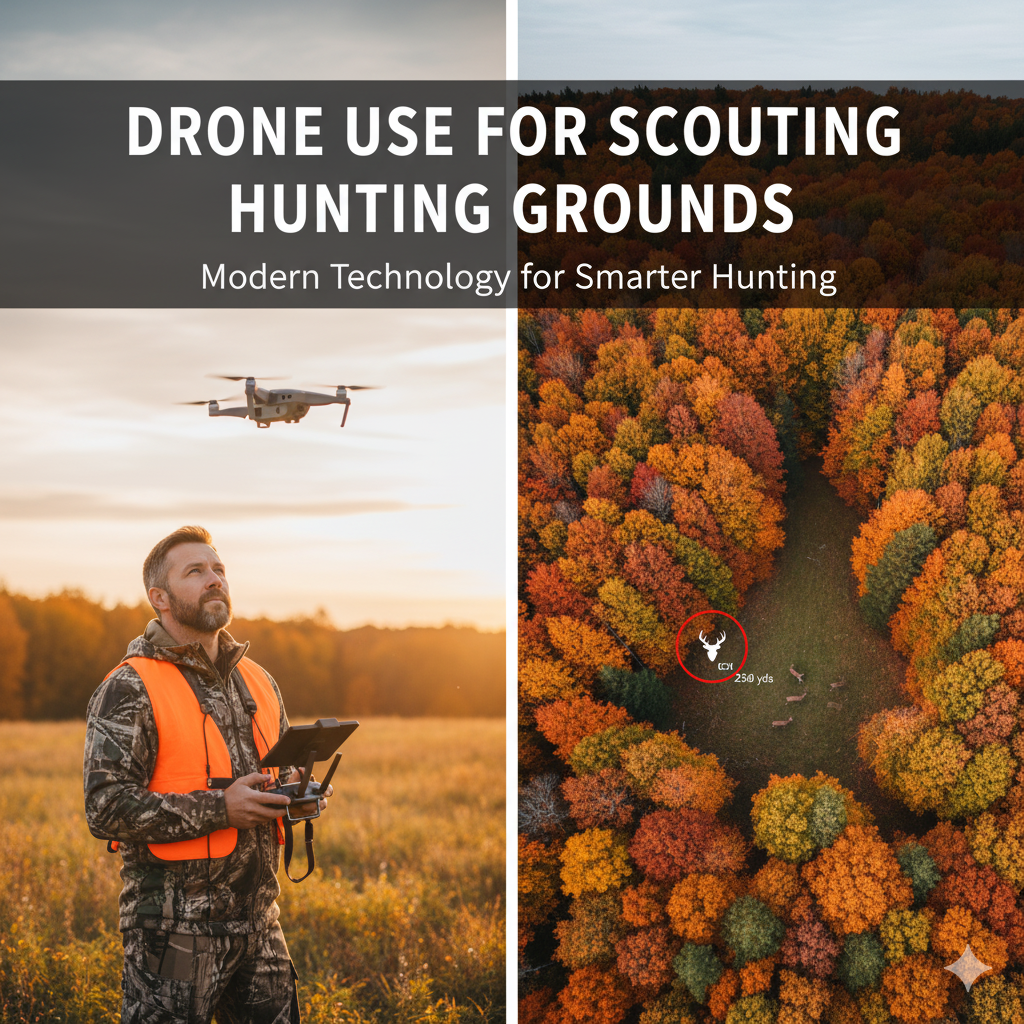
Drones can help you understand the land you hunt, including terrain, access routes, water, and cover, but the legal line is strict and varies widely: in many states it is illegal to use a drone to locate, scout, harass, or pursue game animals, and some states restrict drone use around hunting and wildlife seasons entirely. Laws change, so verify the current rules before each season and before each flight. Federal aviation rules from the FAA also govern how and where you may fly at all. Before flying for any hunting-related purpose, you must confirm the current rules with the FAA and your state wildlife agency, because the legality is the deciding factor, not the technology. This guide explains the legitimate uses, the legal and ethical limits, and where to get authoritative answers.
Table of contents
Legality First: Why This Section Comes Before Anything Else
The single most important fact about drones and hunting is that using a drone to find, follow, or drive game is prohibited in many states, and the specifics differ from state to state and can change year to year. A drone that is perfectly legal for photographing your own farmland may be illegal the moment you point it at scouting game during or near a hunting season. Treat this as a hard rule: confirm what your state allows before you fly for any hunting-related reason, and when in doubt, do not fly.
This article is general information, not legal advice. Hunting-method legality is set by your state wildlife agency, and aviation legality is set by the FAA. Those official sources govern, not any summary you read online.
Federal FAA Rules Apply to Every Flight
The FAA regulates all drone flight in the United States, regardless of whether hunting is involved. Recreational and commercial drone operators must follow registration, airspace, altitude, and line-of-sight rules, and these apply over rural land just as they do over town. Review the current requirements directly at the FAA Unmanned Aircraft Systems page before flying.
- Most drones above a set weight must be registered with the FAA.
- Operators must follow airspace restrictions and altitude limits.
- Recreational flyers typically must keep the drone within visual line of sight and pass the required knowledge test.
- Flying near airports, restricted airspace, or over people carries additional rules.
Meeting FAA rules does not by itself make hunting-related drone use legal. State wildlife law is a separate and often stricter layer.
State Wildlife Rules and the Game-Scouting Ban
State wildlife agencies set the rules on hunting methods, and many have specifically addressed drones. A common pattern is a ban on using aircraft, including drones, to locate, spot, or assist in taking game, sometimes extending to a set number of days before a season opens. Penalties can include fines, license loss, and forfeiture of equipment.
Because the rules differ so much, the only safe approach is to read your own state’s current regulations or contact the agency directly. The U.S. Fish and Wildlife Service maintains links to state wildlife agencies, a useful starting point at the U.S. Fish and Wildlife Service. Your state agency’s regulation booklet or website is the authority for what is allowed where you hunt.
Fair Chase and Hunting Ethics
Beyond the law, the hunting community holds a fair chase standard: the animal should retain a reasonable chance to escape and should not be located or pursued using technology that removes that fairness. Using a drone to spot bedded animals and then move in is widely viewed as a fair chase violation even where a specific statute is unclear. Hunter education programs cover ethics alongside law, and reviewing material from Hunter-Ed is a good way to understand the expectations.
The practical takeaway: even if a flight is legal, using it to gain an unfair advantage over game during a hunt is ethically questionable and can damage access relationships and public trust in hunters.
Where Drone Use Can Be Legitimate
There are land-management and planning uses that are generally separate from in-season game scouting, though you still must confirm they are allowed in your state and that the flight follows FAA rules.
Mapping Terrain and Access on Your Own Land
Out of season, landowners often use drones to understand terrain, water sources, food plots, trail systems, and access routes. This is land assessment, not game pursuit, and is a common legitimate use where state law permits it.
Habitat and Food Plot Planning
An aerial view helps plan food plots, identify erosion, and assess cover. This planning work is typically done well before any season and does not involve locating animals to hunt them.
Recovery of Downed Game Where Specifically Allowed
A few states have begun addressing drones for recovering legally harvested animals, but this is a narrow, state-specific area with strict conditions. Do not assume it is allowed; confirm the exact current rule with your state wildlife agency before using a drone for recovery.
How to Check the Rules Before You Fly
- Read the current FAA drone requirements for registration, airspace, and operation at the official FAA UAS page.
- Read your state wildlife agency’s current regulations on aircraft and drones for hunting, including any pre-season blackout period.
- Contact the agency directly if anything is unclear; ask specifically about scouting, locating game, and recovery.
- Check land access rules, since flying over land you do not own or have permission for raises separate trespass and privacy issues.
- When in doubt, do not fly for any hunting-related purpose until you have a clear, current answer.
Frequently Asked Questions
Is it legal to use a drone to scout for hunting?
In many states it is illegal to use a drone to locate or pursue game, and some states extend the ban to days before a season. The rules vary widely and change, so confirm your state’s current regulations with the wildlife agency before any hunting-related flight. This is general information, not legal advice.
Do FAA rules apply if I fly over my own rural land?
Yes. FAA rules on registration, airspace, altitude, and operation apply everywhere in the United States, including private rural land. Check the current requirements on the FAA UAS page before flying.
Can I use a drone to find a deer I shot?
Only where your state specifically allows it, and usually under strict conditions. Most states have not broadly authorized drone recovery, and assuming it is legal can lead to penalties. Confirm the exact current rule with your state wildlife agency first.
Is drone scouting a fair chase violation?
Using a drone to locate and then pursue game is widely considered a fair chase violation, separate from the legal question. Hunter education programs treat technology that removes the animal’s reasonable chance to escape as unethical. Even where unclear in statute, most hunters avoid it.
Final Takeaway
A drone can be a genuine tool for understanding terrain and managing land out of season, but the moment it touches scouting, locating, or pursuing game, you are in heavily regulated and often prohibited territory. The legality, set by the FAA and your state wildlife agency, is the deciding factor, not the drone’s capability. Confirm the current rules from those official sources before every hunting-related flight, respect fair chase, and when the answer is unclear, keep the drone on the ground.