


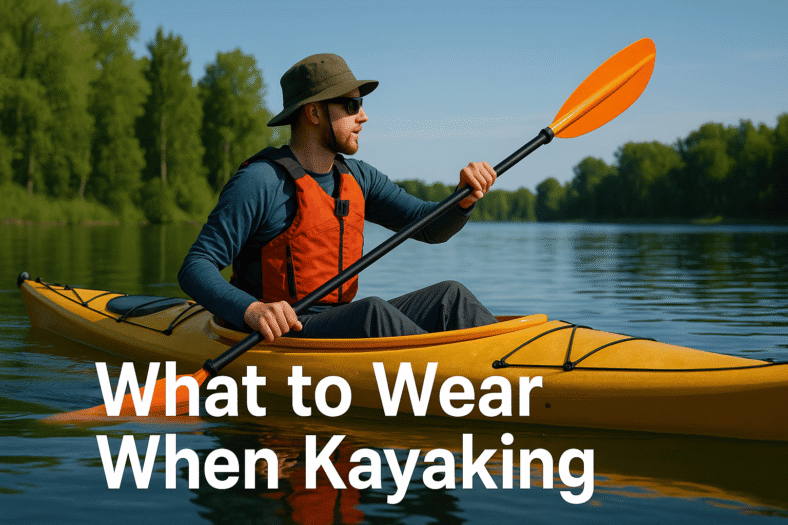
What you wear kayaking should be chosen for safety first, starting with a properly fitted life jacket and clothing matched to the water temperature, not just the air temperature. If you capsize, you will be in the water, so dress for immersion before you dress for comfort. From there, build a layered outfit that handles sun, wind, splash, and temperature changes, add secure footwear, and protect yourself from glare and changing weather. This guide explains the clothing system in practical terms so you can paddle prepared.
Table of contents
Start With a Life Jacket
A life jacket, also called a personal flotation device or PFD, is the most important thing you wear on the water. It should be worn, not just stored in the kayak, because putting one on after a capsize can be difficult or impossible. The U.S. Coast Guard boating safety guidance encourages wearing a life jacket whenever you are on or near the water.
Choose a PFD that fits snugly without riding up over your face when you lift the shoulders. A paddling-style PFD usually has larger arm openings so your paddle stroke feels natural. Check your state and local boating rules too, because requirements can vary by age, water body, boat type, and location.
Dress for the Water, Not Only the Air
The biggest clothing mistake is dressing only for warm air. A sunny day can still sit over cold water, and sudden immersion can become dangerous quickly. Cold water can affect breathing, coordination, and decision-making, so clothing should be based on what happens if you end up in the water, not only how comfortable you feel at the launch.
When the water is cold, paddlers often need immersion protection such as a wetsuit or drysuit, plus insulating layers. A wetsuit traps a thin layer of water that your body warms, while a drysuit keeps water out and works with insulating clothing underneath. Because conditions and personal risk vary, use official boating guidance, local outfitters, or qualified instructors for cold-water decisions instead of guessing.
A Simple Kayaking Layering System
A good kayaking outfit works in layers. The goal is to manage sweat, splash, wind, and temperature changes without wearing bulky clothing that becomes heavy when wet.
Base Layer
Wear a moisture-wicking base layer made from synthetic fabric or merino wool. This layer moves sweat away from your skin and stays more comfortable when damp. Avoid cotton as a base layer because it holds water and loses warmth when wet.
Insulating Layer
Add a fleece or similar insulating layer when conditions are cool. The colder the water and air, the more important this layer becomes. In warm weather, you may skip the insulating layer and use sun-protective clothing instead.
Outer Layer
A wind and water-resistant paddling jacket helps block spray and wind chill. In cold water, a casual rain jacket is not a substitute for proper immersion gear. Think of the outer layer as weather protection, while a wetsuit or drysuit is immersion protection.
PFD Over the Layers
Your PFD goes over your clothing and must still fit correctly after layers are added. Test the fit before launching, especially in cold weather when extra clothing can change how the life jacket sits on your body.
Footwear for Kayaking
Kayaking footwear should protect your feet, stay secure when wet, drain well, and give you grip at the launch. Good options include water shoes, neoprene paddling booties, or secure sandals with heel straps. Neoprene booties add warmth in cold water, while lightweight water shoes are comfortable in summer.
Avoid loose flip-flops and bare feet. Flip-flops can float away, and bare feet leave you exposed to rocks, shells, hooks, broken glass, or slick banks. Secure footwear also makes loading, launching, and landing less stressful.
Sun and Weather Protection
On the water, sun exposure comes from above and reflects off the surface. Weather can also change quickly, especially when wind picks up. Check the forecast before launching; the National Weather Service safety resources are a useful starting point for weather hazards. For longer remote paddles, also think through basic communication and emergency visibility; our guide to ways to signal for help in the wilderness is useful pre-trip reading.
- Sun-protective clothing: Lightweight long sleeves and pants can protect skin without overheating.
- Hat: A brimmed hat with a retention strap shades your face and stays on in wind.
- Sunglasses: Polarized sunglasses reduce glare. Use a retainer strap so they stay attached.
- Sunscreen: Apply water-resistant sunscreen on exposed skin and reapply during longer trips.
- Gloves: Paddling gloves can help with grip, blisters, and cold hands.
Seasonal Clothing Tips
Warm Weather
In warm weather, wear lightweight, quick-drying, sun-protective clothing. Still check the water temperature, because warm air over cold water may call for more protection. Bring water, use sun protection, and avoid heavy clothing that traps heat.
Spring and Fall
Spring and fall can be tricky because the air may feel comfortable while the water stays cold. Use synthetic or wool layers, consider a wetsuit or drysuit when conditions call for it, and build in extra safety margin.
Cold Weather and Cold Water
Cold-water paddling deserves extra caution. A drysuit or wetsuit, insulating layers, neoprene footwear, gloves, and a worn PFD may be necessary. If you are new to cold-water paddling, take instruction or go with experienced paddlers before attempting it alone.
Anglers and Hunters Who Paddle
If you kayak to fish, scout, or reach a hunting area, the clothing rules do not change. Wear your PFD, dress for immersion, and follow boating and wildlife rules for the location. If rain is part of the plan, our waterproof hunting clothing guide can help with layer thinking, but paddling-specific safety still comes first.
What to Avoid Wearing
- Cotton and denim: They hold water, dry slowly, and lose warmth when wet.
- Loose flip-flops: They slip off easily and do not protect your feet at the launch.
- Bulky clothing: Heavy waterlogged layers can make movement harder after a capsize.
- No PFD: A life jacket in the boat is not the same as a life jacket on your body.
- Air-temperature-only outfits: The water temperature is the real safety check.
Frequently Asked Questions
Do I really need to wear a life jacket the whole time?
Yes, wearing a properly fitted PFD while paddling is the safest practice. Rules vary by location and age, but a worn PFD protects you when a capsize happens suddenly.
What does dress for the water temperature mean?
It means choosing clothing that protects you if you fall in, based on the water temperature rather than only the air. Cold water may require a wetsuit, drysuit, or insulating layers even on a pleasant day.
Can I wear jeans or a cotton shirt kayaking?
It is not a good idea. Cotton and denim soak up water, get heavy, dry slowly, and can leave you cold. Choose quick-drying synthetic or wool clothing instead.
What shoes are best for kayaking?
Water shoes, neoprene paddling booties, or secure sandals with heel straps are usually better than flip-flops. They protect your feet, drain well, and stay on when wet.
What should I wear kayaking in cold weather?
Cold-weather paddling usually calls for immersion protection, insulating synthetic or wool layers, neoprene footwear, gloves, and a worn PFD. Get local guidance before paddling cold water if you are new to it.
Final Takeaway
Dress for kayaking from the water up. Wear a properly fitted life jacket, dress for the water temperature, use quick-drying layers, choose secure footwear, and protect yourself from sun and weather. For longer days, pack enough drinking water and know your backup plan; our wilderness guide to safe drinking water methods can help with broader trip planning. Good clothing is not about looking technical; it is about staying comfortable enough to paddle well and prepared enough to handle a capsize or weather change.