


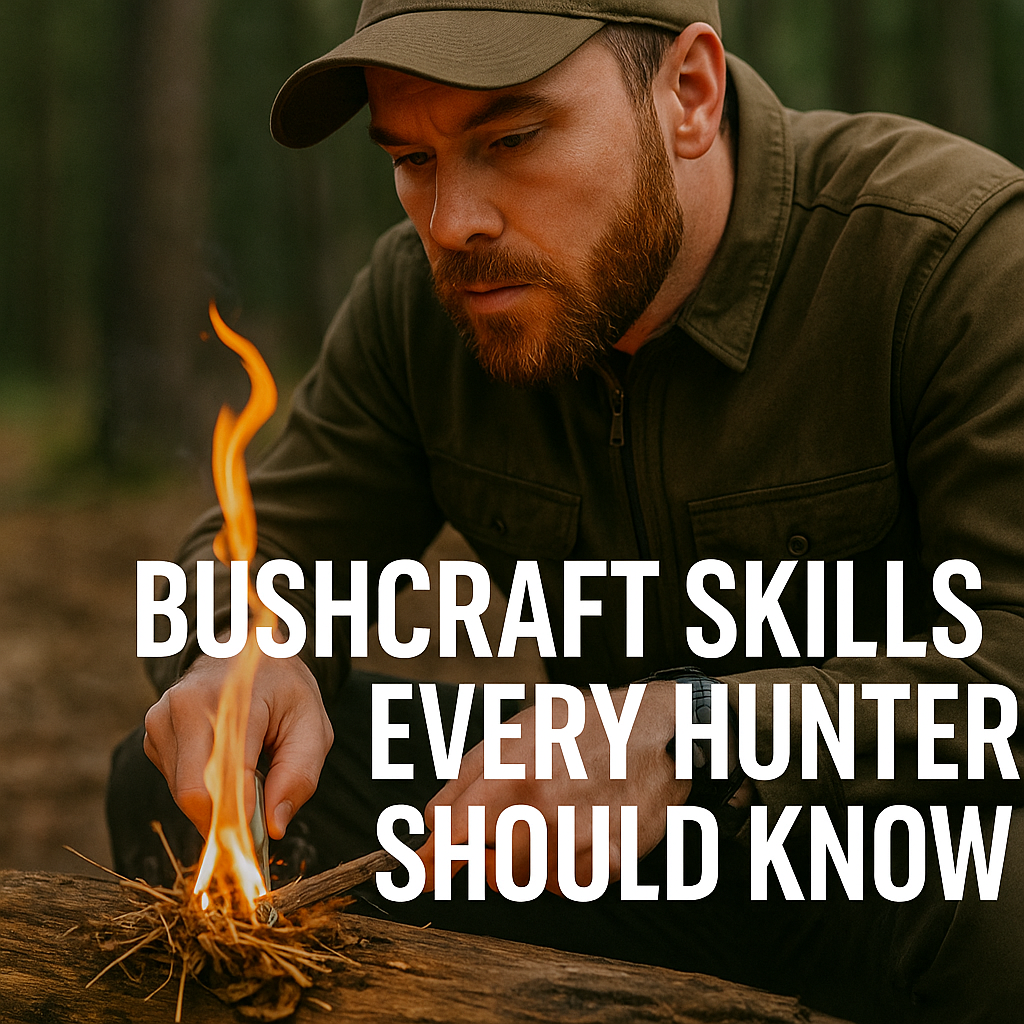
Bushcraft skills every hunter should know are the field basics that keep you safe and self-reliant away from the truck: navigation, simple shelter, safe fire use, finding and treating water, basic first-aid awareness, and low-impact travel under Leave No Trace. None of these replace proper training, and the single most protective habit is preparation, telling someone your plan and expected return time before you go. These skills lower your risk and help you stay calm if a hunt runs long or the weather turns, but they are not a substitute for professional medical care or formal wilderness training.
This guide covers the core skills, how they fit a hunting trip, and where to get real training. The principles here are general preparation, not survival-medical certainty. For first aid and wilderness medicine, learn from qualified instructors, and follow established outdoor guidance such as the National Park Service Ten Essentials and the Leave No Trace seven principles.
Table of contents
Preparation comes first
The most valuable bushcraft skill happens before you leave home. Tell someone reliable exactly where you are going, your planned route, and when you expect to be back, then check in when you return. If you do not come back on time, that person can get help to the right place quickly.
Round out that habit by checking the weather forecast, knowing the terrain and access, carrying the right gear for the conditions, and keeping your phone charged with a backup power source. Cell coverage is unreliable in the backcountry, so consider a map and compass and, for remote areas, a satellite communicator or personal locator beacon. Preparation prevents far more emergencies than any improvised survival trick resolves.
The Ten Essentials for hunters
The Ten Essentials is a widely used outdoor packing framework that covers the categories of gear you may need if a trip goes wrong. It is a sound base for any hunter heading into the backcountry.
- Navigation: map, compass, and a charged GPS or phone.
- Headlamp or flashlight, with spare batteries.
- Sun protection: hat, sunglasses, and sunscreen.
- First-aid supplies suited to your trip and training.
- A knife and a basic repair kit.
- Fire: a reliable lighter or matches and a fire starter.
- Emergency shelter, such as a bivy or space blanket.
- Extra food beyond what you plan to eat.
- Extra water and a way to treat more.
- Extra insulating clothing for the worst likely conditions.
See the full, current list and explanations on the National Park Service Ten Essentials page. Adapt it to your hunt, your season, and your distance from help.
Navigation
Navigation is the skill that keeps you found. Before the hunt, study a map of the area and identify clear landmarks, the road or trailhead you started from, and natural boundaries like ridgelines, creeks, and field edges that can guide you back.
Carry a physical map and compass and know how to orient the map and take a bearing, because batteries die and signal fails. A GPS or phone app is a strong primary tool, but treat the map and compass as the backup that always works. If you become unsure of your location, the standard guidance is to stop, stay calm, and avoid wandering deeper. Many lost-person situations get worse from continuing to move without a plan. Learn basic map and compass skills from a qualified course or experienced mentor before you rely on them.
Shelter basics
Shelter protects you from wind, rain, cold, and heat, which is why an emergency shelter belongs in your pack even on a day hunt. A lightweight bivy sack, an emergency space blanket, or a compact tarp can preserve body heat and keep you dry if you are stuck out longer than planned.
If you ever need to improvise, the priorities are getting out of the wind and off the cold or wet ground, and creating a barrier that traps warmth. A simple lean-to or a debris shelter using natural material and a tarp can work, but practicing the basics at home in good conditions is far better than learning under stress. The reliable move is to carry an emergency shelter so you rarely have to improvise at all.
Fire safety
Fire provides warmth, the ability to dry gear, a signal, and a morale boost in a hard situation, but it carries real responsibility. Carry at least two reliable ignition sources, such as a lighter and waterproof matches, plus a dedicated fire starter, and keep them dry in your pack.
- Check current fire restrictions and burn bans before your trip, since dry conditions often close fires entirely.
- Build fires only where allowed, clear the area down to bare ground, and keep the fire small and controlled.
- Never leave a fire unattended, and keep water or dirt on hand to extinguish it.
- Put the fire out completely, until it is cold to the touch, before you leave.
Wildfire risk is serious, and an escaped fire can cause harm and legal liability. Follow the fire rules from the land manager for your area, and follow the campfire guidance in the Leave No Trace principles.
Water awareness
Staying hydrated keeps you thinking clearly and moving safely, so carry enough water for your planned trip plus a margin, and carry a way to treat more if you may run out. Dehydration impairs judgment and stamina well before it becomes an emergency.
Backcountry water can carry pathogens that cause illness, so treat any water you collect rather than drinking it untreated. Common methods include filtering, chemical treatment, and boiling. The right choice depends on your gear and the water source, so learn proper treatment before you depend on it. The Centers for Disease Control and Prevention publishes general guidance on safe water practices that is a useful reference for understanding the risks.
First-aid awareness
First-aid awareness means knowing the basics, carrying a kit you can actually use, and recognizing when a situation needs professional help. This article does not teach medical treatment. The right step is hands-on training from a qualified provider.
Carry a first-aid kit matched to your trip and your training, and consider a wilderness first aid or first-aid and CPR course, especially if you hunt far from a road. Knowing how to manage a minor wound, stay warm, and stabilize a situation while you get help is realistic and valuable. Treating a serious injury yourself in the backcountry is not, so plan to reach professional care, and in a true emergency, call for help and follow the instructions of emergency services. Look for recognized training such as American Red Cross courses or a wilderness first aid program.
Weather, clothing, and warmth
Cold and wet are common and dangerous in the field, and managing them is a core skill. Dress in layers you can add or shed, favor materials that stay warm when damp over cotton, which loses insulation when wet, and pack a layer for worse conditions than you expect.
Watch for early signs of getting too cold, such as persistent shivering and clumsiness, and act before it worsens by adding layers, getting out of the wind, drying off, and warming up. Hot weather brings its own risks, so manage heat, sun, and hydration as deliberately as you manage cold. Knowing the forecast and matching your clothing to it prevents most weather problems before they start.
Leave No Trace for hunters
Low-impact travel protects the places you hunt and the access you depend on. Leave No Trace is a set of principles for minimizing your impact outdoors, and it fits hunting well.
- Plan ahead and prepare so you do not improvise at the land’s expense.
- Travel and camp on durable surfaces, and pack out all trash.
- Dispose of waste properly, and follow local rules for any game remains.
- Minimize campfire impact, and follow current fire restrictions.
- Respect wildlife and other people sharing the area.
Read the full guidance on the Leave No Trace seven principles page. Following these habits keeps hunting areas healthy and helps protect access for everyone.
Frequently asked questions
What is the single most important thing to do before a backcountry hunt?
Tell someone reliable your exact plan, route, and expected return time, then check in when you get back. If you do not return on time, that person can direct help to the right area. This one habit prevents and shortens more emergencies than any field trick.
Do I really need a map and compass if I have a GPS?
Yes. A GPS or phone is a great primary tool, but batteries die and signal fails in the backcountry. A physical map and compass always work, so carry both and learn to use the map and compass as your reliable backup.
Is it safe to drink water from a stream while hunting?
Not without treating it. Backcountry water can carry pathogens that cause illness even when it looks clean. Filter, chemically treat, or boil water before drinking, and learn proper treatment for your gear before you rely on it.
How much first aid should a hunter know?
Enough to handle minor issues, stay warm, stabilize a situation, and recognize when to get professional help. Carry a kit you can use and consider a first-aid, CPR, or wilderness first aid course. Serious injuries need professional care, so plan how to reach it.
Final takeaway
The bushcraft skills that matter most for hunters are practical and preventive: prepare and tell someone your plan, navigate with a map and compass backup, carry emergency shelter, use fire safely, treat your water, build real first-aid awareness, manage cold and heat, and travel under Leave No Trace. These skills lower your risk and raise your self-reliance, but they do not replace professional medical care or formal training. Build them through qualified courses and steady practice, prepare for the conditions you will face, and always leave a plan behind before you head into the field.