


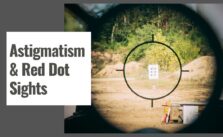
Astigmatism can make a red dot sight look blurry, smeared, star-shaped, comma-shaped, or like a cluster of dots instead of one clean aiming point. That does not automatically mean the sight is defective. Sometimes the distortion comes from the shooter’s eye, sometimes from brightness settings, lens smudges, poor target focus, or a real optic issue.
The practical answer is to test the sight before blaming the gear. Lower the brightness, clean the lens, look through the sight with your other eye, rotate the optic, take a phone photo through the sight, and ask another person to look through it. If the dot looks clean to the camera or another shooter but distorted to you, your vision may be part of the problem and an eye-care professional can help.
Table of contents
Quick Answer
If a red dot looks distorted, first turn the brightness down and focus on the target, not the dot. Then compare with your other eye, ask another shooter to look through it, and take a phone photo through the optic. If the camera shows a round dot but your eye sees a smear, your vision may be contributing to the problem.
Astigmatism is common, but this article is not a diagnosis. If you notice blurry vision, headaches, eye strain, or sudden changes in vision, talk to an eye-care professional. For range use, choose an aiming system you can see consistently and use safely.
What Astigmatism Is
Astigmatism is a refractive error where the eye does not focus light evenly in all directions. The American Academy of Ophthalmology explains astigmatism as an eye-focusing problem that can blur vision at different distances. Their astigmatism overview is a good medical reference if you want a plain-language explanation.
Why It Matters for Red Dots
A red dot sight projects an illuminated aiming point. If your eye does not focus that light cleanly, the dot may look stretched, doubled, spiky, or smeared. The target may still look mostly normal, which is why many shooters first assume the optic is the problem.
Not Every Distorted Dot Is Astigmatism
Brightness, dirty lenses, glare, wet lenses, scratched lenses, poor glasses, old batteries, target focus mistakes, and optic quality can also affect the dot. That is why quick comparison tests matter.
How It Can Affect Red Dot Sights
Shooters describe distorted red dots in different ways. Some see a starburst. Some see a comma, slash, cluster, oval, smear, double dot, or fuzzy bloom. The shape may change with brightness, eye position, glasses, lighting, or distance.
Common Dot Distortions
A dot that blooms too large is often a brightness issue. A dot that looks like the same smear shape every time may be more related to the eye. A dot that changes shape when the optic is rotated may suggest optic or lens factors. These are clues, not proof.
Why Indoor Ranges Can Feel Worse
Indoor ranges often have mixed lighting, dark targets, bright emitters, and visual reflections. Those conditions can make a dot look worse. Proper hearing and eye protection still come first; our indoor range ear protection guide covers another important range-safety piece.
Quick Tests to Separate Eye vs Optic
Before replacing a sight, run a few simple checks. Keep the firearm safe and unloaded while inspecting optics away from the firing line. Follow range rules if you test at the range.
Use a Phone Camera
Point the sight safely at a plain background or target and take a phone photo through the optic. If the phone image shows a clean round dot but your eye sees a smear, your eye or glasses may be the reason. If the phone also shows a distorted dot, the optic, brightness, or lens condition may be involved.
Compare Eyes and Shooters
Look through the sight with each eye. Ask another safe shooter to look through it. If everyone sees the same distortion, inspect the sight. If only you see it, vision may be involved. Do not use this as a medical test; use it as a practical gear check.
Rotate the Sight
If practical and safe, rotate the optic while looking at the dot. If the distortion rotates with the optic, the sight may be contributing. If the smear stays oriented the same way to your eye, your vision may be contributing.
Brightness and Target Focus
Many red dot problems are made worse by brightness. A red dot should be bright enough to see, not so bright that it blooms. Beginners often turn the dot too high because it feels easier to find. That can make the dot look larger and less precise.
Turn the Dot Down
Set the brightness to the lowest level that is still clearly visible against the target. In bright sunlight you may need more brightness. In shade or indoor light, you may need much less. The right setting changes with conditions.
Focus on the Target
With a red dot, your visual attention should stay on the target. Do not stare hard at the dot as if it were a front sight. A target-focused view often makes the aiming point easier to use. If you are still learning range fundamentals, our shooting range etiquette guide is a useful companion.
Optic Options That May Help
Different aiming systems can look different to shooters with astigmatism. There is no universal fix, so try before buying when possible. What works for one person’s eyes may not work for another’s.
Prism Sights
Some shooters with astigmatism prefer prism sights because the reticle is etched rather than only projected as a dot. Prism sights can be heavier and have eye-relief limits, so they are not automatically better for every use.
Green Dots and Different Reticles
Some shooters see green dots, larger circles, circle-dot reticles, or lower-MOA dots more clearly. Others do not. Reticle preference is very personal. Test in realistic light before making a decision.
Iron Sights or Magnified Optics
Depending on the firearm and use, iron sights, low-power scopes, or etched-reticle optics may be easier for some eyes. If your use involves rifles and optic setup, our guide on how to choose a rifle scope may help with broader optic decisions.
Shooting Tips
If you can still use the distorted dot consistently, you may not need to change gear immediately. Many shooters learn to use the center of the smear or the most consistent part of the reticle. The key is repeatability and safe accuracy.
Confirm on Paper
Do not judge only by how the dot looks. Shoot careful groups at known distances and see whether your impacts are consistent. If groups are acceptable and the sight is safe to use, the visual imperfection may be manageable.
Practice in Real Light
Test the optic in daylight, shade, indoor light, and low light if legal and safe. A dot that looks fine outdoors may bloom indoors. A dot that works at one brightness may be poor at another.
When to See an Eye Doctor
See an eye-care professional if you have frequent blurry vision, headaches, eye strain, trouble driving at night, sudden vision changes, or if corrected lenses no longer seem right. Red dot distortion can be a clue, but eye health should not be guessed from range gear.
Bring Up Shooting or Optic Use
If you shoot, tell your eye-care professional what you are seeing through optics. They may be able to check your prescription, discuss astigmatism correction, or explain why certain visual tasks feel difficult.
Use Corrective Lenses Safely
If you wear glasses or contacts, use them consistently when shooting if they are part of your safe vision setup. Make sure eye protection still fits properly over or with your corrective lenses.
FAQ
Why does my red dot look like a starburst?
A starburst can come from astigmatism, brightness set too high, glare, dirty lenses, or optic issues. Lower the brightness, clean the lens, and compare with a phone camera or another shooter.
Does astigmatism mean I cannot use a red dot sight?
No. Many shooters with astigmatism still use red dots effectively. Others prefer prism sights, etched reticles, different dot colors, or lower brightness settings. Try options before replacing gear.
Is a blurry red dot always the sight’s fault?
No. The sight could be defective, but the shooter’s eye, glasses, brightness setting, lens condition, or lighting can also cause distortion. Use comparison tests before blaming one cause.
Can a phone camera help test a red dot?
Yes. If a phone camera shows a clean dot while your eye sees a smear, vision may be involved. If the camera also shows a distorted dot, the optic or settings may be involved.
Should I see an eye doctor because of red dot distortion?
If you have blurry vision, headaches, eye strain, night-driving trouble, sudden vision changes, or ongoing concerns, yes. A red dot sight is not a medical diagnostic tool, but it can reveal vision issues you may want checked.
Final Thoughts
Astigmatism can make red dot sights look frustrating, but the solution is not always buying a new optic. Test brightness, clean the lens, compare eyes, use a phone camera, and ask another shooter to look through the sight. If your vision seems to be part of the issue, get professional eye advice and choose an aiming system you can use safely and consistently.